
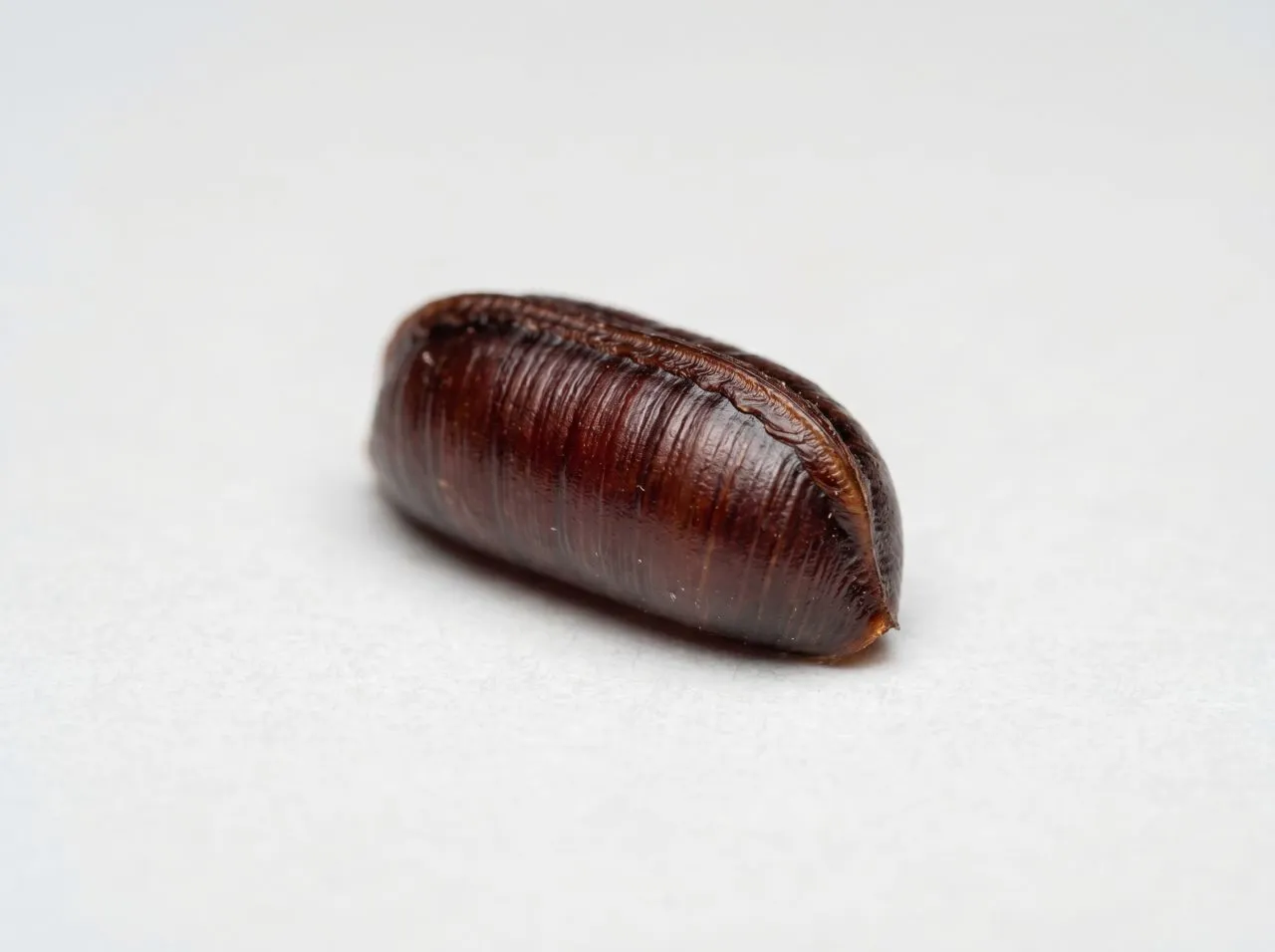
A cockroach egg case — called an ootheca — is a small, brown or reddish-brown capsule shaped a bit like a kidney bean or a tiny purse. Most are about a quarter to a half inch long (6–10 mm), and a single case holds anywhere from 14 to 48 eggs depending on the species. You’ll find them glued into warm, hidden spots close to food and water.
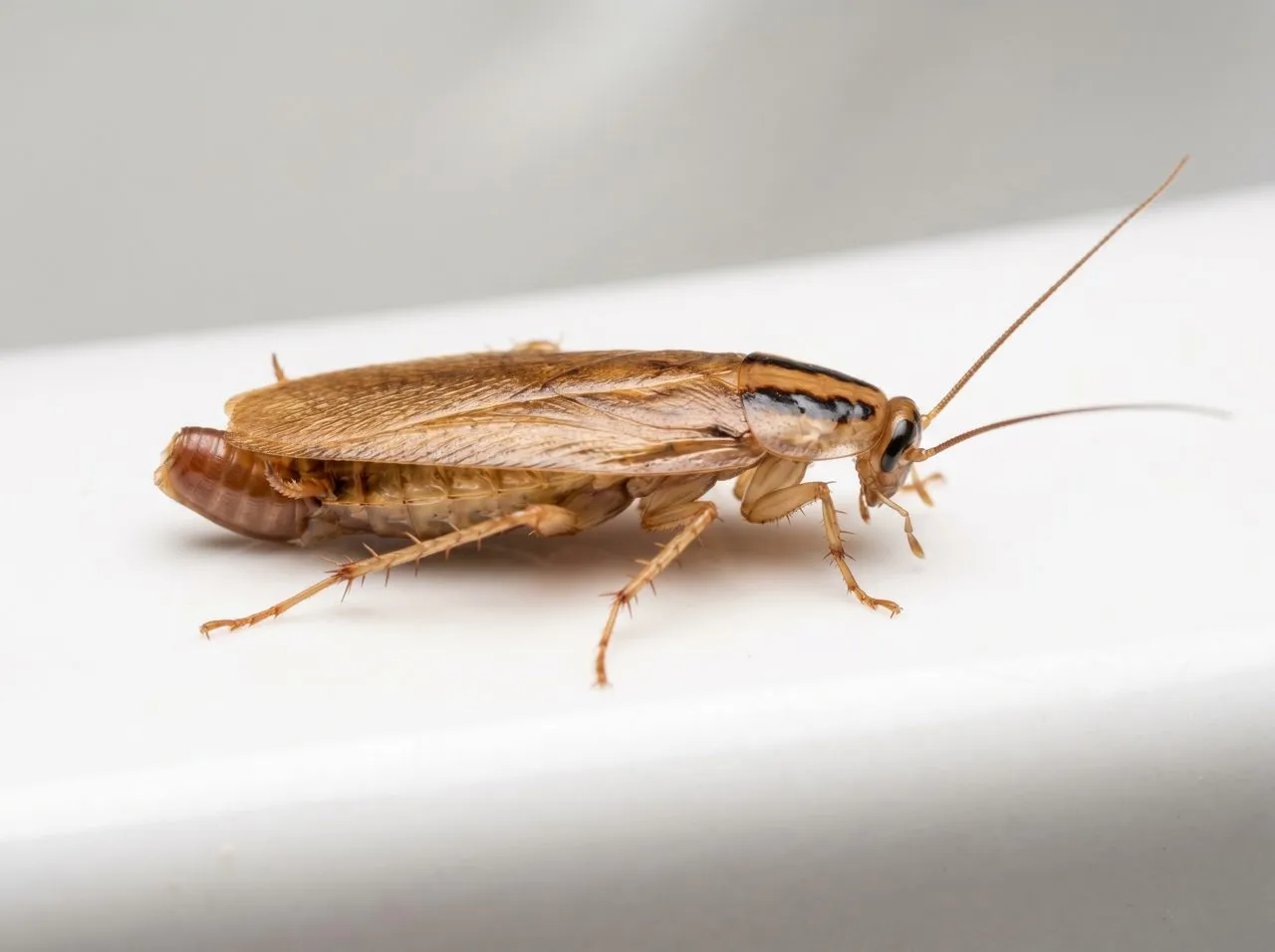
German cockroach cases are light brown and about 6 mm — and the female carries hers until the eggs are nearly ready to hatch. American and Oriental cases are darker and a little larger, and get glued to surfaces in damp, sheltered spots. Finding egg cases almost always means roaches are breeding indoors, not just passing through.
What a cockroach egg case (ootheca) looks like
An ootheca is a hardened, protective capsule rather than a single soft egg. It’s usually brown to dark reddish-brown, smooth or lightly ridged, with a seam running along one edge where the young roaches eventually emerge. Size and color vary by species, which is the easiest way to tell which roach you’re dealing with.
Cockroach egg cases by species
Where roaches hide their egg cases
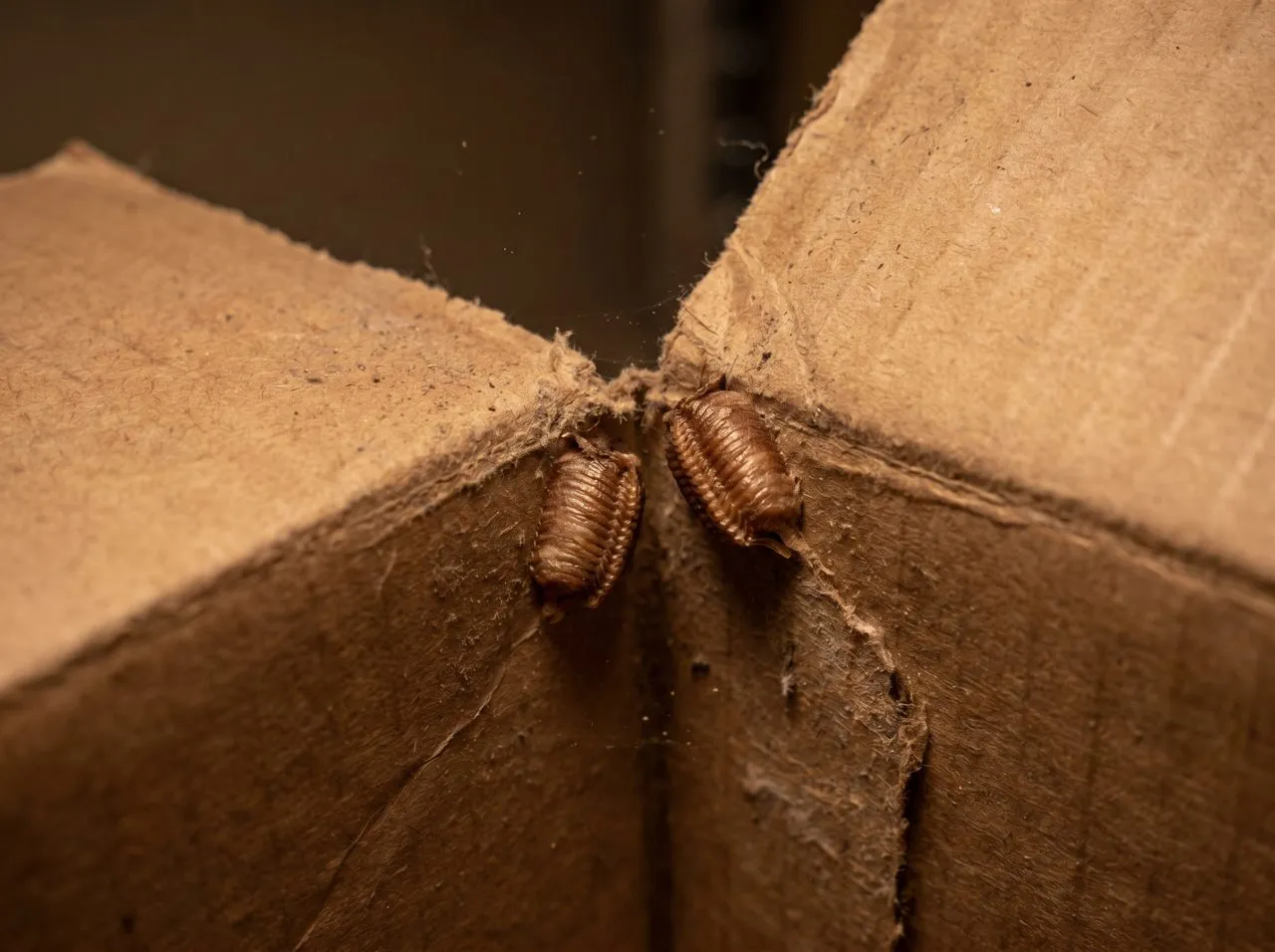
Roaches tuck egg cases into tight, sheltered places near food, water, and warmth: behind and under kitchen appliances, inside cabinet cracks, behind baseboards, under sinks, and — a big one in the Central Valley — inside stored cardboard boxes and paper bags, which hold warmth and are easy to grip onto. In Fresno homes the kitchen is ground zero, because that’s where German cockroaches breed.
Egg case vs. droppings vs. look-alikes
Egg cases are sometimes mistaken for roach droppings, mouse droppings, or even seeds. Droppings are smaller and look like ground pepper or coffee grounds; an ootheca is a single, distinct capsule with a defined seam down one side. If you’re seeing both egg cases and pepper-like droppings together, that’s a strong sign of an active, established infestation.
The ootheca is built to protect the eggs inside — so crushing a stray case, or a female carrying one, can actually scatter viable eggs, and most over-the-counter sprays don’t penetrate the casing at all. German females carry their case until just before it hatches, so surface sprays miss the eggs entirely. That’s why infestations bounce back a few weeks after a DIY “knockdown.”
What finding egg cases really means
A single egg case can release dozens of nymphs, and a German cockroach female can produce several cases in her lifetime — so even one or two found indoors points to a breeding population, not a one-off. The warm Central Valley climate only speeds that cycle up. The practical takeaway: egg cases are an early warning to act before the numbers climb.
How to get rid of cockroach eggs
Because the eggs are shielded inside the ootheca, the reliable fix isn’t spraying the cases — it’s gel baits and insect growth regulators (IGRs) the roaches carry back to their harborage, combined with sanitation and sealing entry points, plus a follow-up once the next batch hatches. Our guide on how to get rid of cockroaches in Fresno walks through exactly what works. For anything past a stray case or two, a professional clears it faster and keeps it from rebounding.
See our cockroach control →Cockroach egg FAQ
Can you visibly see cockroach eggs?
You won’t see individual eggs — they’re sealed inside the egg case (ootheca), a brown capsule about a quarter-inch long. That’s what you’ll actually spot: the case, usually tucked in a warm, hidden spot near food or water, or being carried by a German cockroach.
What kills cockroach eggs?
The eggs are protected inside the ootheca, so most surface sprays don’t reach them. The dependable approach is gel bait and insect growth regulators (IGRs) that disrupt the breeding cycle, plus a follow-up treatment after the next cases hatch. Physically removing cases and sealing them in a bag helps too.
Why should you never squish a cockroach?
Crushing a female that’s carrying an egg case can scatter viable eggs, and a squished roach can leave behind egg cases or attract others with its scent. It also doesn’t touch the hidden population. Baiting is more effective — and far less messy — than stepping on them.
How long do cockroach eggs take to hatch?
It varies by species and temperature, but German cockroach cases typically hatch in about three to four weeks — faster in warm conditions like a Central Valley summer. Each case can release roughly 30 or more nymphs, which is why infestations grow quickly once eggs are present.
Does finding one egg case mean I have an infestation?
Usually, yes — especially with German cockroaches, which breed indoors. A single case means a female has been reproducing inside, and one female produces several cases. Finding egg cases is an early sign to treat the breeding cycle before the population climbs.
Found egg cases? Don’t wait for them to hatch.
Call (559) 472-8200 or request a no-cost inspection — we’ll confirm what you’re seeing and stop the breeding cycle before it spreads.