
Home › Commercial › Warehouses
Warehouse & Distribution Pest Control in Fresno
Big footprints, open dock doors, and stored product are an open invitation to rodents and birds. We protect Fresno and Central Valley warehouses with exclusion-first programs built for scale.
Warehouse pest control is a perimeter-and-exclusion program scaled to a large footprint: keep rodents and birds out at the building envelope, monitor the interior with mapped stations, and document everything for food-adjacent clients. For Fresno’s distribution corridor — where dock doors stay open and product never stops moving — that structural approach beats reactive spraying every time.
Why warehouses are a magnet for pests
A distribution center is a climate-controlled space full of food, packaging, and shelter, with dozens of openings a day at the loading docks. Rodents slip in on pallets and through dock gaps; birds nest in rafters and over receiving; stored-product insects ride in on incoming goods. The cost isn’t just nuisance — it’s contaminated or rejected inventory, gnaw damage to product and wiring, failed customer audits, and contract penalties when a food client finds droppings. At warehouse scale a small problem multiplies fast across racking you can’t easily inspect.
The pests we target in warehouses
Large facilities have a predictable pest profile, and each one calls for a different control point — which is why a single spray approach never holds up across a building this size.
Warehouse pest profile
Exclusion first: how we protect a large facility
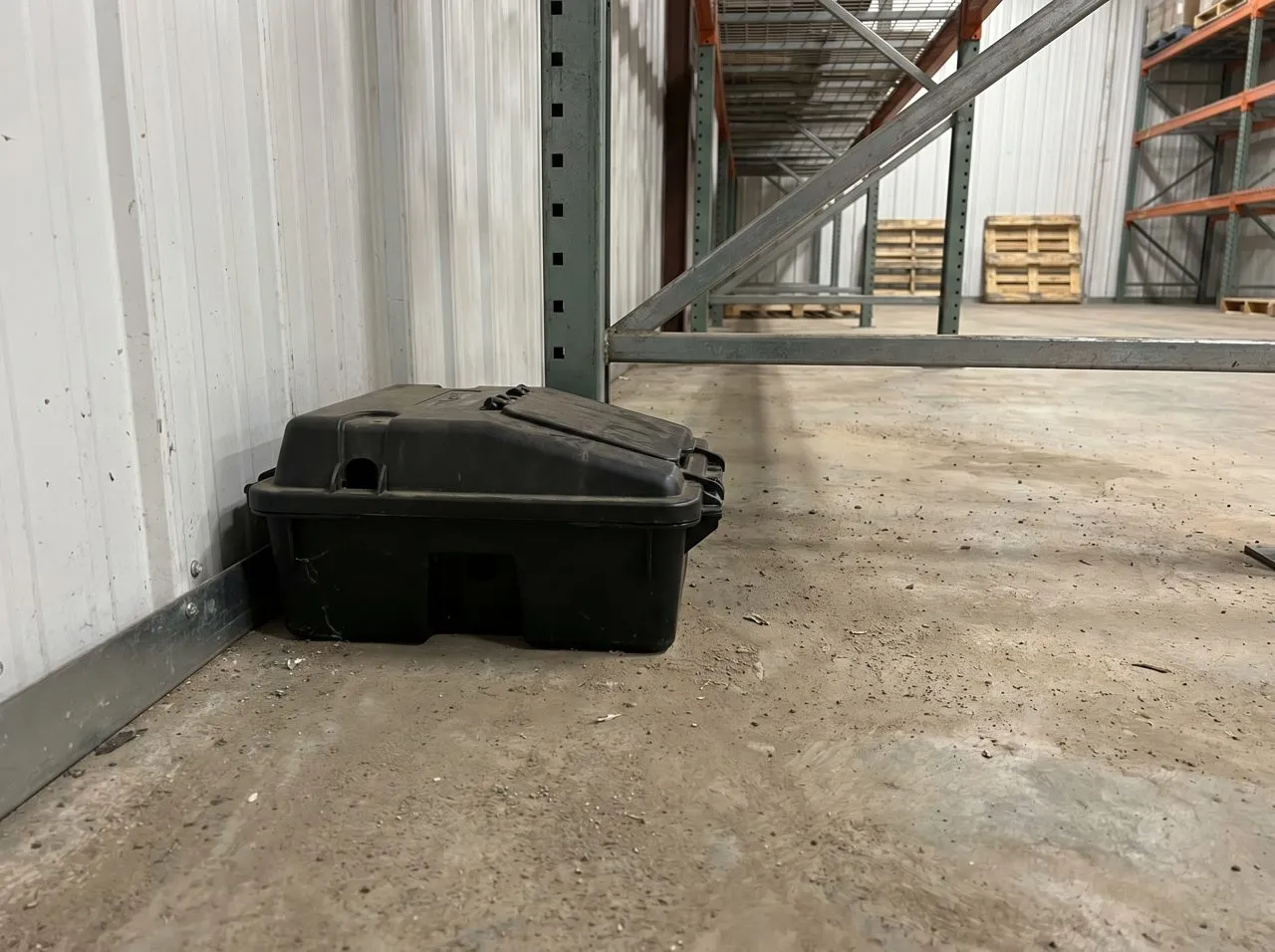
Spraying a warehouse doesn’t work — the building is too big and the entry points are too many. We start at the envelope: seal and screen gaps, manage dock-door sweeps, and run a perimeter of monitored, exclusion-focused bait stations. Inside, we map and number every device so each station is tracked, inspect receiving and racking for rodents and stored-product pests, and add bird deterrents where docks invite roosting. You get a documented program with a device map, dated service logs, and trend reporting — the format food-adjacent and audited clients require.
If you store or move food, your customers’ auditors will ask for pest documentation. We keep it audit-ready: a numbered device map, dated service reports, activity trends, and corrective actions — the same records that satisfy third-party and food-safety audits. For non-food warehouses, the same rigor simply protects your inventory and your building.
Bird control where the docks invite them
Open dock doors and high rafters make warehouses one of the most common places pigeons and sparrows take up residence, and their droppings over receiving and product are both a contamination problem and a slip hazard. We handle birds the same way we handle rodents: structurally. Netting and screening close off rafters and ledges, deterrents make roosting spots unwelcome, and dock-door management cuts the access in the first place, so you are not relying on cleanup after the fact.
Why Central Valley operators choose us
Fresno sits on the Valley’s distribution backbone, and we know the local pressure — from Valley rodents to the birds that work the docks. We’re local and family-owned, licensed and insured (owner Paul Outfleet, CA SPCB Branch 2), and we schedule around your shifts so service never slows the floor. One consistent team learns your facility instead of a rotating crew relearning it every visit.
Request a warehouse site assessment →Warehouse pest control FAQ
How do you keep bugs and rodents out of a warehouse?
Exclusion first: seal the building envelope, manage dock doors and sweeps, and run a monitored perimeter of bait stations. Inside, map and track devices, inspect incoming goods, and keep sanitation tight. At warehouse scale, keeping pests out at the perimeter beats chasing them across the racks.
How do you get rid of roaches in a warehouse?
Targeted gel baits and monitoring in break rooms, offices and harborage areas, combined with sanitation and sealing the cracks roaches hide in. Because roaches usually hitchhike in on deliveries, we also inspect receiving so one infested shipment doesn’t seed the building.
How often should a warehouse have pest control service?
Most distribution facilities do best on a recurring monthly schedule, with bait stations checked each visit and trend data reviewed. Food-adjacent or audited sites often need more frequent service; we set the cadence to your facility and audit requirements.
Do you handle bird control on loading docks?
Yes. Loading docks invite pigeons and sparrows to roost over receiving areas, which contaminates product. We use exclusion such as netting and screening, deterrents, and dock-door management to keep birds off the docks and out of the rafters.
Can you provide documentation for our customer audits?
Yes — that’s standard. We provide a numbered device map, dated service reports, an activity-trend log, and corrective-action notes, formatted for third-party and food-safety audits so you can hand auditors a complete record.
What are the pest control requirements for a warehouse?
Warehouses need a documented, preventive pest program built around exclusion and monitoring: sealed dock doors and entry points, a perimeter of monitoring stations, routine inspections, and complete service records. Facilities that store food or hold audits such as SQF, BRC, or AIB face stricter documentation and device-mapping requirements.
Protect your warehouse — from the dock doors in.
Call (559) 472-8200 or request a site assessment — we’ll map your facility and build an exclusion-first program that scales to your footprint.