
Home › Learn › Signs of Termites
Signs of Termites: How to Tell If You Have an Infestation
Termites work silently, often for years, before the damage shows. Catching them early comes down to knowing the warning signs — mud tubes, frass, swarmers, and the subtle clues most people miss.
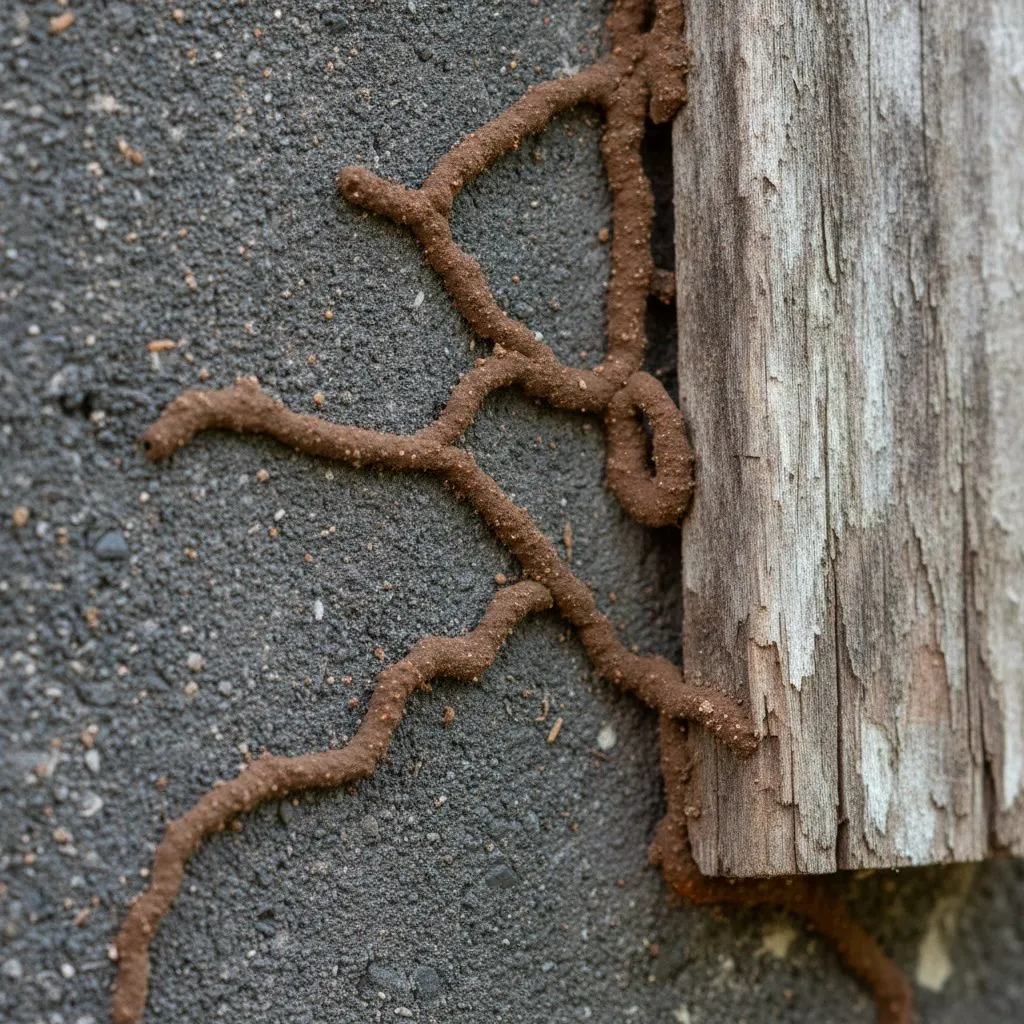
Termites cause billions of dollars in damage every year, and the hardest part is that most infestations are found late — during a remodel, a home sale, or when a floor finally gives. The good news: termites leave clues. Knowing what to look for is the difference between a small treatment and a major repair. Here are the signs, grouped by what they tell you.
The most common signs of termites
Mud tubes: the #1 sign of subterranean termites
Subterranean termites live in the soil and can’t survive long in open air, so they build pencil-width tubes of dried mud to travel from the ground to your wood. You’ll find them running up foundations, piers, and crawlspace walls. If you see them, leave most of them intact — an inspector can check whether the colony is still active.
Frass: the drywood termite giveaway
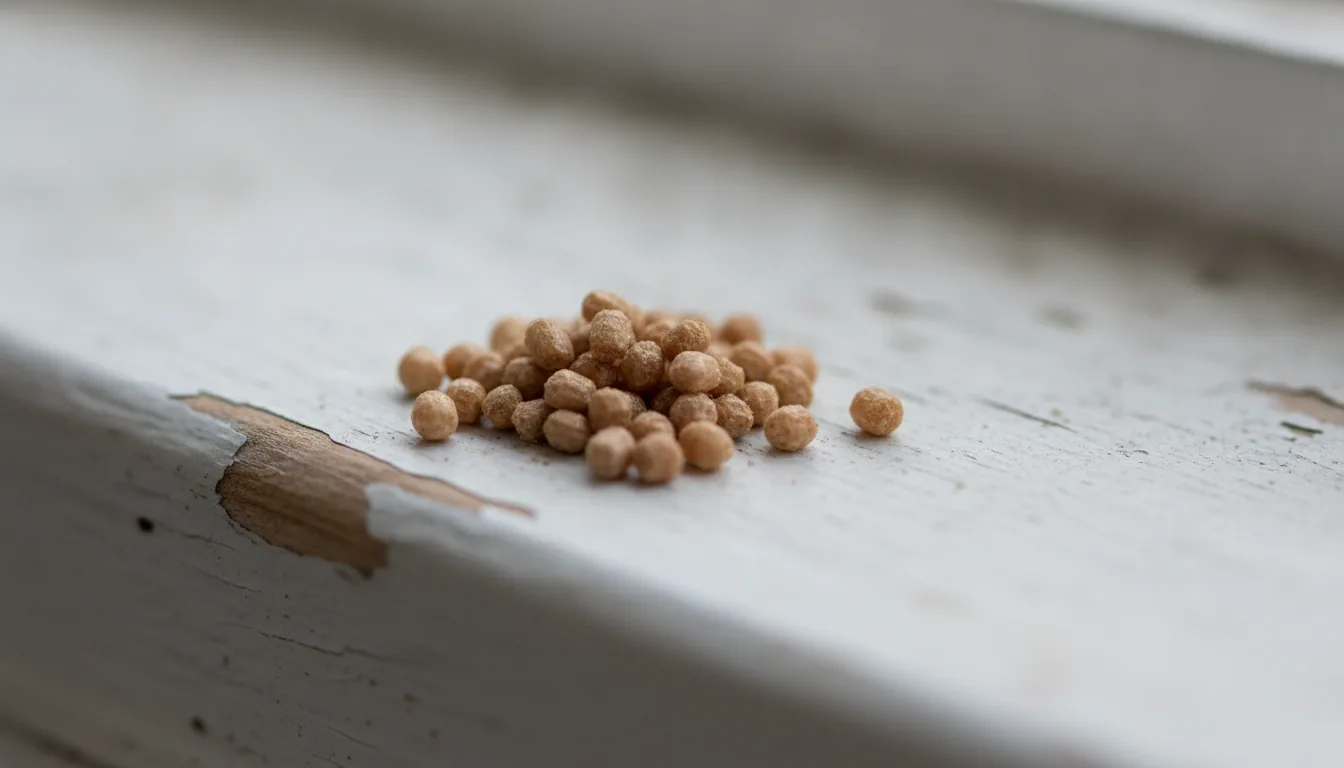
Drywood termites push their droppings — called frass — out of the wood through tiny “kick-out” holes. Frass looks like tiny, ridged, six-sided pellets, often compared to sand or coffee grounds, and collects in little piles on windowsills, floors, and surfaces below the infested wood. Recurring piles you sweep up and find again are a classic drywood sign.
Swarmers and discarded wings
Once a colony matures, it releases winged reproductives called swarmers to start new colonies — usually in spring for subterranean termites and after warm weather for drywood. They’re drawn to light and shed their wings quickly, so piles of equal-length wings on sills or in spider webs are often the only trace. Swarmers indoors almost always mean an established colony in or near the structure.
The subtle signs people miss
Beyond the obvious clues, watch for wood that sounds hollow when tapped, floors that feel soft or sag, doors and windows that suddenly stick, and paint that bubbles or blisters — all signs that termites have been eating wood from the inside out or that their moisture is warping the structure.
Don’t wait — termite damage compounds the longer a colony feeds. A professional inspection confirms the species, how far it has spread, and the right treatment before the repair bill grows.
What to do if you spot termite signs
Resist the urge to knock down every mud tube or attack the wood with store-bought spray — surface treatments don’t reach the colony, and disturbing evidence makes a professional’s job harder. The reliable next step is a termite inspection: it pins down whether you have subterranean or drywood termites and exactly where they are.
Book a termite inspection →Signs of termites FAQ
What is the first sign of termites?
Often mud tubes on the foundation (subterranean termites) or small piles of pellet frass (drywood termites). Swarmers or discarded wings in spring are another common early clue.
What do termite droppings look like?
Drywood termite frass is tiny, six-sided, and sand- or coffee-ground-like, collecting in small piles directly below the infested wood.
Are flying termites a sign of an infestation?
Yes — swarmers indoors or shed wings on windowsills mean a colony nearby is reproducing, which is worth an inspection.
How do I tell termite damage from water damage?
Both can cause bubbling paint and soft wood. Termite galleries follow the wood grain and may be packed with soil (subterranean) or kept clean (drywood). An inspection settles it for certain.
Can I have termites and not see them?
Absolutely. Termites work inside wood and underground, so many infestations are only discovered during an inspection or a remodel.
How fast do termites cause damage?
Slowly but relentlessly. Serious structural damage usually takes time to develop, which is exactly why catching the early signs matters.
Think you've got termites? Let's confirm it.
A quick, thorough inspection from a licensed Fresno team tells you exactly what's going on — and what to do next. Protecting Central Valley homes since 2020.