
Home › Learn › What Does a Rat Nest Look Like
What Does a Rat Nest Look Like? (Plus Mouse Nests)
A rat nest is a loose ball of shredded material — insulation, paper, fabric, plant matter — tucked into a hidden, sheltered spot. Here’s what rat and mouse nests look like, where to find them, and what to do.
A rat nest looks like a loose, messy ball of shredded material — insulation, paper, cardboard, fabric, dried plants, and twigs — packed into a hidden, sheltered spot. Roof rats nest up high (attics, wall voids, dense vegetation, trees); Norway rats nest low (ground burrows, under decks, crawlspaces). A nest usually means an active, breeding infestation, not a one-off visitor.
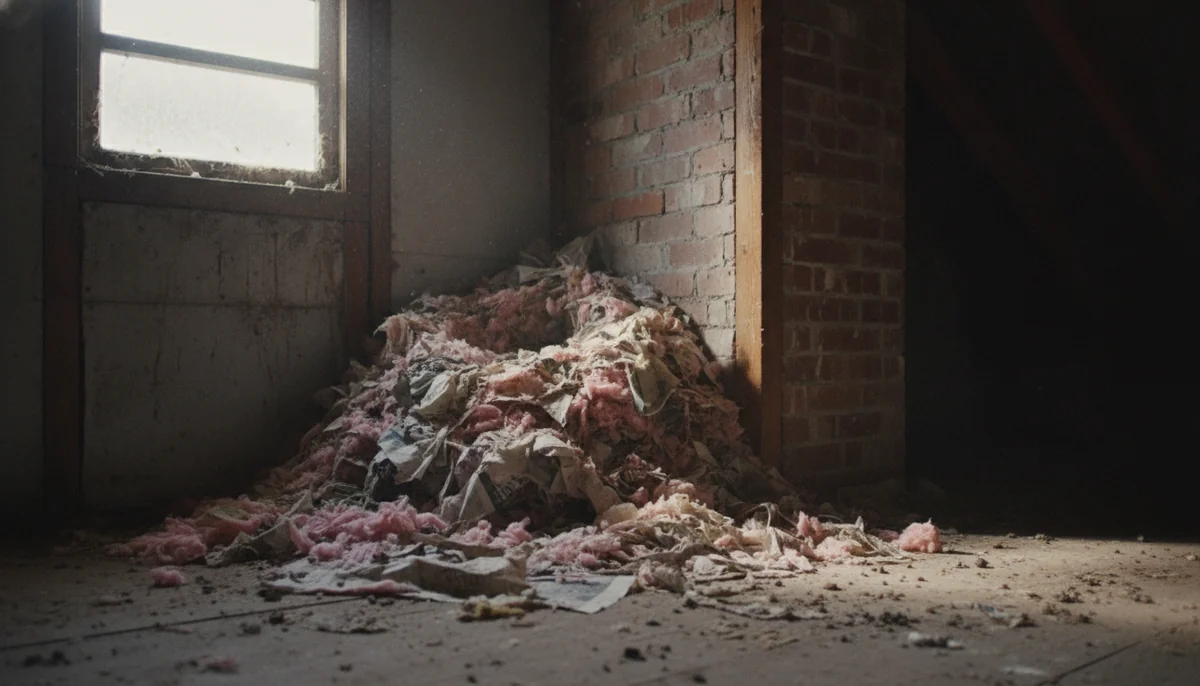
What a rat nest is made of
Rats shred whatever soft material is nearby — fiberglass attic insulation, paper, cardboard, cloth, string, and outdoor plant matter — into a fluffy mass roughly the size of a softball or larger. You’ll often see droppings, dark grease marks, gnawed material, and a musky smell around it.
Where rats build nests
Roof rats nest high and hidden: attic corners, insulation, soffits, wall voids, behind stored boxes, in dense ivy and vines, palm skirts, and tree canopies. Norway rats nest low: ground burrows along foundations, under decks, sheds, and woodpiles, and in crawlspaces. See roof rats and the types of rats in California.
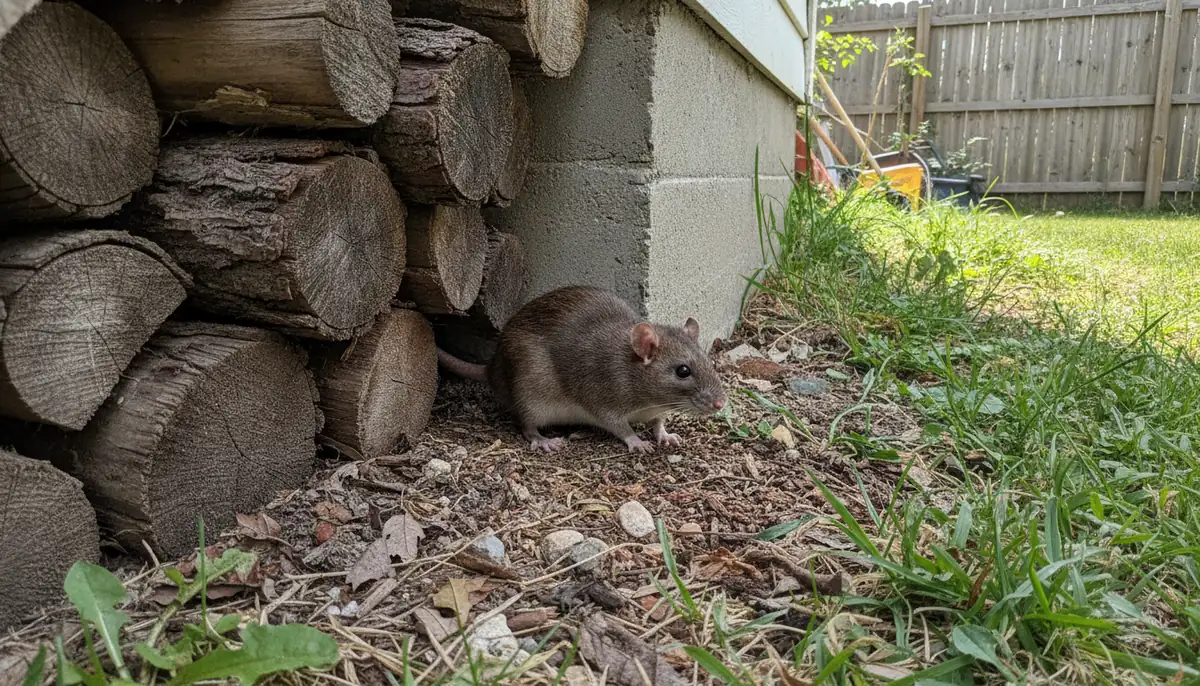
What does a mouse nest look like?
A mouse nest is smaller — roughly baseball-sized — and made of finely shredded fibers: paper, insulation, cardboard, fabric, even cotton stuffing. House mice nest close to food, usually within about 30 feet: behind appliances, in wall voids, drawers, storage boxes, and cluttered garages.
Rat nest vs mouse nest
Rodent nests and droppings can carry disease. The CDC says to ventilate the area, wear gloves and a mask, wet the material with disinfectant before cleanup, and bag it — never sweep or vacuum dry, which can send particles into the air.
How many rats live in a nest?
A single nest can hold a female and her litter — rats have 5–10 or more pups per litter and several litters a year — and related rats often nest near one another. So one nest can signal many more rats nearby.
What to do if you find a rat nest
Don’t disturb it. Note the location, then have it inspected — the nest tells us the species, the population size, and where the rodents are getting in. We remove the rodents, seal entry points, and clean up contamination. See rat control and attic restoration.
See rodent control in FresnoRat & mouse nests — FAQ
What does a rat nest look like?
A loose, messy ball of shredded material — insulation, paper, cardboard, fabric, and plant matter — about the size of a softball or larger, tucked into a hidden spot like an attic corner or a ground burrow.
Where do rats build nests?
Roof rats nest high (attics, wall voids, trees, dense vegetation); Norway rats nest low (ground burrows, under decks, crawlspaces).
What does a mouse nest look like?
A smaller, baseball-sized ball of finely shredded fibers — paper, insulation, fabric — usually within about 30 feet of food, behind appliances or in wall voids.
Is it dangerous to touch a rodent nest?
Yes. Don’t disturb it or sweep and vacuum droppings dry. Ventilate the area, wear gloves and a mask, wet the material with disinfectant, and bag it, following CDC guidance.
How many rats live in one nest?
A nest can hold a female and her litter of 5–10 or more pups, and related rats nest nearby, so one nest often means many more rats are present.
Found a nest in your attic or yard?
We’ll identify the rodent, remove it, seal the way in, and clean up safely. Book a no-cost inspection for your Fresno-area home.