
Home › Learn › Fleas
Flea Bites vs. Bed Bug Bites: How to Tell Them Apart
The fastest tell is location: flea bites cluster low on the ankles and lower legs, while bed bug bites show up on skin left exposed in bed — arms, shoulders, neck, and back. Here is how to read the bites and figure out which pest you have.
Flea bites and bed bug bites are both small, red, and itchy — but where they land on your body usually gives the pest away. Flea bites cluster low, around the ankles, lower legs, and feet, because fleas live in carpet and hop up. Bed bug bites show up on skin you leave exposed while sleeping — arms, shoulders, neck, and back — because bed bugs feed in the bed at night. Read the location first, then the pattern, and you can usually tell them apart before you ever see the bug.
Bites around your ankles and lower legs, itching right away, with a pet in the house — think fleas. Bites in lines or zigzags on your arms, shoulders, neck, or back that you notice after waking up — think bed bugs. Location is the single best clue.
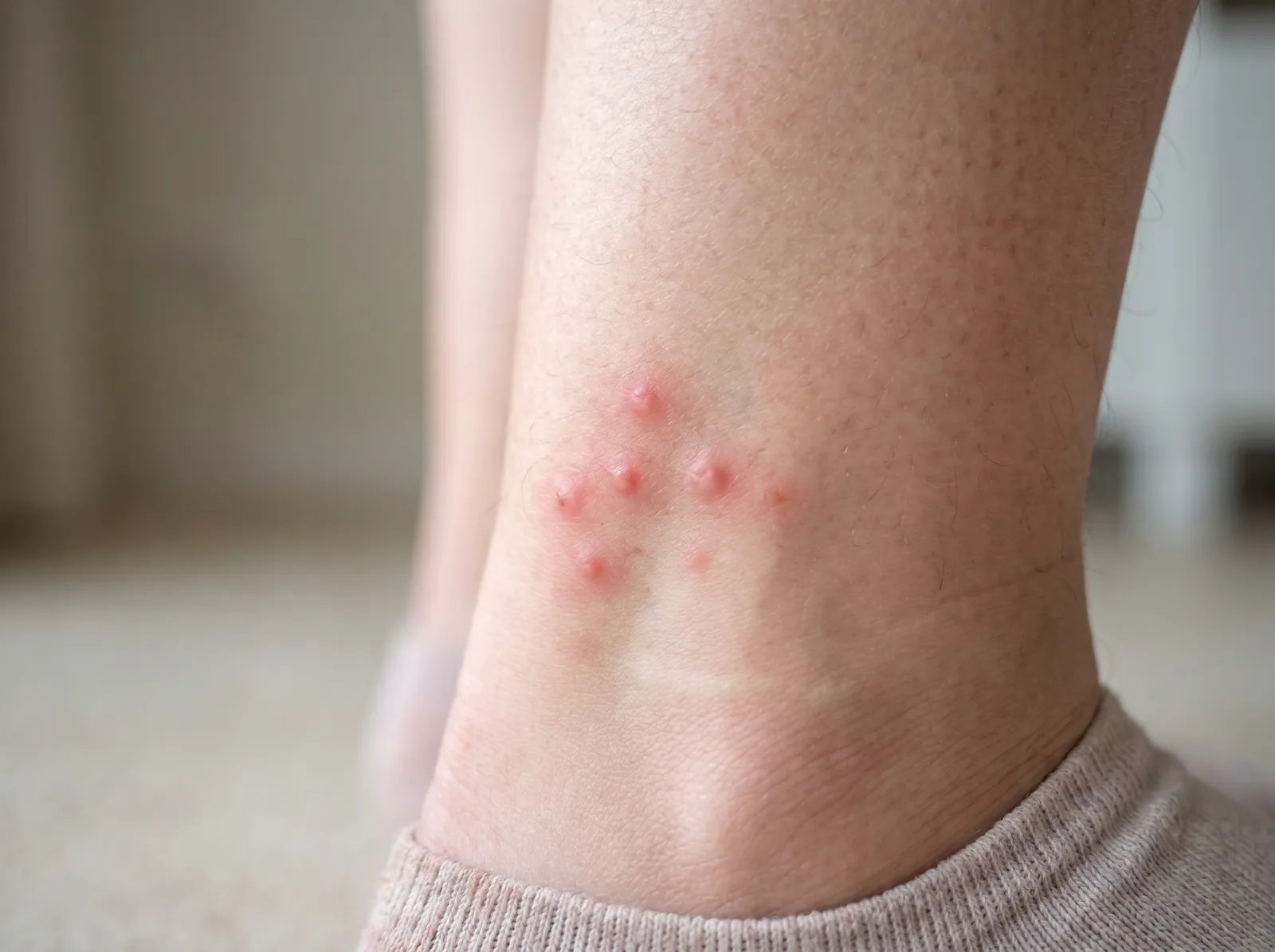
What flea bites look like
Flea bites are small, raised red bumps, usually with a tiny dark center and often a faint reddish halo around them. They tend to appear in loose clusters or small groups of three or four, and they itch almost immediately. The giveaway is location: because fleas live down in carpet and bedding and jump only a few inches, the bites concentrate on the feet, ankles, and lower legs. If you have been sitting on a carpeted floor, you might also see them on the backs of the legs or buttocks. On people with sensitive skin, flea bites can swell into firm, intensely itchy welts.
What bed bug bites look like
Bed bug bites are typically flat or slightly raised red welts, and they classically appear in a line or zigzag row — the so-called “breakfast, lunch, and dinner” pattern — because a disturbed bug repositions and bites again along the same path. They land on skin left uncovered in bed: the arms, shoulders, neck, upper back, and hands. A key difference is timing: many people do not feel bed bug bites for hours or even days, so they wake up with new marks and no memory of being bitten. Bed bugs do not jump or fly, and they are a completely different pest from fleas.
Flea bites vs. bed bug bites, side by side
Flea bites vs. bed bug bites
How to tell which one you actually have
Bites alone are suggestive, not proof — reactions vary a lot from person to person, so confirm with the environment. If you have a cat or dog, comb it and check for fleas and flea dirt, and look for dark specks jumping in the carpet; that points to fleas. If there is no pet and the bites follow sleep, inspect the mattress seams, the headboard, and the box spring for small reddish-brown bugs, shed skins, and dark fecal spots; that points to bed bugs. For a full pest-by-pest comparison, see fleas vs. bed bugs, and if it turns out to be bed bugs, our bed bug control covers what to do next.
Are flea bites dangerous?
For most people flea bites are mainly itchy and annoying, but they are not entirely harmless. Scratching can lead to skin infection, some people and pets develop strong allergic reactions (flea allergy dermatitis is common in dogs and cats), and fleas can transmit tapeworm to a pet that swallows one while grooming. Fleas can also carry diseases such as murine typhus and, rarely, plague — the CDC’s information on fleas and flea-borne disease has the details. Clearing an infestation promptly is the right call rather than living with the bites.
Most bites can be managed at home with antihistamines and anti-itch cream, but see a doctor if a bite becomes increasingly red, warm, swollen, or pus-filled (possible infection), if you have a widespread or severe allergic reaction, or if you run a fever after being bitten. For medical advice about any bite, consult a healthcare professional.
Flea bites vs. bed bug bites FAQ
How do I tell flea bites from bed bug bites?
Location is the best clue. Flea bites cluster low on the ankles and lower legs and itch right away; bed bug bites form lines or zigzags on skin exposed in bed — arms, shoulders, neck, back — and are often noticed only after waking. Confirm by checking the pet and carpet for fleas, or the mattress seams for bed bugs.
Where do fleas usually bite humans?
On the feet, ankles, and lower legs, because fleas live in carpet and bedding and can only jump a short distance up. If you have been sitting on the floor, bites may also appear on the backs of the legs.
Do flea bites have a red ring around them?
Often, yes. A flea bite is typically a small red bump with a darker center and a faint reddish halo around it, usually in a small cluster. Bed bug bites are more often flat welts in a line.
Are flea bites dangerous?
Usually they are just itchy, but they can cause allergic reactions in people and pets, lead to skin infection if scratched, transmit tapeworm to pets, and — less commonly — carry diseases like murine typhus. They are worth clearing rather than tolerating.
Why am I getting bitten but cannot find any bugs?
Both fleas and bed bugs are small and hide well. Fleas live down in carpet and on pets; bed bugs hide in mattress seams and crevices and feed at night. Use the bite location plus an environment check — pet and carpet for fleas, mattress for bed bugs — to identify the source.
Bitten around the ankles? It is probably fleas — and we can clear them.
Call (559) 472-8200 or request a no-cost inspection — we will confirm the pest and stop the bites.