
Home › Learn › Bed Bugs
What Temperature Kills Bed Bugs and Their Eggs?
Adult bed bugs die around 118°F and their eggs need about 122°F — but the real answer is heat plus time, and getting that heat into every hiding spot. Here is exactly what it takes, and why DIY heat so often misses the eggs.
Adult bed bugs start to die at about 118°F (48°C), and their eggs — which are tougher — need roughly 122°F (50°C) or higher to be reliably killed. But temperature is only half the story. What actually kills bed bugs is heat plus time: the hotter it gets, the faster they die, and at the low end they can hang on for hours. The hard part is not hitting a number on a thermometer — it is getting that heat into the seams, cracks, and wall voids where bed bugs and their eggs hide.
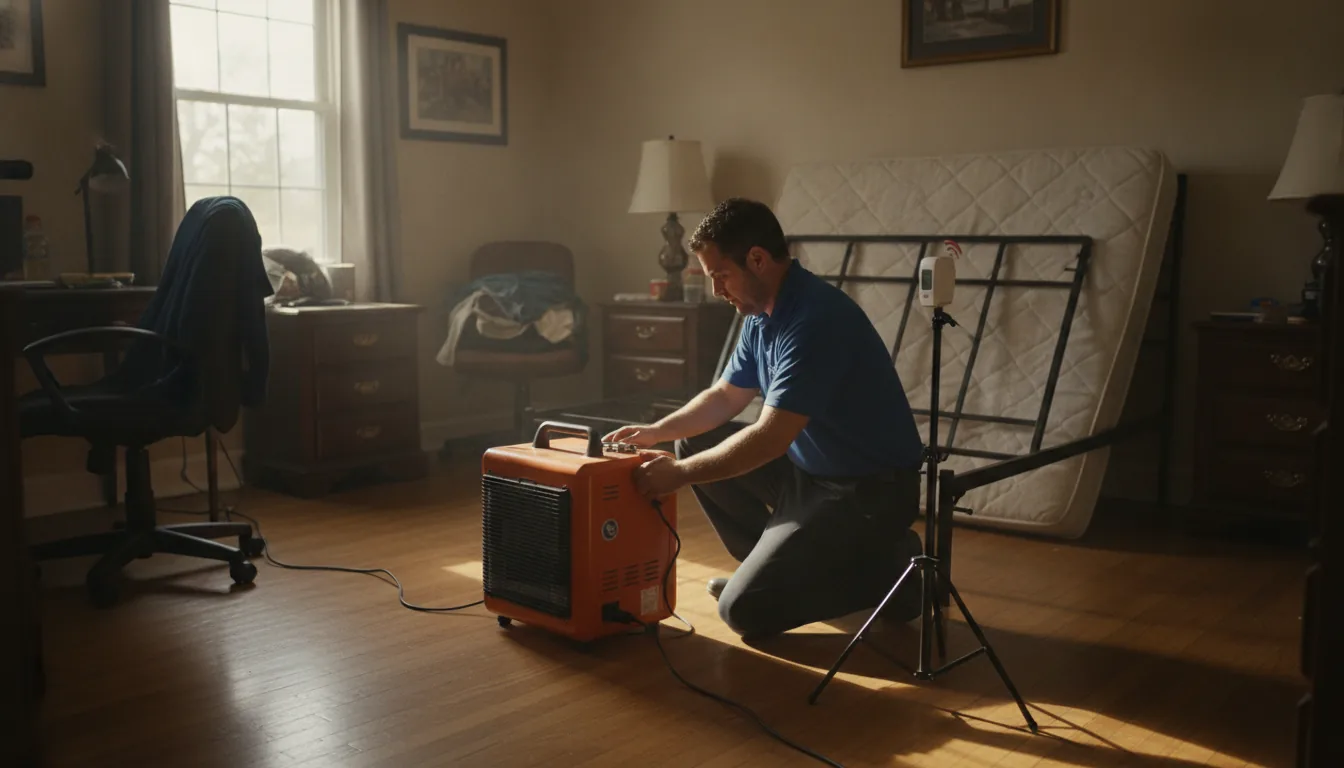
Bed bug adults die at about 118°F and eggs at about 122°F — when those temperatures are held long enough. That is why professionals heat a whole room to around 135°F for several hours: so the lethal temperature actually soaks into mattresses, furniture, and walls. A quick blast of heat, or a warm room that never gets hot in the corners, will not finish the job, and the eggs are usually what survives.
The exact temperature that kills bed bugs and their eggs
Researchers measure a “thermal death point” for each life stage — the temperature that kills it when held steady. For bed bugs, the most-cited figures come from a University of Minnesota study (Kells & Goblirsch, 2011): adults reach near-total mortality at about 118.9°F (48.3°C), while eggs hold out until about 130.6°F (54.8°C). In the field, pest professionals treat 122°F (50°C) as the working lethal target for eggs, with a safety margin on top.
Bed bug death temperatures by life stage
Notice the gap: eggs need meaningfully more heat than the bugs crawling around. That one fact explains most “the bed bugs came back” stories — a treatment that kills the adults but never quite cooks the eggs just resets the clock by a week or two.
Why temperature alone is not the answer — it is temperature × time
Heat does not kill instantly at the low end; it kills over time. The same Minnesota research measured how long each stage survives at a given temperature, and the difference is dramatic. Raise the temperature a few degrees and the kill time collapses from hours to minutes.
How long it takes to kill bed bugs at each temperature
This is why a professional will not just “warm up” a room. The goal is to push the air well past the lethal point — typically around 135°F (57°C) — and hold it for several hours, so even the slowest, most sheltered egg gets a lethal dose of both heat and time.
The real challenge: getting heat where bed bugs actually hide
Here is the catch the temperature numbers leave out. A thermometer in the middle of the room reading 135°F does not mean the inside of your mattress, the back of a dresser drawer, or the gap behind a baseboard is anywhere near that hot. Heat has to soak through dense materials, and that takes time — the core of a packed box spring or a wall void can lag the room by 20, 30, even 40 degrees for hours.
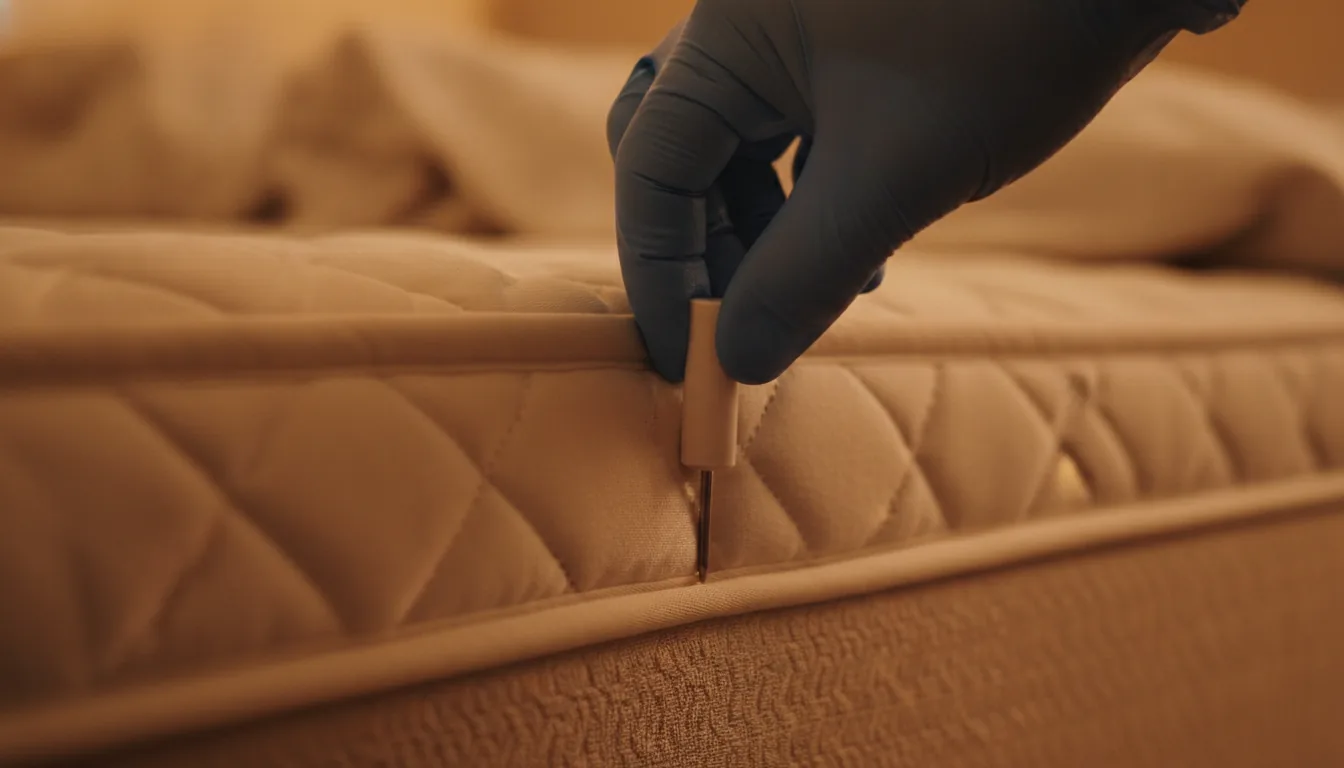
Bed bugs also crawl away from heat, retreating into the coolest cracks they can find — which are exactly the spots that warm up last. So professional heat treatment is never about a single thermostat reading. Technicians run high-output heaters, push air with fans, and place wireless sensors in the coldest spots — under mattresses, inside furniture, along floor-to-wall junctions — then hold the heat until those cold spots cross the lethal line, not just the open room. (Virginia Tech’s extension guide makes the same point: parts of a room can fail to reach lethal temperature even when the air is plenty hot.)
The places bed bugs hide — deep in upholstery, inside walls, under heavy furniture — are the same places that heat up slowest. If a treatment ends before those cold spots have been lethal long enough, survivors (especially eggs) repopulate. Getting the air to temperature is easy; getting it everywhere bed bugs hide, and holding it, is the actual skill.
Will DIY heat kill bed bugs?
Some heat is genuinely useful on a small scale — and some popular “hacks” are a waste of time or downright dangerous. Here is an honest rundown for Fresno households.
Clothes dryer (works — for laundry): a hot dryer cycle, about 30 minutes on high, kills bed bugs and their eggs on clothing, bedding, and other dryer-safe items. This is the single most effective DIY step. Wash and hot-dry everything you can, then seal it in bags. It just cannot treat the room itself.
Steam (works on contact): a steamer puts out 160–180°F+ at the nozzle and kills bed bugs and eggs it directly touches — handy on mattress seams, baseboards, and upholstery. The limits: it only reaches the surface, it cools fast, and it cannot drive heat deep into walls or stuffing.
Turning up the thermostat or running space heaters (does not work): a home HVAC system or a couple of space heaters cannot safely reach and hold 120°F+ evenly across a room, and trying invites a fire or carbon-monoxide hazard. The bugs simply shift to the cool spots the heat never reaches.
A parked car in Fresno summer (limited): a closed car in Central Valley heat can top 130–140°F inside on a 100°F+ day, and sealed bags of infested items left in it through a hot afternoon may get hot enough to help. But it is uneven, it can warp or melt belongings, and it does nothing for the bugs back in the home where they breed.
Does cold kill bed bugs too?
Yes — extreme cold works, it is just slower and harder to pull off at home. Bed bugs and their eggs die at about 0°F (−18°C), but only after roughly four days of continuous exposure. Many home freezers do not run that cold, and items have to stay frozen long enough all the way to the center. If you try it, double-bag the items and leave them frozen at least four days. For most Fresno homes, heat is the faster, more reliable route.
Why professional heat treatment is the dependable fix
Professional heat treatment works because it solves the two problems DIY cannot: it gets the whole room — including the cold, hidden spots — above the lethal temperature, and it holds it there long enough to kill every life stage, eggs included, in a single visit. No pesticide residue, no week-by-week spraying, and no waiting to see whether eggs hatch. Many treatments pair the heat with a light residual product so anything that wanders back in afterward is handled too. Our guide to bed bug heat treatment in Fresno walks through exactly how a service visit works.
Not sure heat is the right call? Compare your options on our heat, chemical, and fumigation comparison, or see the full range of bed bug control in Fresno.
See our bed bug heat treatment →Bed bug temperature FAQ
What temperature kills bed bugs instantly?
Around 122°F (50°C) and above kills bed bugs and their eggs almost on contact. Below that, heat still works but needs time — at 118°F it takes roughly an hour to kill the eggs, and at 113°F it can take several hours. That is why professionals push the air to about 135°F: to be sure every hidden spot crosses the lethal line.
What temperature kills bed bugs and their eggs?
Adult bed bugs die at about 118°F (48°C), but the eggs are tougher and need roughly 122°F (50°C) or higher, held long enough to cook all the way through. Because the eggs are the hard part, any treatment that does not reliably reach egg-killing temperature tends to bounce back a week or two later.
Can bed bug eggs survive a washing machine?
A hot wash helps, but it is the hot dryer that does the killing. Run washable items through a dryer on high for about 30 minutes to kill bed bugs and their eggs, then seal them in bags so they are not re-infested while you treat the rest of the home.
How hot does a room need to be to kill bed bugs?
Professionals heat the air to roughly 135°F (57°C) and hold it for several hours. The extra heat above the 118–122°F lethal point is not overkill — it is what forces a lethal temperature into mattresses, furniture, and wall voids, where a 120°F room would never quite reach.
Does a hot car in Fresno summer kill bed bugs?
Sometimes, for small items. A closed car in Central Valley summer heat can top 130–140°F inside, and sealed bags of belongings left in it through a hot afternoon may get hot enough to help. It is unreliable and can damage your things, though, and it does nothing for the bugs back in your home.
What kills bed bugs permanently?
The dependable fix is reaching egg-killing temperature everywhere bed bugs hide and holding it long enough — which in practice means professional whole-room heat treatment, often paired with a light residual product. DIY heat like a hot dryer or steam helps with laundry and surfaces but rarely finishes an established infestation on its own.
Bed bugs in your Fresno home? Heat is the fastest way out.
Call (559) 472-8200 or request a no-cost inspection — we will confirm what you are dealing with and bring whole-room heat that reaches every hiding spot, eggs included.