
Home / Wasp Control / Wasp & Hornet Nest Removal
Wasp & Hornet Nest Removal in Fresno, CA
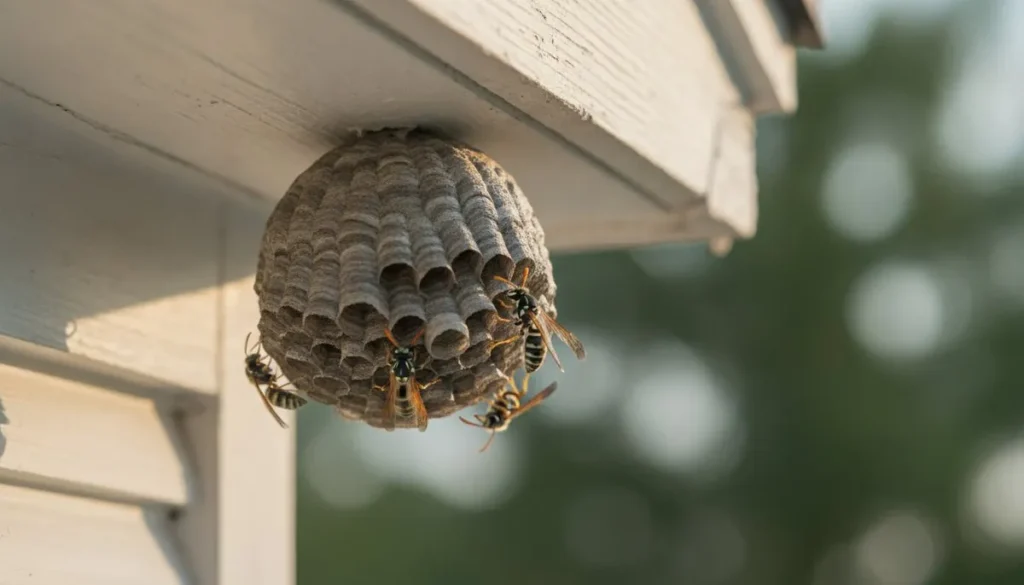
Paper wasp umbrella nest under the eave? Yellowjackets pouring out of a hole in the ground? A licensed Fresno technician removes the nest and treats the colony so the stinging stops - without you on a ladder swatting at them.
A single wasp is a nuisance; a nest is a hazard. By mid-to-late summer a paper wasp or yellowjacket colony in a Fresno backyard can number in the hundreds, and unlike a honey bee, a wasp can sting you again and again. Knocking the nest down yourself is exactly how people end up with a face full of angry yellowjackets. A licensed technician treats the colony first, then removes the nest, so the threat is actually gone.
If you can see an active nest - an umbrella shape under the eave, a papery ball in a tree or wall, or wasps streaming in and out of a hole in the ground or siding - do not spray it at dusk and hope. We treat the colony with a professional product, confirm it is knocked down, and remove the accessible nest, then advise on sealing the void so a new colony does not move into the same spot.
Know what you are dealing with
The right approach depends on the species. Paper wasps build the classic open, umbrella-shaped comb under eaves and patio covers. Yellowjackets are the aggressive ones - they nest in the ground, in wall voids, and in attic spaces, and they defend the nest fiercely. Bald-faced hornets build the big gray football-shaped aerial nests. Mud daubers and cicada killers look alarming but are mostly solitary and far less of a threat.
Common Fresno stinging insects
Ground-nesting yellowjackets and bald-faced hornets defend the colony in numbers, and a person who is allergic can be in real danger from multiple stings. Hardware-store sprays often agitate the colony without reaching the core, and a nest in a wall void should never be sealed before it is treated - trapped wasps chew through into the living space. This is the job to hand to a licensed technician.
How our wasp & hornet removal works
Our nest removal process

What about bees?
Honey bees are pollinators, and we do not exterminate a healthy honey bee colony as a first resort - the right move is usually relocation by a beekeeper. If you are not sure whether you have wasps or bees, send a photo or let us take a look; we will tell you honestly and point you the right way. Wasps, yellowjackets, and hornets, on the other hand, we remove.
Request fast wasp nest removalWhen to call right away
Call sooner rather than later if the nest is near a door, a kid play area, or a walkway, if anyone in the home is allergic to stings, or if you hear buzzing inside a wall. Colonies only get bigger and more defensive as summer goes on, so an early-season nest is far easier (and cheaper) to handle than a late-August yellowjacket fortress.
Wasp & hornet nest removal FAQ
How fast can you remove a wasp nest?
For an active nest near a door, play area, or walkway we treat it as a priority and aim to be out within a day or two, often same-week. Call us and describe where the nest is and how active it is, and we will tell you how quickly we can get there.
Is it safe to remove a wasp nest myself?
A small, early paper wasp nest is sometimes manageable, but yellowjacket and hornet nests are not - they defend the colony in swarms and can sting repeatedly, which is dangerous for anyone allergic. Ground and wall-void nests in particular should be left to a licensed technician with the right product and protective equipment.
Do you remove bees too?
Honey bees are protected pollinators, so we do not exterminate a healthy honey bee colony as a first option - relocation by a beekeeper is usually the right answer, and we can point you in that direction. We do handle wasps, yellowjackets, and hornets. If you are not sure which you have, we will identify it for you.
What does wasp nest removal cost in Fresno?
It depends on the species, the size of the colony, and how accessible the nest is - a paper wasp nest under an eave is quick, while a yellowjacket colony deep in a wall void takes more work. We quote it over the phone or after a quick look, with no hard-sell. There is no cost to have us assess it.
Will the wasps come back after the nest is removed?
The treated colony will not, but the same sheltered spot can attract a new queen next season, which is why we recommend sealing the void or gap once the nest is out. A spring exterior treatment also makes your eaves and patio covers far less inviting for new nests.
Get that nest gone - safely
Do not risk a swarm of stings on a ladder. Call a licensed Fresno technician to remove the nest and knock out the colony - usually within a day or two.