
Home / Tick Control
Tick Control in Fresno, CA
Pulling ticks off the dog after time in the yard, or finding them indoors? Ticks gather in tall grass, brush, and shaded edges and ride in on pets and wildlife. Here is how a licensed Fresno technician treats your yard and breaks the cycle.
Ticks are not just a wilderness problem - they turn up in Fresno-area yards wherever there is tall grass, leaf litter, brush, and shade, and they ride in on dogs, cats, and the wildlife that passes through. Because some ticks can transmit disease to people and pets, they are worth taking seriously. The most effective control combines treating the yard zones where ticks actually gather with reducing the habitat and hosts that support them.
Ticks concentrate at the edges - tall grass, leaf litter, fence lines, woodpiles, and shaded spots where pets rest - not out in the open, sunny lawn. So tick control is about treating those harborage zones, cutting the habitat (mow, clear litter, trim back brush), and addressing the rodents and wildlife that carry ticks in. Pet treatment itself is your veterinarian's department; we handle the yard.
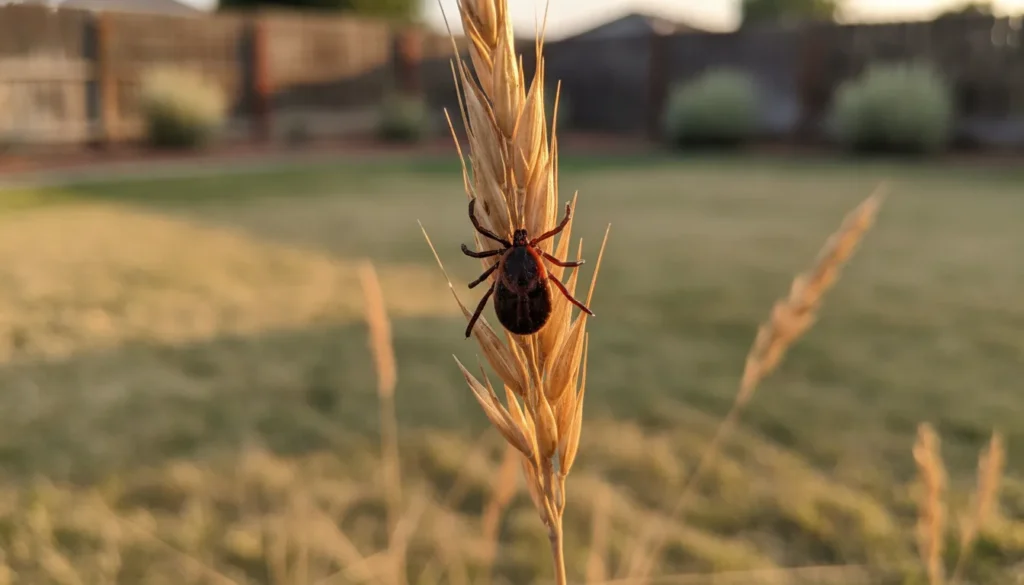
Ticks in the Central Valley
Several ticks turn up around Fresno. The brown dog tick is notable because it can complete its entire life cycle indoors and in kennels, so a dog can seed a home or yard infestation. The Pacific Coast tick is common on wildlife and pets in grassy and brushy areas. The western black-legged tick - the one that can carry Lyme disease in California - is more associated with the coastal ranges and foothills than the open valley floor, but it is a reason to stay careful in brushy, wooded edges. For current health guidance, the CDC and the California Department of Public Health are the authorities to follow.
Where ticks gather in a yard
Tick hot zones and what helps
Remove it promptly with fine-tipped tweezers: grasp close to the skin and pull straight out with steady pressure, then clean the area. Do not crush it or use heat or petroleum jelly. Watch for a rash, fever, or aches in the following days and see a doctor if symptoms appear - and check pets with your veterinarian. The CDC has detailed removal and symptom guidance.
How our yard tick control works
Our tick process
Get a no-cost tick inspectionLocal, licensed, and straight with you
We are a family-owned Fresno company licensed by the California Structural Pest Control Board (since 2020). We treat the yard where ticks live and coordinate with what your vet does for your pets, so you are covering both halves of the problem instead of fighting it one tick at a time.
Tick control FAQ
How do you treat a yard for ticks?
We focus on the zones where ticks actually concentrate - tall grass, brush lines, leaf litter, fence lines, and shaded spots where pets rest - rather than blanketing the open lawn. Alongside treatment, we recommend habitat changes (mowing, clearing litter, trimming brush) and reducing the rodents and wildlife that carry ticks in, which is what makes the results last.
Are there really ticks in Fresno?
Yes. While the valley floor is not as tick-heavy as the coastal foothills, ticks like the brown dog tick and Pacific Coast tick are present in Fresno-area yards, especially where there is tall grass, brush, shade, and wildlife or pet traffic. Brown dog ticks in particular can establish in and around homes with dogs.
Can ticks live inside my house?
Most ticks prefer the outdoors, but the brown dog tick is a key exception - it can complete its whole life cycle indoors and in kennels, so dogs can seed an indoor problem. If you are finding ticks inside, it is worth a professional inspection of both the home and the yard.
Do Fresno ticks carry Lyme disease?
The tick that transmits Lyme disease in California, the western black-legged tick, is more associated with the coastal ranges and foothills than the open valley floor, so valley-floor risk is generally lower - but not zero, especially around brushy, wooded edges. Follow CDC and California Department of Public Health guidance, do tick checks after time outdoors, and see a doctor if you develop a rash or fever after a bite.
What about ticks on my pets?
Treating the animal itself is your veterinarian's department - they can recommend the right tick preventives. Our job is the environment: knocking down the yard population and habitat so your pets pick up far fewer ticks in the first place. The two together work much better than either alone.
Make your yard a place ticks avoid
Get a no-cost inspection from a licensed Fresno technician - we target the yard zones where ticks gather and help you cut the habitat and hosts that keep them coming.