
Home › Learn › Carpet Beetles
Carpet Beetles: ID, Damage & How to Get Rid of Them
How to identify carpet beetles and their fuzzy larvae, tell them apart from bed bugs, and clear them out of your Fresno home for good.
To get rid of carpet beetles, find the food source (wool, hair, lint), deep-vacuum every crevice, launder infested fabrics in hot water, and store clean items in sealed containers. Adults fly in from flowers; the fuzzy larvae do the damage, and they do not bite.
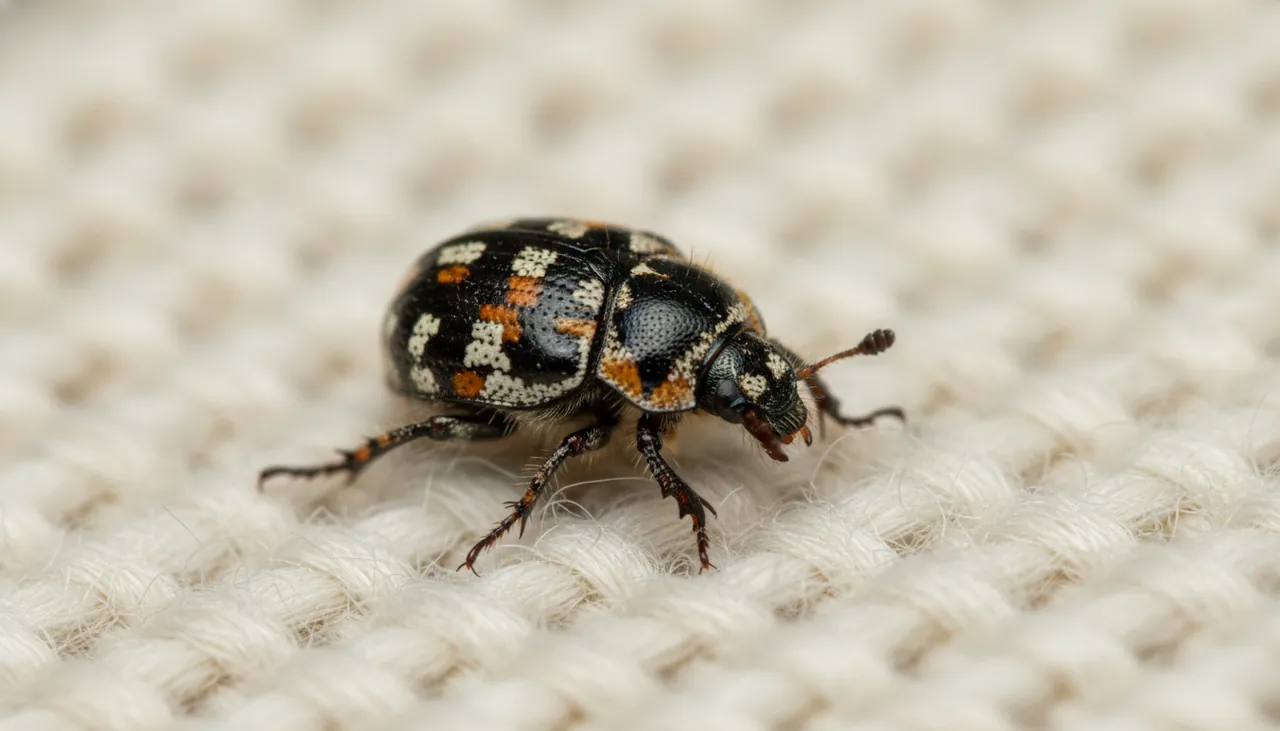
What carpet beetles and their larvae actually look like
Adult carpet beetles are tiny, oval, and only about 1/16 to 1/8 inch long, roughly the size of a pinhead. The most common one in Valley homes, the varied carpet beetle, is mottled with black, white, brown, and yellowish scales; black carpet beetles are solid dark and shiny. Adults are harmless pollen feeders, so you'll often spot them on a sunny windowsill trying to get back outside.
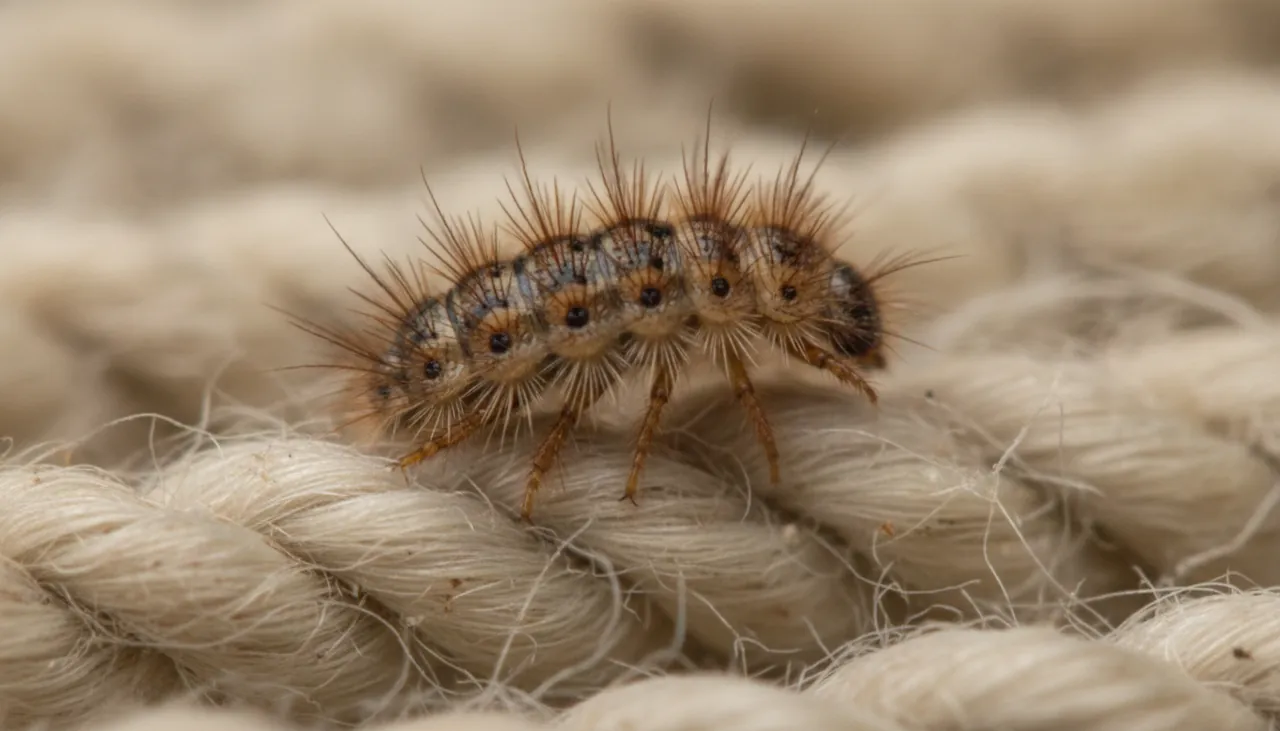
The damage-doers are the larvae. A carpet beetle larva is a small, carrot-shaped, fuzzy creature covered in stiff brown-and-tan bands of bristly hairs, sometimes with a tuft at the tail. It is slow-moving and shies away from light, so it stays tucked in carpet pile, closet corners, and under furniture. Those bristly hairs matter: they are what irritate skin and get mistaken for bites.
Carpet beetle vs. bed bug: how to tell them apart
Carpet beetle larvae are the number-one bug people confuse with bed bugs in Fresno. The fast way to settle it: carpet beetles leave behind shed larval skins and damaged fabric, while bed bugs leave blood smears and dark fecal spots on your mattress and bite you in your sleep. If you are seeing actual blood spots on the sheets, read our guide on how to get rid of bed bugs in Fresno and visit our bed bug control page instead.
Carpet beetle vs. bed bug at a glance
What they eat and the damage they leave
Carpet beetle larvae feed on keratin — the protein in natural animal fibers. That puts wool rugs and clothing, silk, leather, felt, fur, feathers, and pet hair all on the menu. They will also graze on lint, dead insects in light fixtures, and dry stored foods like flour, cereal, and pet food. They generally ignore synthetics like polyester unless those fabrics are soiled with sweat, food, or body oils.
The telltale damage is irregular holes and bare patches in wool sweaters, the threadbare edges of a wool rug, or thinning spots on upholstered furniture. Alongside the holes you will find the cast-off bristly skins the larvae shed as they grow — often the first hard evidence people notice. In Fresno's long warm season, larvae can stay active much of the year, so damage adds up quietly over months.
Where carpet beetles come from in Fresno homes
Most infestations start outdoors. Adult carpet beetles feed on flower pollen and nectar, and in spring they drift in through open windows and doors after a meal in the garden — a common entry point in the Central Valley once the weather warms. Once inside, a female lays eggs near a food source: a wool closet, an heirloom rug, a forgotten box of clothes, or the lint that collects in vents and along baseboards.
The larvae then settle into the dark, undisturbed places we rarely clean — under heavy furniture, inside closets, in floor and wall vents, behind baseboards, and beneath area rugs. That is why a carpet beetle problem can look like it came from nowhere: by the time you see adults at the window, the larvae have been quietly feeding out of sight for weeks.
How to get rid of carpet beetles, step by step
Carpet beetle control is mostly about finding the source and removing the food and eggs. Work through these steps in order:
Find the source. Inspect closets, wool rugs and clothing, upholstered furniture, vents, and dark corners. Look for live larvae, shed skins, and damaged fabric — the worst damage usually sits closest to the egg source.
Deep-vacuum everything. Vacuum carpets, rugs, upholstery, closet floors, baseboards, and vent covers slowly and thoroughly, getting into edges and crevices. Empty the vacuum or bag outside immediately so nothing crawls back out.
Launder or dry-clean infested fabrics. Wash affected washable items in hot water (130°F or hotter) and dry on high heat. Dry-clean wool, silk, or delicate pieces that cannot take hot water.
Treat what you cannot wash. Run a hot dryer cycle on pillows and small items, or seal them in a deep freezer for about two weeks to kill eggs and larvae on items that cannot be heated — short freezes often are not cold enough to finish the job.
Store clean and sealed. Once items are clean, store off-season wool and natural-fiber clothing in airtight bins or garment bags. Larvae cannot reach what they cannot get into, and clean fabric is far less attractive than soiled fabric.
Monitor for several weeks. Keep vacuuming high-risk areas and watch for new adults at windows or fresh damage. A few stragglers are normal; a steady stream means there is still a source you have not found.
Get a Home Pest InspectionWhen it's an infestation worth calling a pro
A handful of beetles at the window after spring is usually a do-it-yourself job. It is a different story when you are finding larvae in multiple rooms, ongoing fabric damage after you have cleaned, recurring skin rashes, or beetles emerging from vents and wall voids — that points to a hidden source like a dead animal in the attic, an old bird or rodent nest, or accumulated lint deep in the ductwork that keeps re-seeding the problem.
At that point a licensed technician can locate the breeding site, treat the harborage areas a vacuum cannot reach, and put a plan in place so it does not come back. Total Pest Control has served Fresno families since 2020; our residential pest control service covers carpet beetles and the other look-alikes that get blamed on them — if you are still not sure what you are dealing with, our guide on bugs that look like cockroaches can help you rule out other culprits.
Carpet Beetle FAQ
Are carpet beetles the same as bed bugs?
No. They are completely different insects. Bed bugs are flat, reddish-brown, apple-seed-sized insects that feed on blood and bite you at night. Carpet beetles are tiny round beetles whose fuzzy larvae eat natural fibers like wool and pet hair. Carpet beetle larvae are simply the most common bug people mistake for bed bugs.
Do carpet beetles bite?
No, carpet beetles do not bite — their mouthparts cannot pierce skin. What people call a "bite" is carpet beetle dermatitis, an allergic skin reaction to the stiff, barbed hairs on the larvae. It shows up as red, itchy bumps and is easily confused with bed bug bites, but it comes from contact, not feeding, so reactions vary from person to person.
What attracts carpet beetles?
Adults are drawn indoors by light and feed on pollen outdoors, so they fly in through open windows in spring. Once inside, larvae are attracted to natural animal fibers — wool, silk, leather, fur, feathers, and pet hair — plus lint, dead insects, and stored foods. Soiled fabric with sweat or food residue is especially appealing to them.
How do I find where carpet beetles are coming from?
Start where the damage is worst, then work outward. Check closets, wool rugs and clothing, upholstered furniture, vents, baseboards, and any spot that stays dark and undisturbed. Look for live larvae, the bristly skins they shed, and holes in fabric. Adults gathering at windows point you toward the room the larvae are feeding in.
Can carpet beetles infest a whole house?
Yes, a heavy or long-ignored infestation can spread room to room, since adults fly and larvae crawl to new food sources. It usually starts in one spot — a closet or rug — and expands if the source is not removed. Catching it early with thorough vacuuming and laundering keeps it from becoming a whole-house problem.
Not sure if it's carpet beetles or something worse?
Our licensed Fresno technicians will identify what is actually in your home and put a plan in place to clear it out. Schedule a no-cost inspection today.