
Home / Ant Control / Carpenter Ant Control
Carpenter Ant Control in Fresno, CA
Carpenter ants do not eat wood like termites - they tunnel through it to nest, and in the Central Valley they zero in on the moisture-damaged wood around roofs, eaves, decks, and plumbing. Here is how a licensed Fresno exterminator finds the nest and stops the damage.
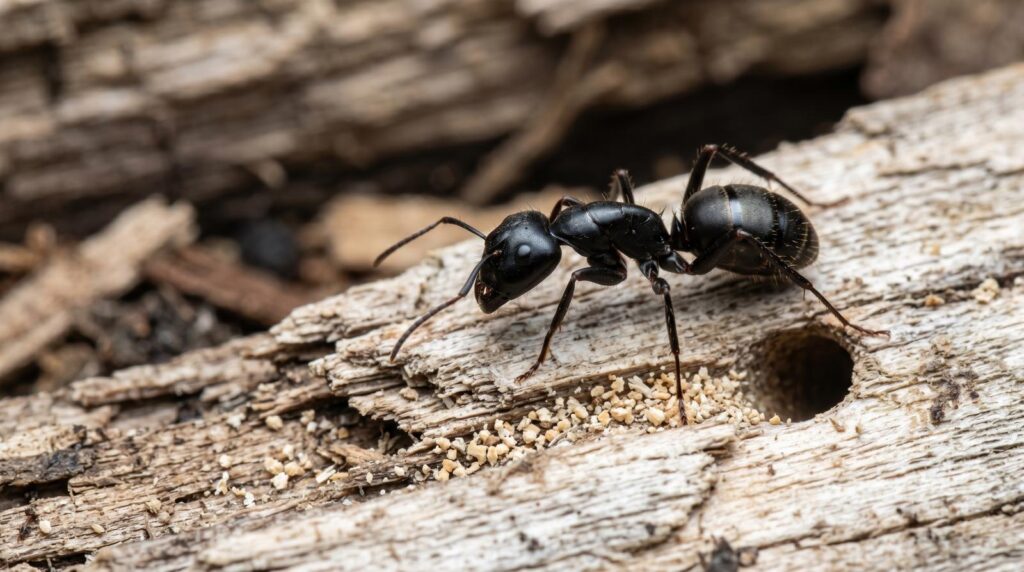
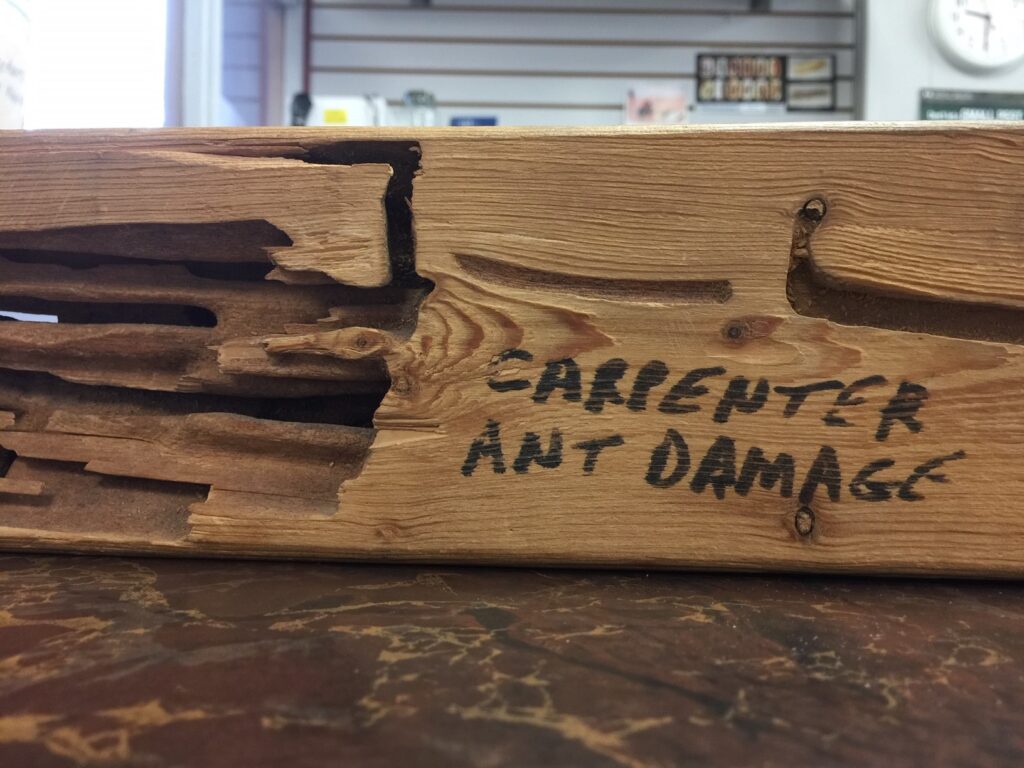
Carpenter ants are the largest ants you will see indoors in Fresno - workers run up to half an inch, usually solid black, sometimes red-and-black. Unlike termites, they do not eat wood. They excavate smooth galleries inside it to build a nest and push the debris out as a tell-tale pile of frass that looks like coarse sawdust mixed with bits of insect. Left alone, a colony enlarges those galleries season after season and weakens the wood it lives in.
If you are seeing big black ants indoors - especially in late winter or spring, near windows, bathrooms, or the kitchen - plus little piles of sawdust-like frass, you very likely have a carpenter ant nest in or near the structure. Over-the-counter sprays kill the foragers you see but rarely reach the hidden parent nest, so the colony rebuilds. Real control means finding and treating the nest itself.
Carpenter ants vs. termites: how to tell them apart
This is the question that matters most, because the two are treated completely differently and people mix them up constantly. Both can swarm with wings indoors, and both damage wood - but carpenter ants leave clean galleries and sawdust, while termites pack their tunnels with mud. If you are not sure which you have, our guide on carpenter ants vs. termites walks through it, and our inspection settles it for certain.
Carpenter ants vs. termites at a glance
Why carpenter ants thrive in the Central Valley
Carpenter ants want wood that is already softened by moisture, and Fresno homes hand it to them: roof and gutter leaks, irrigation overspray against the stucco, soaker lines along the foundation, deck posts and fascia boards, and the damp framing under a slow plumbing leak. The parent nest is frequently outdoors - in a tree, stump, fence, or woodpile - while satellite nests of workers and older larvae move into the warm, dry voids of your walls. That split is exactly why the trail on your counter can lead to a nest a hundred feet away.
Why DIY sprays usually backfire
Store-bought repellent sprays kill the workers you can see and can trigger the colony to bud - split off and relocate its satellite nests - which scatters the problem and makes it harder to find. The foragers on your counter may be nesting outdoors entirely, so wiping them out never touches the egg-laying queen. Effective treatment uses non-repellent products and baits the workers carry home to her.
How our Fresno carpenter ant treatment works
Carpenter ants are a find-the-nest problem, not a spray-the-ant problem. Our process is built around tracing the colony back to its source - indoors and out - and breaking it at the queen.
Our carpenter ant process
Get a no-cost carpenter ant inspectionProtect your home structure
Carpenter ants rarely collapse a house, but they are a reliable signal that something in your home stays wet - and that combination is worth handling early. As a family-owned Fresno company licensed by the California Structural Pest Control Board (since 2020), we treat the ants and flag the moisture issue behind them, so you fix the cause and not just the symptom.
Carpenter ant control FAQ
Do carpenter ants cause as much damage as termites?
Not as quickly. Termites eat wood continuously, while carpenter ants only excavate it for nesting, so termite damage usually accumulates faster. But a mature carpenter ant colony left in place for years can still cause meaningful structural damage, especially in wood that is already moisture-softened. Their presence is also a red flag for a hidden moisture problem.
How do I find a carpenter ant nest?
Look for frass (sawdust-like debris), a faint rustling in walls at night, and foraging trails that lead toward a wall void, window frame, or outdoors. Parent nests are often outside in a tree, stump, fence, or woodpile, with satellite nests inside. Tracing the trail back to the nest is the part homeowners struggle with - and the part that decides whether treatment actually works.
Will store-bought ant spray get rid of them?
Usually not for long. Sprays kill visible foragers but rarely reach the queen, and repellent products can cause the colony to split and spread. Baits the workers carry back to the nest, placed correctly, are far more effective - which is what a professional treatment is built around.
What time of year are carpenter ants active in Fresno?
You will usually notice them most in late winter and spring as the colony wakes up and winged swarmers appear, but in the Central Valley mild climate they can forage much of the year. Seeing winged carpenter ants indoors typically means a nest is inside the structure.
Do you treat the outdoor nest too?
Yes. Because the parent nest is frequently outdoors, we inspect and treat the full picture - the structure, the trails, and exterior nest sites like trees, stumps, and woodpiles - so the colony cannot simply re-supply from outside.
Stop carpenter ant damage before it spreads
Seeing large black ants or little piles of sawdust in your Fresno home? Get a no-cost inspection from a licensed local exterminator - we find the nest, not just the trail.