
Landlord or Tenant: Who Is Responsible for Pest Control in California?
California law is clear about who pays for pest control in a rental and who has to fix it. Here is how responsibility works for bed bugs, cockroaches, rodents, and ants, plus what to do when a problem is not being handled.
✓ Grounded in CA Civil Code §1941.1
✓ Bed bugs, roaches, rodents & ants
✓ Licensed Fresno exterminator (SPCB)
✓ Same-week scheduling
★★★★★ Trusted by Fresno landlords and tenants since 2020
Get a No-Cost Inspection
Tenant or landlord — tell us the situation and we will get it handled fast.
Are landlords responsible for pest control in California?
In most cases, yes. Under California Civil Code §1941.1, landlords must keep rental units habitable, which courts have long read to include keeping the property free of insects, rodents, and other vermin. So a landlord is generally responsible for arranging and paying for professional pest control when an infestation affects habitability — especially in multi-unit buildings, where pests spread through shared walls. The main exception is when a tenant's own negligence clearly caused the problem.
California strengthened these protections with bed-bug-specific rules (Civil Code §§1942.5 and 1954.603): a landlord cannot rent a unit they know has bed bugs, must give tenants bed bug information, and must act on reports. Below is how responsibility breaks down by pest and by situation — and what you can do if a problem is not being handled.
This page is general information for California renters and rental owners, not legal advice.
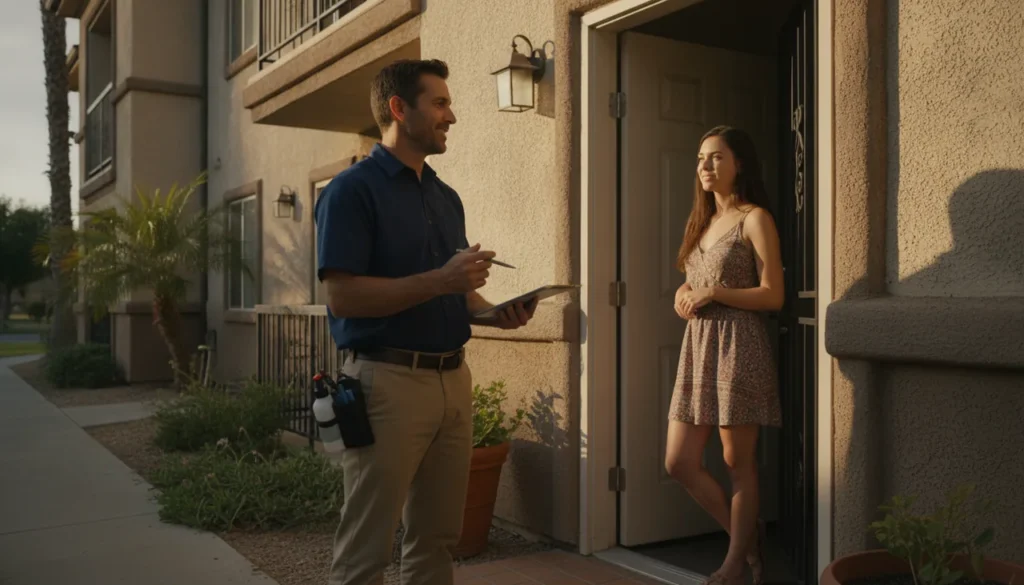
Who pays for each type of infestation?
The habitability rule covers the most common household pests. Here is how it typically applies in California rentals.
Bed bugs
Almost always the landlord's responsibility. California law specifically bars landlords from renting units with known bed bugs and requires them to act on tenant reports. Because bed bugs spread between units, landlords are also expected to inspect and treat adjacent apartments. See our bed bug guide for landlords.
Cockroaches
A roach infestation almost always counts as a habitability issue, making treatment the landlord's responsibility — unless it is clearly tied to one tenant's sanitation. In apartments, roaches travel through shared plumbing and walls, so real control usually means treating neighboring units too.
Rodents (rats & mice)
Rats and mice are a health-and-safety hazard, so removing them and sealing entry points is generally the landlord's duty under the warranty of habitability. The structural exclusion work — gaps, vents, and crawl spaces — falls to the landlord, not the tenant.
Ants
Most ant infestations are the landlord's responsibility when they affect habitability, though a minor, tenant-caused issue (like food left out) can shift to the tenant. Large or recurring ant problems tied to the building or landscaping fall to the landlord.
Common questions about pest control in California rentals
Can a tenant withhold rent for pest control in California?
Possibly, but carefully. If a landlord will not fix an infestation that makes a unit uninhabitable, California tenants may have options like repair-and-deduct (Civil Code §1942) or rent withholding — but only after giving proper written notice and a reasonable time to fix it. These remedies have strict rules, so document everything and consider legal advice before withholding rent.
How long does a landlord have to fix a pest problem in California?
California law requires landlords to address habitability problems within a reasonable time after written notice. For a serious infestation, reasonable usually means days, not months. Thirty days is often cited as an outer limit for non-urgent repairs, but a spreading bed bug or rodent problem is generally expected to be handled much faster.
Can a landlord charge a tenant for pest control?
Sometimes. A landlord can generally bill a tenant for pest control only when the lease allows it and the tenant's own negligence caused the infestation — for example, severe sanitation issues. A landlord cannot pass on the cost of routine or building-wide pest control that is part of normal habitability.
What if the tenant caused the infestation?
If a tenant's negligence clearly caused the problem, responsibility and cost can shift to the tenant. In practice this is the exception, and it has to be documented. For most infestations in older or multi-unit Fresno buildings, the source is structural or shared, which keeps responsibility with the landlord.
Is a landlord required to provide pest control in California?
Yes, when an infestation affects habitability. California's implied warranty of habitability (Civil Code §1941.1) requires landlords to keep units free of vermin, which means providing professional pest control for problems like bed bugs, roaches, and rodents. A landlord cannot waive this duty in the lease.
Get pest control handled — on the record
Licensed Fresno exterminators serving landlords, property managers, and tenants across Central California. No-cost inspection and clear documentation, every time.