
Home › Learn › Prevention
How to Keep Wasps Away: What Works and What’s a Myth
The honest version: a few things genuinely keep wasps away, and a lot of popular tricks barely do anything. Here’s what actually works — and the truth about peppermint oil, fake nests, traps, and WD-40.
The reliable ways to keep wasps away are unglamorous: remove what attracts them (exposed food, sugary drinks, open trash, ripe fruit, standing water), seal off the sheltered spots where they like to nest, and check for new nests early in spring while they’re small. The popular shortcuts — peppermint oil, fake nests, WD-40 — range from “modest and short-lived” to “myth.”
Take away the food and the nest sites and you take away the wasps. Keep trash and recycling closed, clean up fallen fruit and spills, screen vents and seal eave gaps, and knock down tiny starter nests in spring. Repellent sprays and traps can help a little, but nothing replaces removing the attractants — and nothing safely replaces a pro for an established nest.
What attracts wasps to your yard?
Wasps come for two things: food and shelter. In late summer the big draw is sugar and protein — open soda cans, juice, fallen fruit, pet food, meat on the grill, and uncovered trash and recycling. Standing water (pet bowls, saucers, clogged gutters) brings them in to drink. For nesting, they want sheltered, protected spots: eaves, soffits, patio covers, door frames, wall voids, attic vents, and old rodent burrows in the lawn. The more of these your yard offers, the more wasps you’ll see.
What actually keeps wasps away
These are the steps that reliably reduce wasp pressure around a Central Valley home:
Keep trash and recycling bins tightly closed, and rinse sugary residue from cans and bottles before they go in.
Clean up fallen fruit, spills, and pet food, and cover food and drinks when you’re eating outside.
Remove standing water — empty saucers and pet bowls, fix drips, and clear clogged gutters.
Seal the openings wasps nest in: screen attic and gable vents, and caulk gaps around eaves, soffits, fascia, and where pipes enter walls.
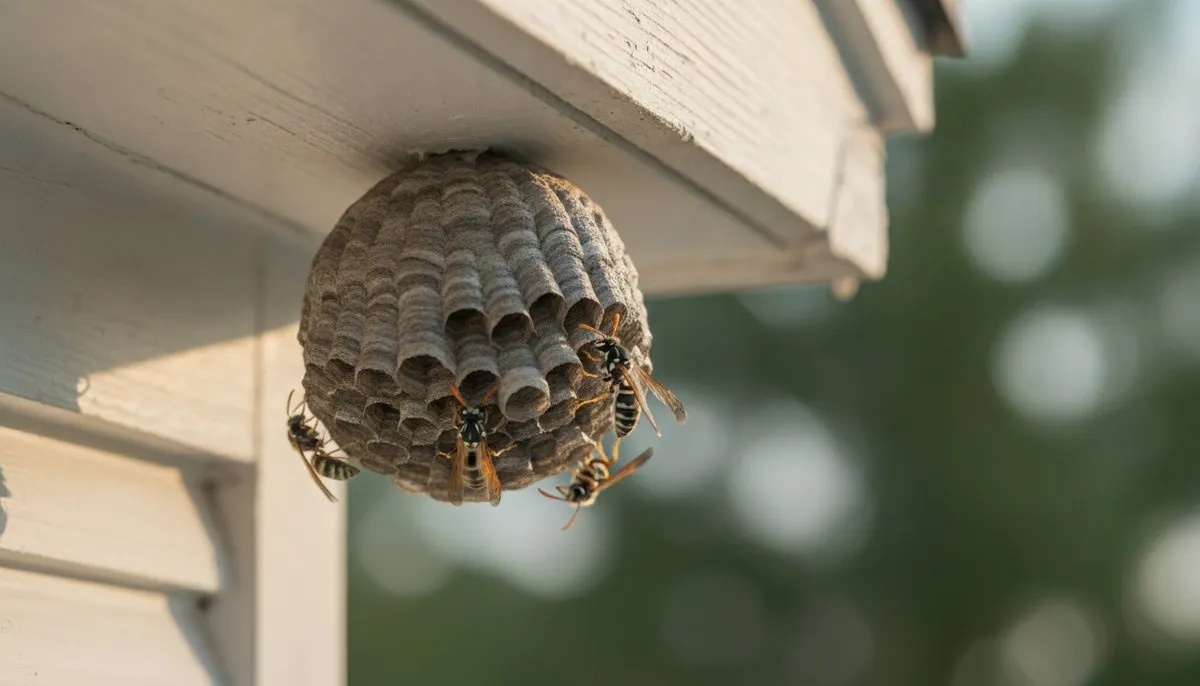
Walk the eaves and yard in spring and early summer and knock down small starter nests before a queen’s colony grows — one nest in May is far easier than a thousand wasps in August.
Keep the lawn thick; bare, sun-baked patches invite ground-nesting wasps.
What smells do wasps hate? (And do repellents work?)
Wasps are put off by some strong plant oils — peppermint, clove, lemongrass, and eucalyptus are the ones with at least some research behind them, and a peppermint-oil spray can discourage wasps from building in a freshly cleaned eave. The catch is that these wear off in a day or two, need constant reapplication, and won’t do anything to an established nest. Use them as a minor, short-term deterrent on a clean surface — not as your main line of defense.
Wasp myths: peppermint oil, fake nests, traps & WD-40
Popular wasp tricks, honestly rated
When prevention isn’t enough
Prevention keeps numbers down, but once a colony is established — especially a hidden yellowjacket nest in the ground or a wall, or an enclosed hornet nest — deterrents won’t move it, and DIY removal is where people get swarmed. If you’re finding a real nest, see what the nest looks like to identify it, and have an active or hidden nest removed professionally. We also offer recurring exterior service that knocks down new nests before they take hold.
Get wasps handled for good →Wasp prevention FAQ
How do I keep wasps away from my house?
Remove the attractants and the nest sites: keep trash and recycling closed, clean up fallen fruit and spills, eliminate standing water, seal eave and vent gaps, and knock down small starter nests in spring. Those steps do far more than any spray or trap.
What smell do wasps hate the most?
Peppermint is the most cited, along with clove, lemongrass, and eucalyptus. A peppermint-oil spray can discourage wasps from building on a freshly cleaned surface, but the effect is mild and fades within a day or two, so it needs frequent reapplication and won’t affect an existing nest.
Does peppermint oil really repel wasps?
Somewhat. There is research showing mint oils deter wasps from nesting, so it can help on a clean eave as a short-term measure. But it wears off quickly and does nothing to an established nest, so treat it as a minor deterrent, not a solution.
Do wasp traps work?
Traps do catch wasps and are useful for monitoring or thinning out foragers. The downside is that baited traps can attract more wasps into your yard, so place them at the property’s edges, away from patios and doors — and remember they don’t remove the nest.
Does WD-40 keep wasps away?
Not as a real repellent. WD-40 can kill wasps on contact and may briefly discourage building under an eave, but it isn’t a dependable deterrent and it’s flammable, which makes spraying it around nests risky. Sealing and cleaning the area works better.
Same nest, every summer?
Call (559) 472-8200 or request a no-cost inspection — we’ll remove the nest and set up recurring service that stops new ones before they start.