
Home › Learn › Pantry Pests
Pantry Pests: Moths & Weevils in Your Food
Indian meal moths and weevils almost always ride in on a sealed bag from the store. Here's how to find the source and shut it down.
Pantry moths and weevils get into your food by hitching a ride inside store packaging, not from a dirty kitchen. To get rid of them, find and toss the infested package, vacuum and wipe the shelves, freeze suspect dry goods, and switch everything to airtight containers.
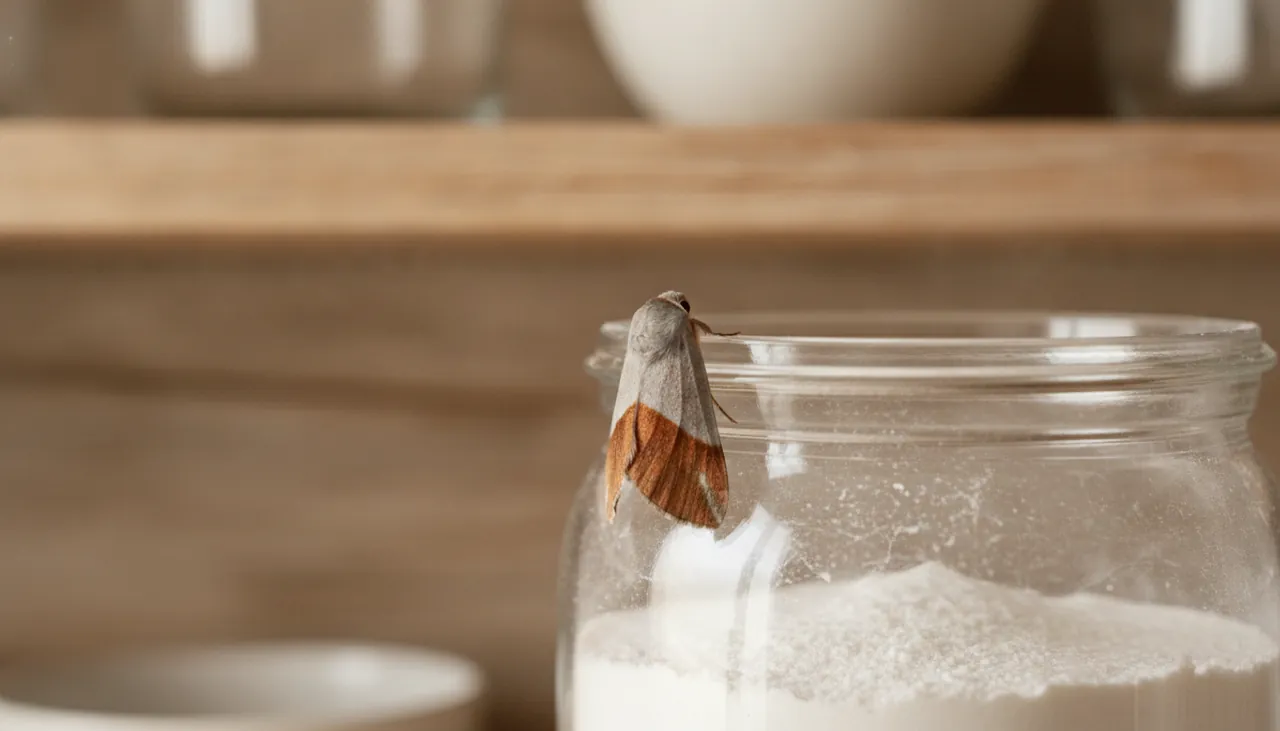
Moth or weevil? Meet the two main culprits
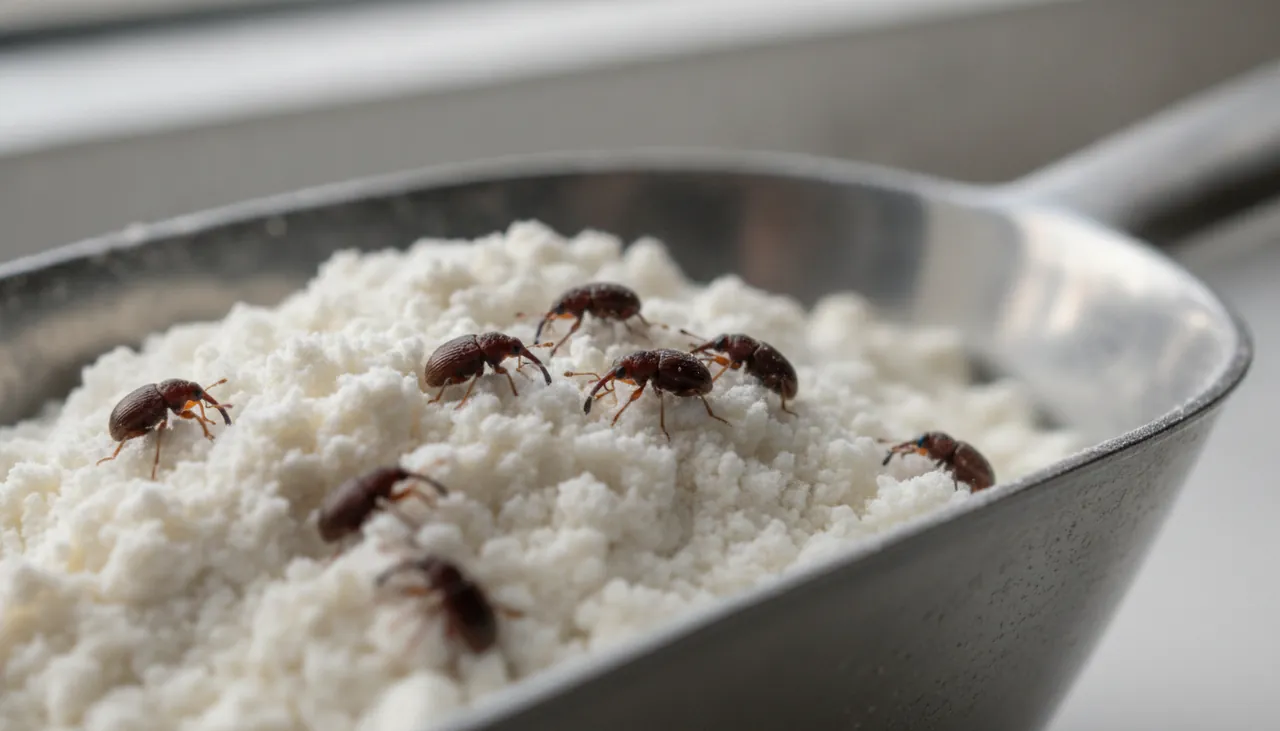
When something is crawling or fluttering in your dry goods, it's almost always one of three insects. The Indian meal moth is the flier — a small moth with two-toned wings whose cream-colored larvae spin the telltale silk webbing. Weevils are tiny snout-nosed beetles that live and breed inside whole grains like rice, wheat, and dried beans. The flour beetle is a small reddish-brown beetle that infests milled products like flour and cornmeal. Knowing which one you have tells you exactly where to look.
The three pantry pests at a glance
They came from the store, not a dirty kitchen
This is the part that surprises people: a pantry infestation is rarely a cleanliness problem. The eggs were almost certainly already inside a package when you carried it home. These insects get into grain, flour, and dried goods at the warehouse, mill, or storage facility, and a few tiny eggs slip through in a sealed bag or box. You did nothing wrong — you just brought home one bad package.
What turns one stray package into a full takeover is heat. These pests breed faster the warmer it gets, and a Central Valley pantry through our long, warm season is close to ideal for them. We see this snowball most often after summer bulk-store trips in Fresno — a single overlooked bag of birdseed or bulk flour can seed the whole shelf within a few weeks. The same warm-season speed-up drives a lot of indoor pest activity here, which is why we put together a companion guide on how to pest-proof your Fresno home.
How to find the source package
Before you start throwing things away, find ground zero — there's usually one heavily infested package feeding everything else. Pull every dry good off the shelf and inspect each one in good light. Webbing or clumping that holds its shape when you tilt the container is the moth signature. For weevils and flour beetles, pour a small amount onto a white plate and watch for a minute — movement gives them away.
Check the usual suspects first: opened cereal and flour, baking mixes, rice, dried fruit, nuts, spices, pet food, and birdseed. Don't skip unopened packages either — meal-moth larvae can chew through thin plastic and cardboard, so a sealed box is not automatically safe. The package with the most webbing, live insects, or dense clumping is your source.
How to get rid of pantry moths and weevils
Once you've found the source, work through these steps in order. The goal is to remove every life stage — eggs, larvae, and adults — so nothing is left to restart the cycle.
Bag and toss the source package immediately, plus any nearby food showing webbing, clumping, or live insects. Take the bag straight to an outdoor bin so adults can't re-emerge inside.
Empty the shelves completely and vacuum them — corners, cracks, shelf-bracket holes, and the underside of shelves. Larvae crawl out of food to pupate and hide in these seams, so this step matters as much as tossing the food.
Wipe every surface with warm soapy water or a vinegar solution. Skip pesticide sprays inside a food pantry; thorough physical removal works better here and keeps chemicals away from your food.
Freeze any dry goods you want to keep but suspect may be contaminated. Seal them in a bag and freeze at 0°F for at least 3 to 4 days; this reliably kills larvae and adults, while eggs are tougher and may need longer, so when in doubt, discard it instead.
Let the shelves dry fully, then move everything you keep into sealed glass or hard-plastic containers before it goes back. Loose bags and boxes are how a single survivor restarts the whole problem.
Keeping them from coming back
The single best prevention step is airtight storage. Transfer flour, rice, cereal, pet food, and birdseed into glass or rigid-plastic containers with gaskets. This does two things at once: it traps any eggs that rode in from the store so they can't spread, and it locks out moths looking for a new place to lay. Practice first-in, first-out — use older packages before newer ones, and don't let a forgotten bag sit at the back of the shelf for a year.
As for the popular bay-leaf trick — tucking bay leaves, cloves, or garlic into your containers? It's a myth worth a reality check. There's no solid evidence these reliably repel pantry pests, and they won't kill eggs already in your food. They're harmless to try, but don't let them stand in for sealed containers and routine inspection, which are what actually work.
Get a Home Pest PlanWhen it keeps spreading and you need a pro
Most pantry infestations are a one-pantry job you can handle yourself. But if moths keep reappearing weeks after a thorough cleanout, the source is hiding somewhere you haven't looked — under-shelf gaps, an overlooked bag of pet food in the garage, or pupae tucked into a wall void or ceiling corner. Adult moths can travel between rooms, so a recurring problem usually means there are still larvae developing out of sight.
That's when a licensed inspection pays off. We've handled pantry pests in Fresno homes since 2020, and a tech can trace the source you can't find, treat the harborage areas safely, and confirm it's actually gone. If pantry moths keep coming back, our residential pest control team can pinpoint where they're breeding and break the cycle.
Pantry Pest FAQ
How do I get rid of pantry moths permanently?
Find and discard the infested source package, then vacuum and wipe down every shelf, corner, and crack where larvae hide. Move all remaining dry goods into airtight glass or hard-plastic containers and inspect new groceries before storing them. "Permanent" comes from sealed storage plus routine checks — that combination removes the food source and blocks re-entry so the cycle can't restart.
Where do pantry bugs come from?
Almost always from inside store packaging. Indian meal moths, weevils, and flour beetles get into grain, flour, and dried goods at the mill, warehouse, or storage facility, and a few eggs slip home sealed in a bag or box. It's not a sign of a dirty kitchen. Warmth speeds their breeding, so a single package can snowball fast in a warm Central Valley pantry.
Are weevils in flour safe to eat?
Accidentally eating a few weevils or their eggs isn't considered harmful — they aren't toxic and the eggs are essentially invisible in flour. That said, heavily infested flour can develop an off taste and lose quality, so most people discard it. This isn't medical advice; if you have a specific allergy or health concern, check with a professional. When in doubt, throw it out.
Do I have to throw out all my food?
No — usually just the infested source package and any nearby items showing webbing, clumping, or live insects. Sealed cans, jars, and anything in genuinely airtight containers are typically fine. Dry goods you want to keep but aren't sure about can be frozen at 0°F for 3 to 4 days to kill active insects, then stored sealed. When uncertain, discarding is the safe call.
What keeps pantry moths away?
Airtight storage is the most reliable defense — glass or rigid-plastic containers with sealed lids lock pests out and trap any that rode in from the store. Add first-in, first-out rotation, regular shelf inspection, and prompt cleanup of spills. Bay leaves and similar home remedies are popular but unproven, so treat them as optional rather than your main line of defense.
Pantry moths that won't quit?
If moths or weevils keep coming back after you've cleaned out the pantry, the source is hiding somewhere you can't see. We've kept Fresno kitchens protected since 2020 — schedule a no-cost inspection and we'll find it.