
Home › Learn › Fleas
Sand Fleas vs. Fleas: Are Sand Fleas Real Fleas?
Most of what people call “sand fleas” are not fleas at all — they are tiny beach crustaceans that do not infest homes. The flea that matters in your Fresno home is the cat flea. Here is the difference.
Despite the name, most “sand fleas” are not fleas at all. The term gets used for a few completely different creatures — most commonly tiny beach-dwelling crustaceans (sand hoppers) that hop around in wet sand and seaweed but do not infest homes or pets. There is also a genuine flea called the chigoe flea, but it is a tropical species not found in California homes. The flea that actually matters in a Fresno house is the cat flea — the one that infests pets, carpets, and yards. If you are dealing with fleas indoors or on a pet, that is the one to focus on.
“Sand fleas” on a beach are usually harmless crustaceans, not insects, and they will not infest your home. The chigoe flea is a real flea but tropical, not a California pest. The flea in your home or on your pet is the cat flea — treat for that.
What people call “sand fleas”
The everyday “sand flea” — the thing people feel hopping around their feet at the beach — is almost always a sand hopper (a beach amphipod), a small crustacean, not an insect and not a true flea. They live in the wet sand and decaying seaweed along the shoreline, are most active around dusk, and feed on washed-up organic matter. They get the “flea” nickname purely because they are small and jumpy. They do not live in carpet, do not infest homes, and cannot survive away from the beach environment.
The chigoe flea (a real flea, but not here)
Confusingly, “sand flea” is also a nickname for the chigoe flea (Tunga penetrans), which genuinely is a flea. It lives in sandy soil in tropical and subtropical regions — parts of the Caribbean, Central and South America, sub-Saharan Africa — and a female can burrow into skin (usually the feet) to feed, a condition called tungiasis. It is a travel-related concern in those regions, not a pest of California homes or yards. Unless you have recently traveled to the tropics, this is not what is biting you in Fresno.
True fleas: what actually infests your home
The flea responsible for nearly all home and pet infestations in the Central Valley is the cat flea (Ctenocephalides felis) — and despite the name, it is the common flea on dogs as well as cats, and the one that bites people around the ankles. It lives in carpet, pet bedding, and the yard, and it is the species every part of our flea content is about. See what a flea looks like to identify it, and the flea life cycle for why it is so hard to clear.
Sand flea vs. chigoe flea vs. cat flea
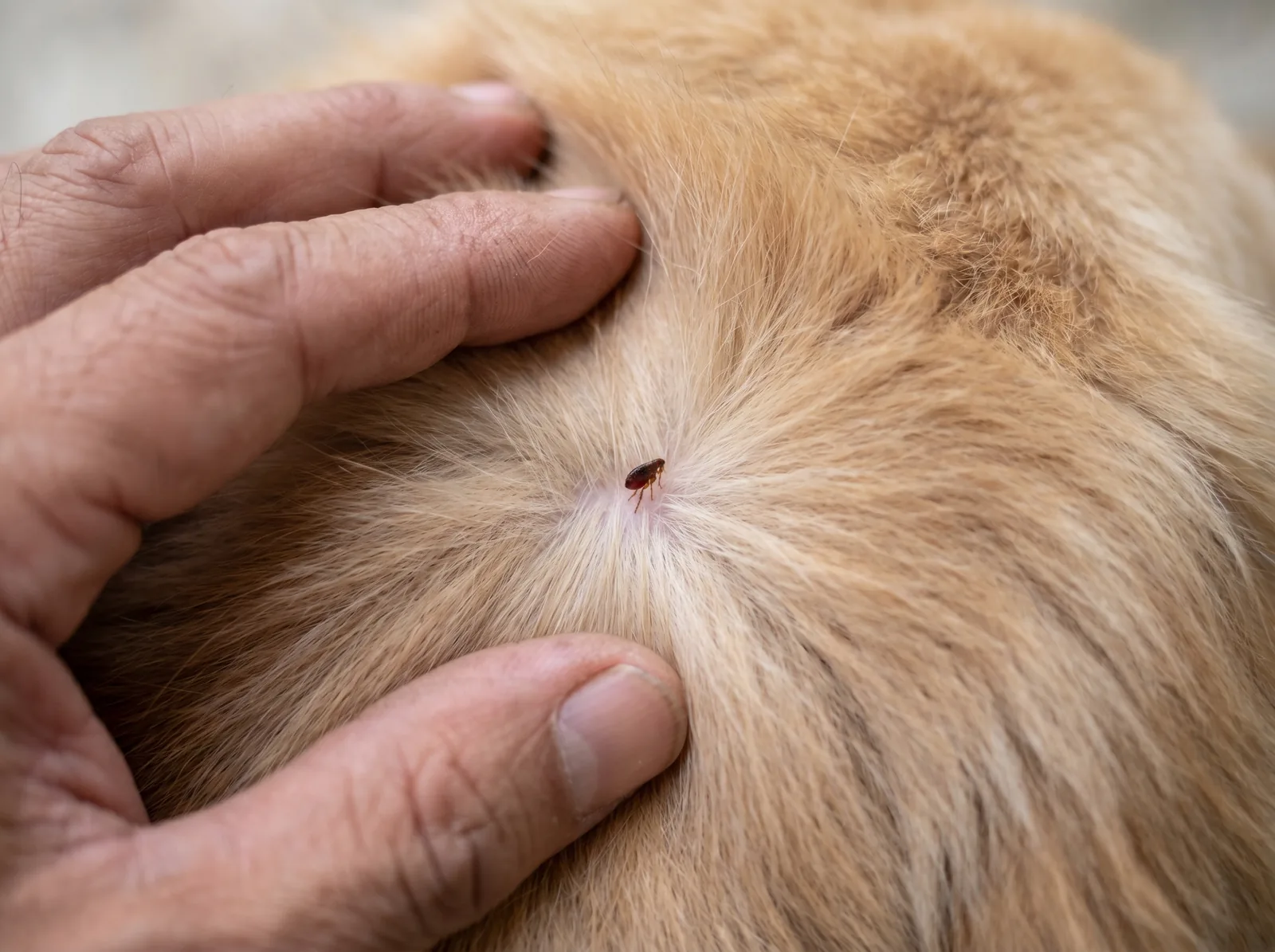
Do “sand fleas” bite, and are they dangerous?
Beach sand hoppers can occasionally nip if handled or trapped against skin, but they do not seek out people, do not transmit disease, and cannot infest you or your home — the “bites” people get at the beach are often from other small biting flies in the same areas. The chigoe flea is the genuinely harmful “sand flea,” but only in the tropical regions where it lives; tungiasis is documented by the CDC as a travel-associated condition. For anyone in the Central Valley, neither is the cause of fleas in the house — the cat flea is.
Why this matters in Fresno
Fresno is inland — there are no beaches and therefore no beach “sand fleas,” and the tropical chigoe flea does not live here either. So if you are finding fleas on a pet, getting bitten around the ankles, or seeing specks in the carpet, you are dealing with the cat flea, full stop. Skip the sand-flea rabbit hole and treat for the real thing: the pet, the home, and the yard together. Our flea control covers exactly that.
Got real fleas? See our flea control →Sand fleas FAQ
Are sand fleas real fleas?
Usually not. The common beach “sand flea” is a small crustacean (a sand hopper), not an insect or a true flea. There is a real flea called the chigoe flea that is sometimes called a sand flea, but it is tropical and not found in California homes.
Do sand fleas bite humans?
Beach sand hoppers may occasionally nip but do not seek out or infest people and are essentially harmless. The tropical chigoe flea can burrow into skin (tungiasis), but only in the regions where it lives — not in California.
Are sand fleas dangerous?
Beach sand hoppers are not dangerous and transmit no disease. The chigoe flea can cause tungiasis in tropical areas, but it is a travel-related concern, not a risk in the Central Valley.
Can sand fleas infest my house?
No. Beach sand hoppers cannot survive away from the shoreline and do not live in homes, and the chigoe flea is not present in California. Fleas that infest homes are cat fleas, which come from pets and the yard.
Do we have sand fleas in Fresno or California?
Not the home-infesting kind. Fresno is inland with no beaches, and the tropical chigoe flea is not found here. Indoor and pet flea problems in the Central Valley are caused by the cat flea.
If it’s in your home or on your pet, it’s a real flea — and we can clear it.
Call (559) 472-8200 or request a no-cost inspection — we treat the cat flea where it actually lives.