
Home / Learn / Termite Damage vs Water Damage
Termite Damage vs. Water Damage: How to Tell the Difference
Termites and a slow leak can leave behind damage that looks almost identical. Here is how to tell termite damage from water damage in a home, why the two so often appear together, and when you need a professional inspection.
Termite damage and water damage are the two most commonly confused problems in a home, and for good reason: both attack soft structural wood, both thrive where there is moisture, and both can hollow out a beam before you ever notice. The short answer is that termite damage follows the wood grain in hollow galleries and comes with mud tubes, frass, or discarded wings, while water damage radiates out from a moisture source as staining, swelling, and a soft, spongy texture. This guide walks through each set of signs, why the two so often appear together, and how to tell which one you are dealing with in a Fresno-area home.
Why termite and water damage look so similar
Both problems target the same material under the same conditions. Wood is strongest when it is dry and intact; moisture softens it, and that softer wood is exactly what subterranean termites prefer to eat. A slow roof or plumbing leak can quietly soften framing for months, creating the damp, dark conditions termites need, and then the termites finish the job the water started. That overlap is why inspectors rarely treat the two as separate questions: where you find one, you often find the other.
Signs of termite damage
Termites eat wood from the inside out, so the surface can look fine while the interior is honeycombed. California has two main types, and they leave different calling cards.
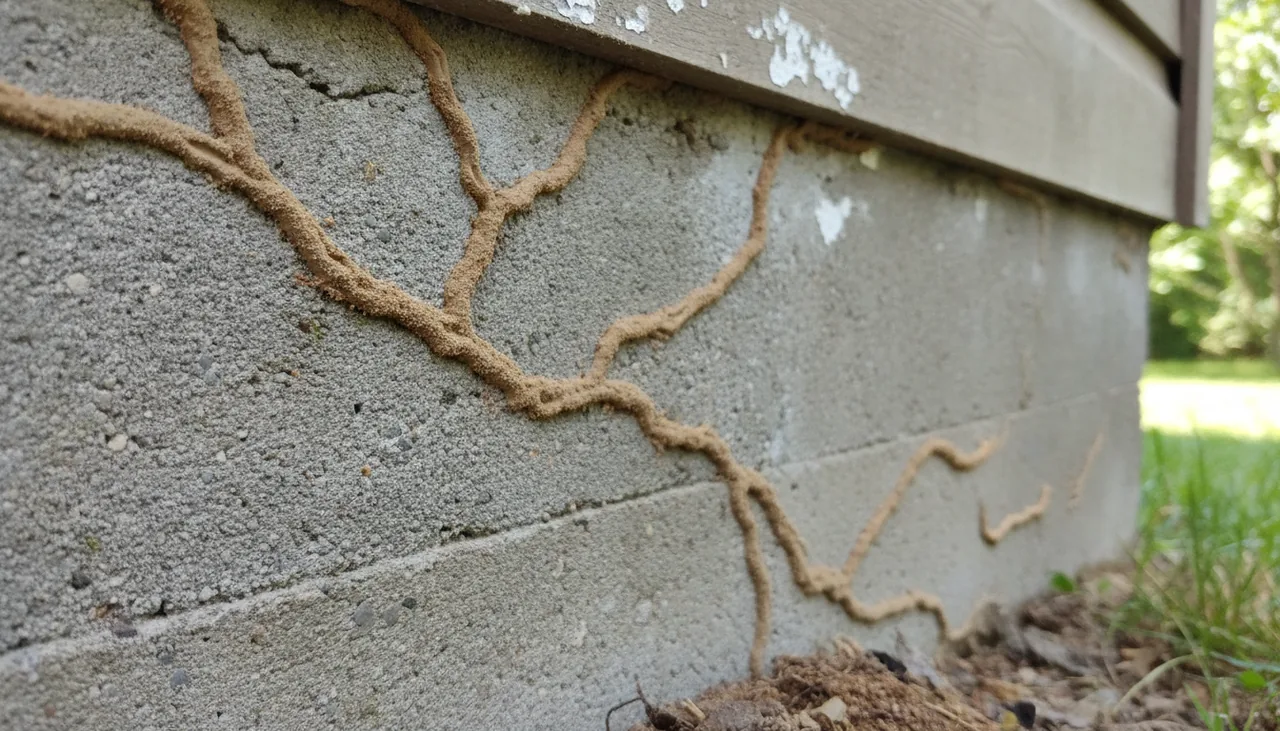
Subterranean termites live in the soil and are by far the most common termite in the Central Valley. Their hallmark sign is mud tubes: pencil-width tunnels of soil and saliva running up foundation walls, piers, and crawl-space framing, which they use to travel between the ground and the wood. Other signs include wood that sounds hollow when tapped, galleries packed with soil, blistered or sunken paint, and spring swarms of dark winged termites along with the wings they shed near windows.
Drywood termites live entirely inside the wood with no soil contact, so they leave no mud tubes. Instead they push out frass: tiny six-sided pellets that look like coffee grounds or coarse sawdust, ejected through small kick-out holes and left in little piles below infested wood. Their galleries are clean and smooth rather than soil-filled. Drywood termites are more common along the coast but do turn up in the Valley, usually in attic rafters, eaves, and furniture.
Signs of water damage
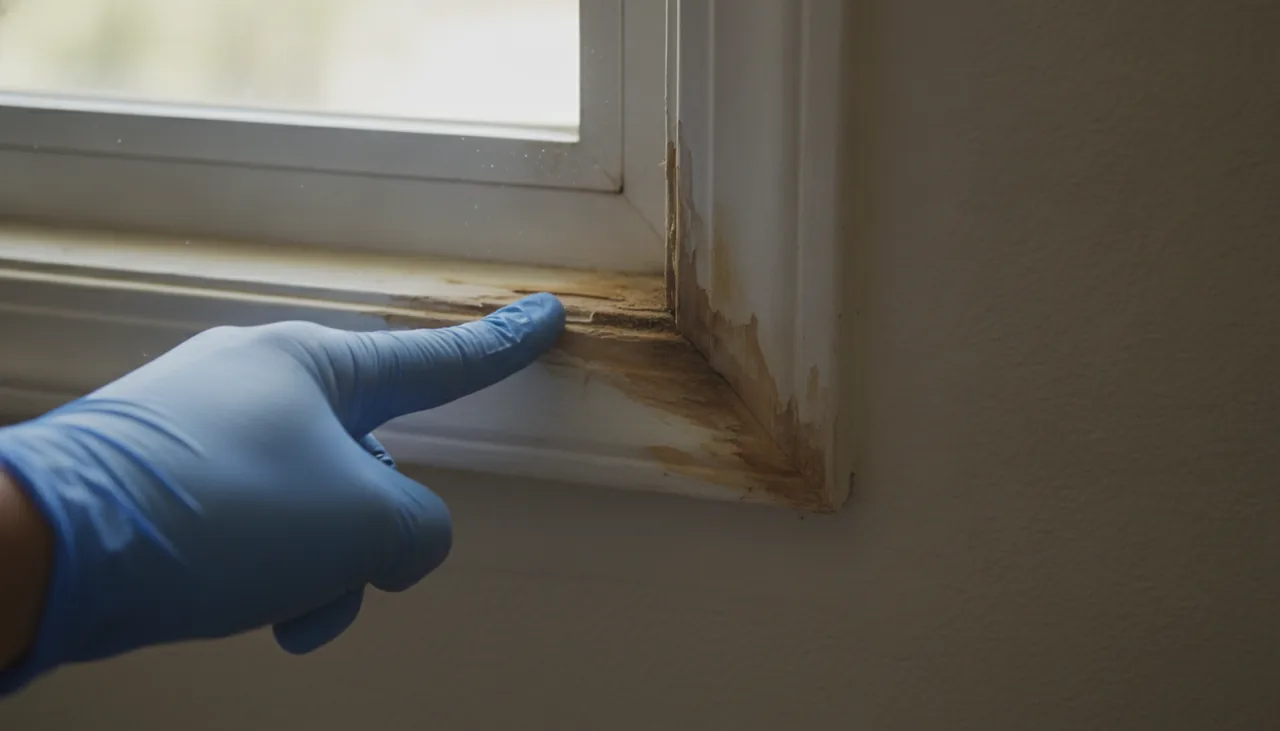
Water damage always traces back to a source: a roof or flashing leak, a plumbing leak under a sink or behind a wall, condensation, or poor drainage that pushes moisture against the foundation. The wood and finishes tell the story. Look for brown or yellow staining and water rings, wood that feels soft, spongy, or crumbly, warping, cupping, and swelling, bubbling or peeling paint, a persistent musty smell, and visible mold or mildew. Unlike termite galleries, water damage spreads outward from the wet spot rather than tunneling along the grain, and it usually discolors the surface rather than leaving it papery-thin.
Termite damage vs. water damage at a glance
Here is the catch most homeowners miss: termites are drawn to moist, water-damaged wood because it is softer and easier to tunnel. A long-running leak does not just rot the wood, it advertises a meal. It is common to find both problems in the same wall, which is why fixing a leak without checking for termites, or treating termites without fixing the moisture, leaves the door open for the next infestation.
What it looks like in a Fresno home
In Fresno and across the Central Valley, subterranean termites are the bigger concern. The mix of clay soils, lawn and landscape irrigation, and slab-on-grade or raised-foundation homes gives them constant access to moisture and wood. We most often find mud tubes on foundation stem walls, in crawl spaces, behind planter beds and sprinklers that run against the house, and around hose bibs and air-conditioner condensate lines. Older homes with original framing, and homes where the grade slopes toward the foundation, are the most vulnerable. Drywood termites show up less often, usually in attic rafters, eaves, fascia, and stored wood or furniture.
A 5-minute check you can do yourself
1. Walk the foundation. Look along the base of exterior and crawl-space walls for pencil-width mud tubes. Break one open: if it is moist inside or rebuilds within a few days, the termites are active.
2. Tap and probe suspect wood. Termite-damaged wood sounds hollow and a screwdriver slides in along the grain; water-damaged wood is soft, crumbly, and usually stained.
3. Look for frass and wings. Small piles of pellet-like frass point to drywood termites; piles of shed wings near windows point to a recent swarm.
4. Find the water. If you see staining or swelling, trace it to a leak, condensation, or drainage. No water source, plus galleries or tubes, points toward termites.
5. Note the smell and the spread. A musty odor and damage that spreads outward say water; clean, hollow galleries that follow the grain say termites.
Why an inspection is the only sure answer
Because termite and water damage look so similar and so often overlap, a visual once-over rarely settles it for good. In California, a licensed inspector performs a wood-destroying organisms (WDO) inspection that documents both active termites and the moisture conditions that feed them, on the standardized report used for repairs and real-estate transactions. If you are buying or selling, clearing the report (and any Section 1 items) is usually required before close of escrow. If you simply want to know what is eating your house, it is the fastest way to stop guessing. For more, see the signs of termites, what termites look like, and how to tell flying ants from termites.
Schedule a termite inspectionTermite Damage vs. Water Damage FAQ
Can water damage be mistaken for termite damage?
Yes, often. Both soften and discolor structural wood and both happen in damp areas. The clearest difference is the pattern: termites leave hollow galleries, mud tubes, and frass, while water damage leaves staining and a soft, spongy texture that spreads from a moisture source.
What does termite damage look like compared to water damage?
Termite damage shows hollow galleries that follow the wood grain, often with mud tubes from subterranean termites or pellet-like frass from drywood termites. Water damage shows brown or yellow staining, swelling, and a soft, spongy texture that spreads outward from a leak.
Does water damage attract termites?
It can. Subterranean termites need moisture, and water-damaged wood is softer and easier to eat, so a long-running leak can make a home more attractive to termites. Fixing leaks and improving drainage is one of the best termite-prevention steps.
How can I tell if wood damage is old or active?
Active termite damage often comes with fresh mud tubes, live insects, or new frass that reappears after you clean it up. Old, inactive damage stays dry and unchanged. A professional inspection confirms whether an infestation is still active.
Can I have both termite and water damage at once?
Yes, and it is common. Termites are attracted to the soft, moist wood that water damage creates, so the two frequently appear in the same spot. Treating one without addressing the other usually leads to a repeat problem, which is why inspections check for both.
Do I need a professional to tell the difference?
For certainty, yes. Because termite and water damage look so similar and frequently occur together, a licensed inspector is the only reliable way to know which you have, and a WDO report documents both for repairs or a home sale.
Not sure if it is termites or water?
Get a licensed Fresno inspection that checks for both active termites and the moisture conditions that invite them, with clear documentation.