
Home › Learn › Where Do Rats Hide
Where Do Rats Hide? Hiding Spots & How They Get In
Rats hide where it’s dark, sheltered, and close to food — roof rats up high, Norway rats down low. Here’s where rats hide indoors and out, the entry points they use, and what draws them in.
Rats hide where it’s dark, sheltered, and close to food and water — and where they hide depends on the species. Roof rats hide up high (attics, rafters, wall voids, dense vegetation, fruit trees); Norway rats hide down low (ground burrows, under decks and sheds, in crawlspaces). During the day they stay tucked away; at night they come out to feed along the same routes.
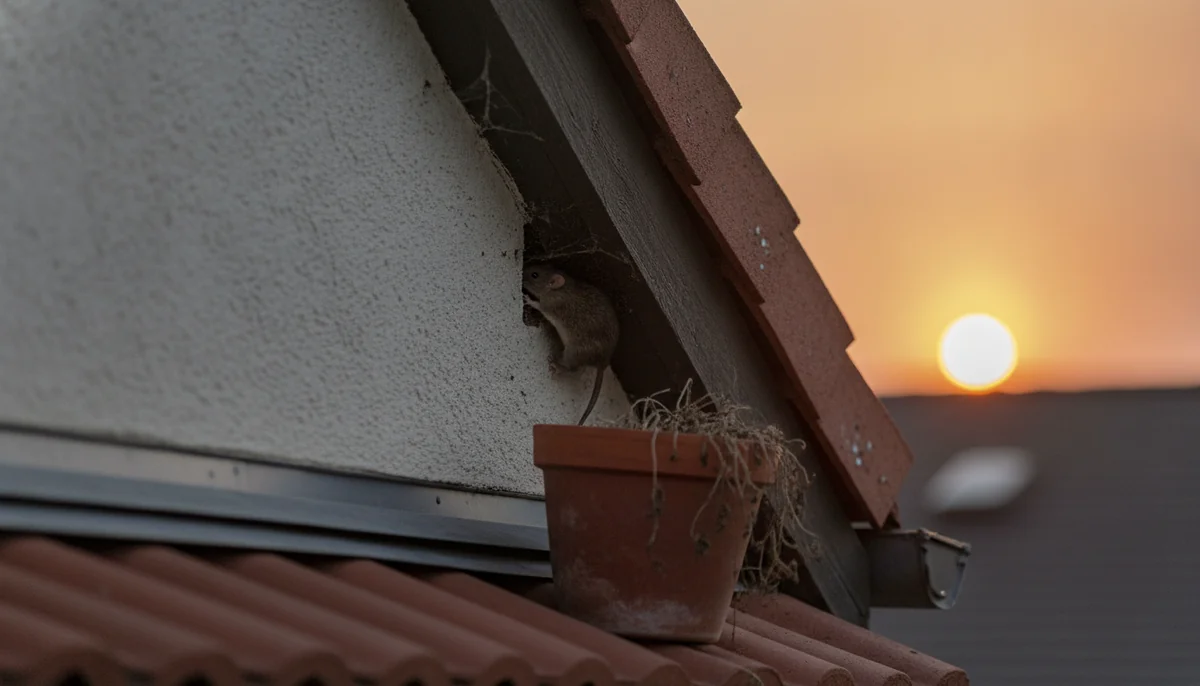
Where roof rats hide
Attics and the spaces under the roof are roof-rat headquarters: insulation, rafters, soffits, and wall voids. Outdoors they hide in dense ivy and vines, palm skirts, woodpiles, overgrown shrubs, and the canopies of fruit and citrus trees, using fences, wires, and branches as elevated runways. See roof rats in California.
Where Norway rats hide
Norway rats are ground-dwellers. They dig burrows along foundations and slabs, under decks, sheds, and concrete, and they shelter in crawlspaces, garages, sewers, and dense ground cover. Burrow openings are 2–4 inches across with smooth, well-traveled edges.
How rats get in — common entry points
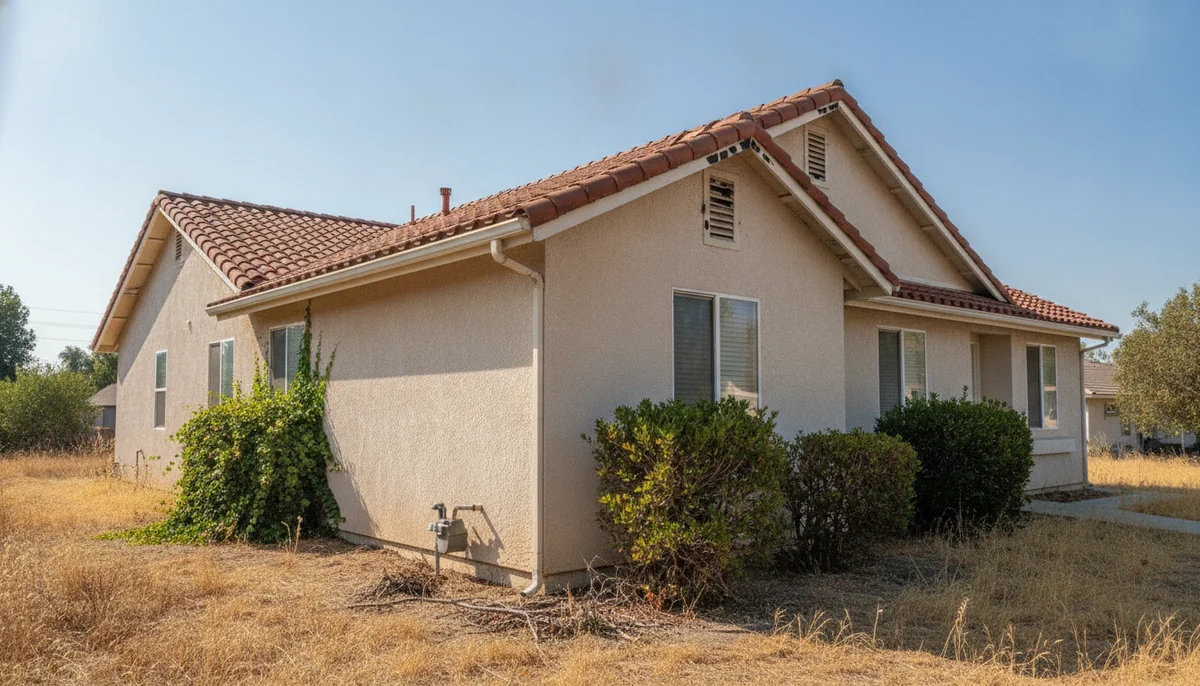
Common rat entry points
What attracts rats to a property?
Food, water, and shelter. The big draws around Fresno homes: fallen fruit under citrus and fruit trees, pet food left out, bird seed, open garbage and compost, pet water and leaks, dense vegetation and clutter, and woodpiles against the house. Remove those and the property becomes far less inviting.
A rat can fit through a gap about the size of a quarter (1/2 inch); a mouse needs only a dime-sized 1/4 inch. If a pencil fits through a gap, a mouse can use it.
How to find and seal rat hiding spots
Inspect the roofline, vents, and eaves (for roof rats) and the foundation, crawlspace, and yard (for Norway rats); follow grease marks and droppings to their runways; then seal every gap with rodent-proof materials and cut back the vegetation and food sources that draw them. That is exactly what rodent exclusion does — see also rat control.
See rodent exclusion in FresnoWhere rats hide — FAQ
Where do rats hide during the day?
Somewhere dark and sheltered near food. Roof rats hide in attics, wall voids, and dense vegetation; Norway rats hide in ground burrows, crawlspaces, and under decks.
How do rats get into a house?
Through roofline and eave gaps, vents, gaps around pipes, garage-door corners, and foundation cracks. Roof rats usually enter up high; Norway rats enter low.
How small a hole can a rat fit through?
About a half-inch — roughly the size of a quarter. Mice need only a quarter-inch.
What attracts rats to a property?
Food, water, and shelter — fallen fruit, pet food, bird seed, garbage, water leaks, dense vegetation, clutter, and woodpiles against the house.
Where do roof rats nest?
Up high — attics, rafters, wall voids, and dense outdoor vegetation like ivy, palms, and fruit trees.
Find where they’re getting in
We inspect the whole structure, seal every entry point, and clear out the rodents already inside. Book a no-cost inspection for your Fresno home.