
Home › Learn › Identify
Mud Daubers: Nests, Stings & Whether They’re Dangerous
Mud daubers are the slender, thread-waisted wasps that build mud-tube nests on walls and eaves. They’re one of the most harmless wasps around — here’s how to identify them, what the mud nests mean, and whether you need to worry.
Mud daubers are slender, solitary wasps named for the mud-tube nests they build on walls, eaves, and sheds. They’re easy to spot by their extremely long, thread-thin waist, and they’re among the most harmless wasps you’ll meet — docile, very unlikely to sting, and actually beneficial, since they hunt spiders to stock their nests.
Skinny thread-thin waist + small mud tubes stuck to a wall or eave = a mud dauber. They’re solitary, not aggressive, and almost never sting — there’s no colony defending the nest. Old mud nests are usually empty and can simply be scraped off. They’re more helpful than harmful, because they prey on spiders.
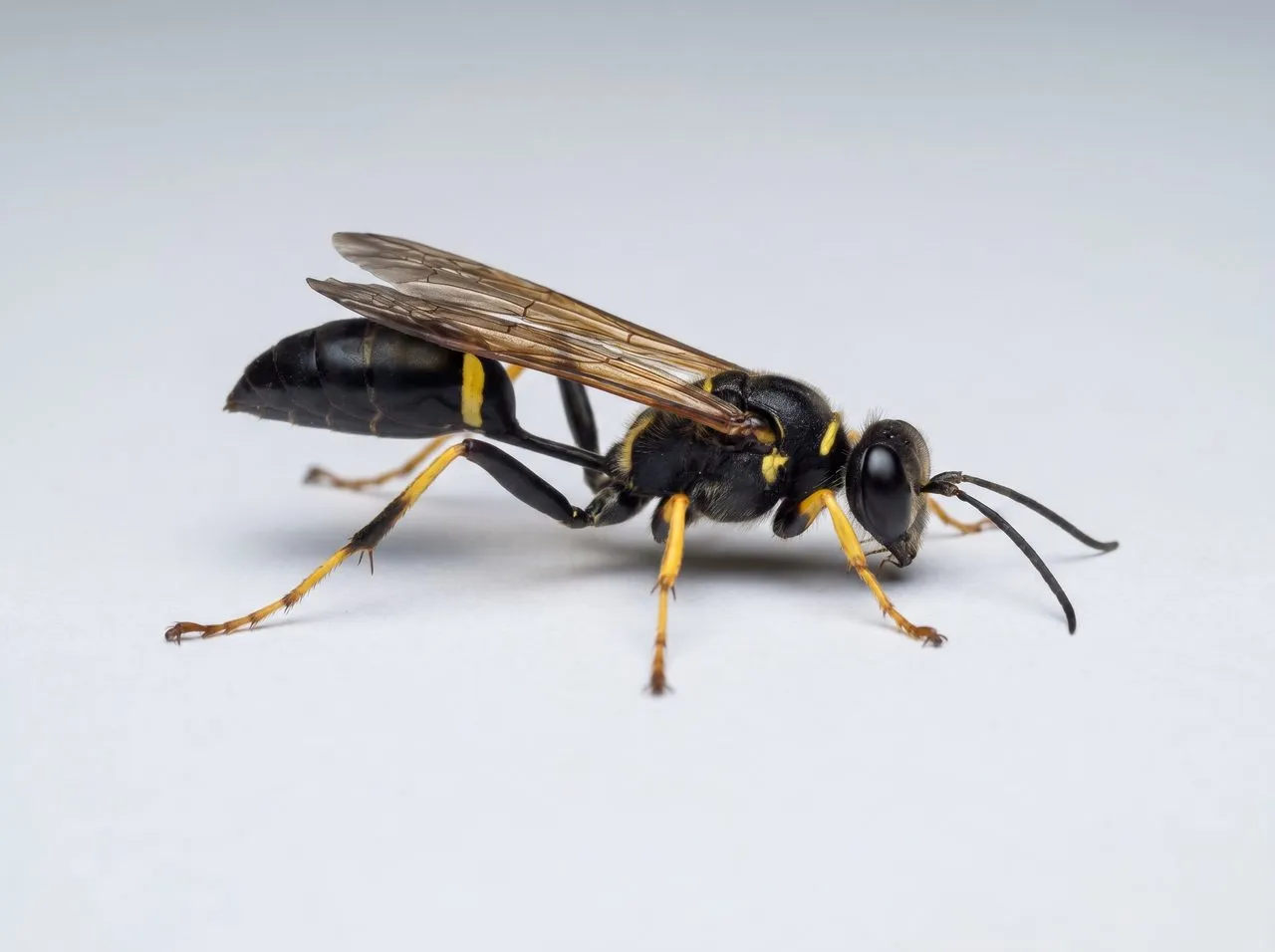
What a mud dauber looks like
Mud daubers are about an inch long and very slim, with a distinctive thread-like waist (a long, thin segment connecting the thorax and abdomen) that no other common wasp has. Color varies by species: some are glossy solid black, some are black with bright yellow legs and markings, and one is an iridescent steely blue. They fly with their long legs trailing and are usually seen alone, gathering mud at a puddle’s edge or working on a nest.
Mud dauber nests: what the mud tubes mean
The nest is the easiest ID. Mud daubers build small nests out of mud — either single finger-length tubes, several side-by-side tubes that look like a tiny pipe organ, or a smooth rounded lump of dried mud — tucked under eaves, on walls, ceilings, sheds, and in garages and attics. Each cell is stocked with paralyzed spiders and a single egg, then sealed. Finding mud tubes means a mud dauber, not termites or paper wasps — compare the shapes on our wasp nest guide.
Are mud daubers dangerous? Do they sting?
Mud daubers are about as harmless as wasps get. They’re solitary, so there’s no colony to defend and they don’t swarm, and they’re extremely reluctant to sting — most people who handle nests are never stung. Their venom is mild and mainly meant for subduing spiders. They’re actually beneficial, keeping black widow and other spider populations down. One thing worth knowing: abandoned mud dauber nests are sometimes taken over by other, more aggressive insects, so an old nest is still worth removing.
Mud dauber vs. wasp: how to tell them apart
Mud dauber vs. paper wasp / yellowjacket
In short: a skinny solitary wasp at a mud nest is a mud dauber and not a concern. A stockier wasp around an open paper comb or a hidden ground/wall nest is a paper wasp or yellowjacket — see how to tell those apart.
How to get rid of mud daubers and their nests
Because mud daubers don’t sting readily and don’t reuse old nests, removal is simple: scrape the dried mud nests off with a putty knife and wash the spot, ideally in the evening when any adult is less active. To discourage new ones, fix the conditions they like — reduce standing water and mud sources nearby and keep sheltered eaves and garages tidy. Since mud daubers hunt spiders, a lot of mud nests can also be a sign of a heavy spider population worth addressing. If nests keep coming back or you’d rather not handle it, we can clear them and treat the area.
Get nests cleared & treated →Mud dauber FAQ
Are mud daubers dangerous?
No, mud daubers are among the least dangerous wasps. They’re solitary and don’t defend a colony, they almost never sting, and their venom is mild. They’re actually beneficial because they hunt spiders, including black widows.
Do mud daubers sting?
They can, but they very rarely do. Mud daubers are docile and not territorial, so even people who remove their nests are seldom stung. They use their sting mainly to paralyze the spiders they feed to their young, not to defend themselves.
What does a mud dauber nest look like?
It’s made of mud, not paper — either a single finger-length tube, several side-by-side tubes resembling a small pipe organ, or a smooth rounded lump of dried mud, stuck under eaves or on walls, ceilings, and sheds. Each is packed with paralyzed spiders and sealed.
How do I get rid of mud daubers?
Scrape the dried mud nests off with a putty knife and wash the surface — they don’t reuse old nests. To prevent new ones, cut down on nearby standing water and mud and keep sheltered eaves and garages clean. Lots of nests can mean a heavy spider population worth treating.
What is the difference between a mud dauber and a wasp?
Mud daubers are a type of wasp, but a solitary one with an extremely long, thread-thin waist that builds mud nests and almost never stings. The wasps people worry about — paper wasps and yellowjackets — are social, build paper nests, and are far more likely to sting.
Mud nests — or the spiders behind them?
Call (559) 472-8200 or request a no-cost inspection — we’ll clear the nests and treat the spider activity that draws mud daubers in.