
Home › Learn › Identify
Yellowjacket vs. Wasp vs. Hornet: How to Tell Them Apart
Yellowjackets, paper wasps, and hornets are all types of wasp — but they look, nest, and sting differently. Here’s a side-by-side guide to telling them apart (plus the quick wasp-vs-bee test) for Central Valley homes.
The fastest way to tell them apart: paper wasps are slender with long dangling legs and build open, umbrella-shaped nests under eaves; yellowjackets are short, stocky, and brightly banded, and hide their nests in the ground or in walls; hornets are larger with a white-marked face and a big enclosed grey nest. Bees, by contrast, are fuzzy and rounded — wasps look smooth and have a pinched “waist.”
Yellowjackets and hornets are wasps — “wasp” is the umbrella term. Yellowjackets are the aggressive ground- and wall-nesters behind most late-summer stings in Fresno. Paper wasps are the calmer eave-nesters. Bald-faced hornets build the big grey football-shaped nests. Mud daubers (skinny, mud-tube builders) are wasps too, but they almost never sting. Bees are fuzzy pollinators — we relocate honeybees, we don’t exterminate them.
Yellowjacket vs. paper wasp vs. hornet vs. bee at a glance
Stinging insects in the Central Valley, side by side
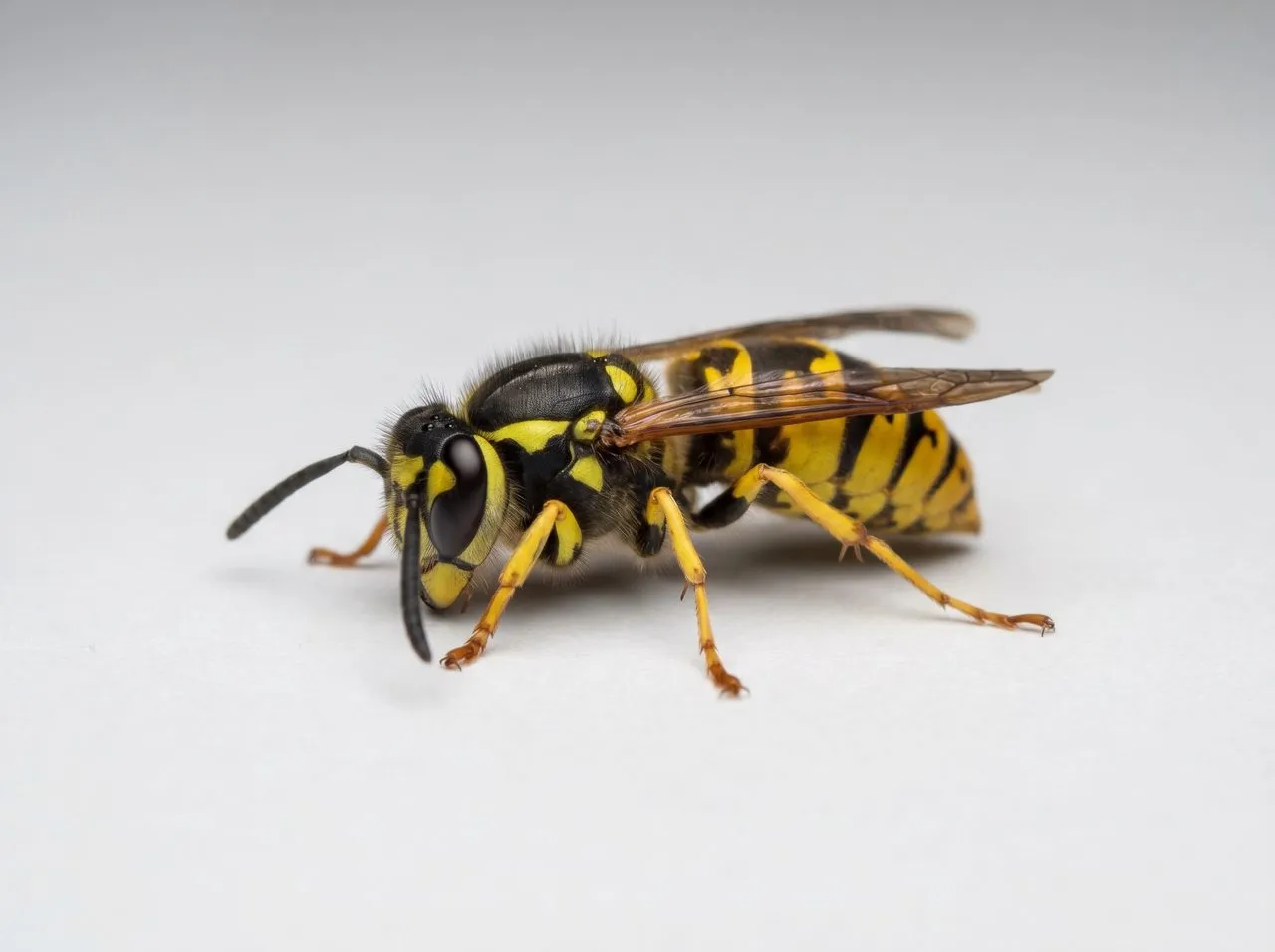
How to identify a yellowjacket
Yellowjackets are the wasps most people actually get stung by. They’re about a half-inch long, short and thick-bodied, with crisp bright-yellow and black bands and a smooth, almost hairless look — and they don’t dangle their legs in flight the way paper wasps do. They nest out of sight: in old rodent burrows and ground cavities, inside wall voids, or in dense shrubs, and a single colony can hold thousands by late summer. Because they scavenge protein and sugar, they swarm trash cans, soda, and barbecues, and they sting repeatedly with little provocation. Steady wasp traffic in and out of a hole in the lawn or a gap in the stucco is almost always yellowjackets.
How to identify a paper wasp
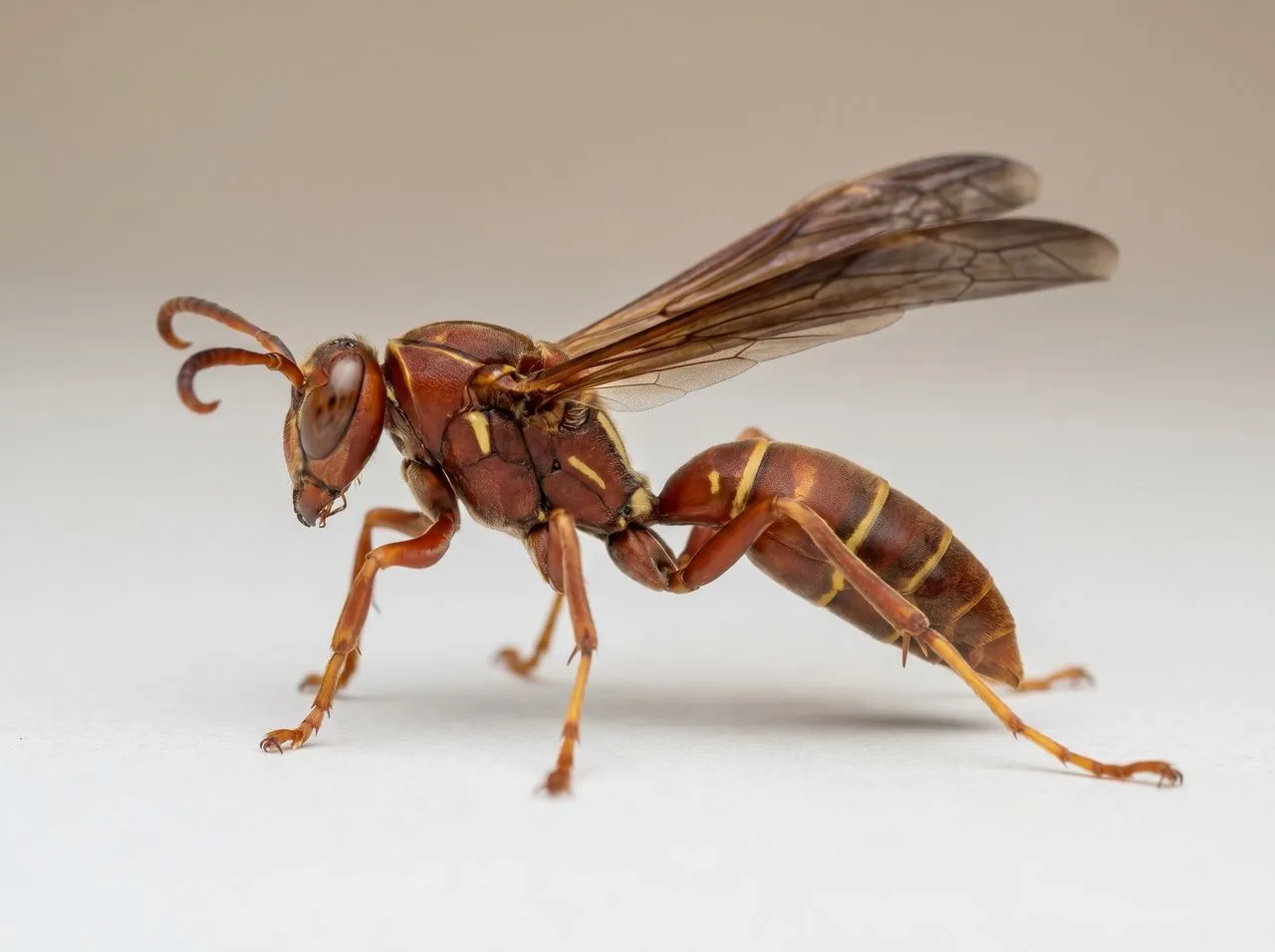
Paper wasps are the slender, long-legged wasps you see drifting around eaves and porch ceilings. They’re about ¾ to 1 inch long, reddish-brown to dark with yellow markings, and they let their legs hang as they fly. The nest is the giveaway — an open, upside-down, umbrella-shaped grey comb with visible six-sided cells, tucked under an eave, patio cover, or door frame, never fully enclosed. Paper wasps are far calmer than yellowjackets and mostly leave you alone unless the nest is disturbed. Our guide to what a wasp nest looks like shows how to tell the nests apart.
How to identify a hornet (bald-faced hornet)
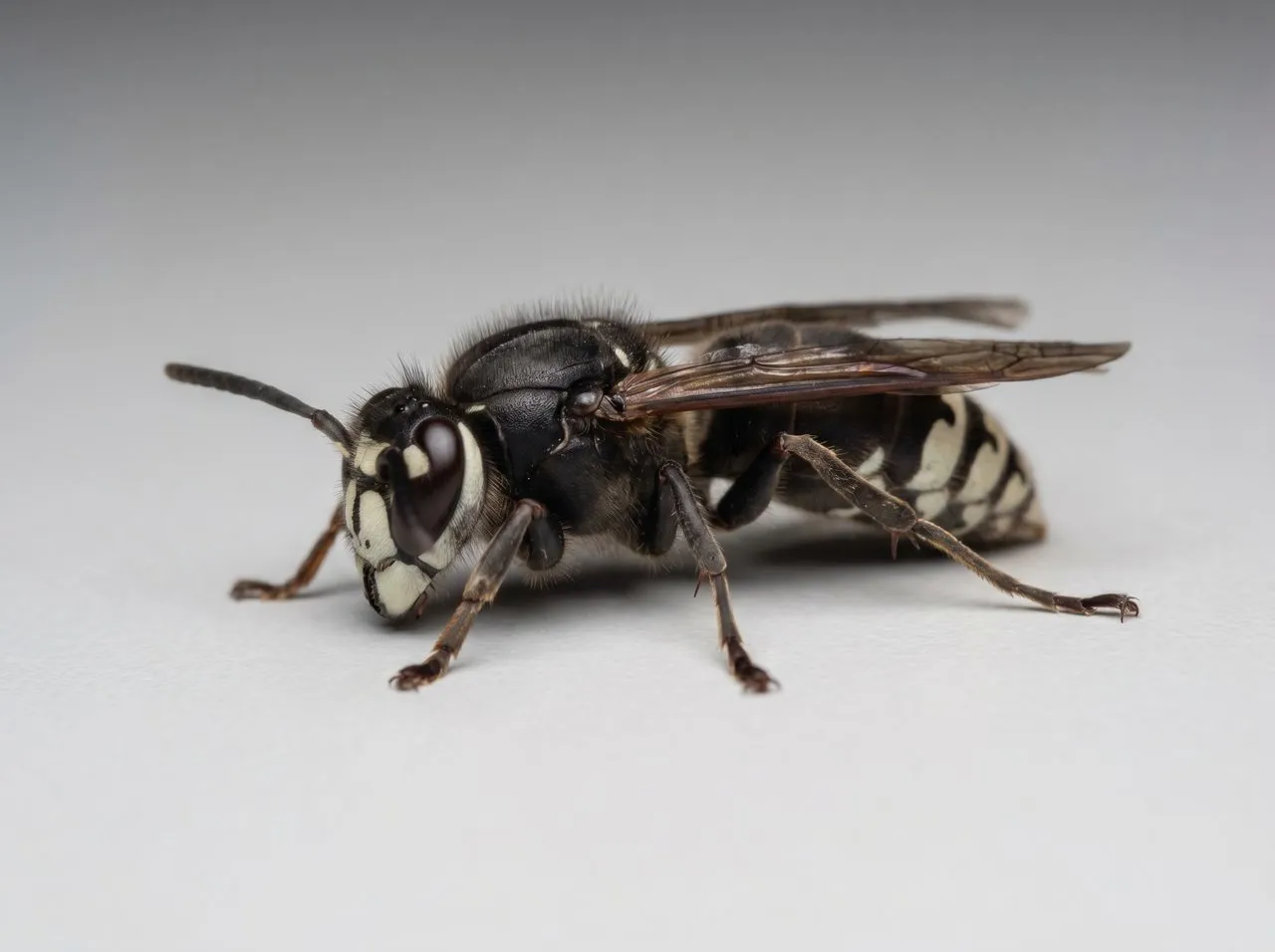
True hornets are uncommon in California, but the bald-faced hornet — really a large relative of the yellowjacket — does turn up here. It’s about ¾ inch, black with an ivory-white face and white markings, and noticeably bigger and chunkier than a paper wasp. Its nest is unmistakable: a large, enclosed, grey papery “football” hanging in a tree, tall shrub, or under a high eave, sometimes basketball-sized by late summer. Bald-faced hornets are very defensive within a few feet of the nest, so an enclosed grey nest at head height or above is a job for a pro. Read our full bald-faced hornet guide for nests, stings, and removal.
Wasp vs. bee: the quick test
If it’s fuzzy, rounded, and working a flower, it’s a bee. Wasps look smooth and glossy, have a sharply pinched “wasp waist,” and are drawn to meat and sugary drinks rather than pollen. Honeybees are golden-brown and gentle; in spring you may see a swarm clustered on a branch or wall. Bees are protected pollinators, so we relocate or refer honeybees rather than kill them. Carpenter bees — big, shiny, and black, boring round holes in wood — are a different case. When in doubt, a quick photo tells us what you have.
Why telling them apart matters
Identification changes the safe move. A calm paper-wasp nest under an eave is straightforward; a hidden ground yellowjacket colony or an enclosed hornet nest can send dozens of stinging insects out at once if it’s disturbed — which is exactly why DIY ground-nest removal goes wrong. Knowing what you’re dealing with also tells you how urgent it is. When the nest is hidden, aggressive, or out of easy reach, it’s safer and faster to have it identified and removed professionally.
See our wasp & hornet control →Wasp identification FAQ
Is a yellowjacket a wasp?
Yes. A yellowjacket is a type of wasp — a social wasp in the genus Vespula or Dolichovespula. “Wasp” is the umbrella term that also includes paper wasps and hornets. Yellowjackets are simply the stocky, black-and-yellow, ground- and cavity-nesting wasps known for aggressive late-summer stinging.
What’s the difference between a wasp and a hornet?
Hornets are a larger subgroup of wasps. In our area the bald-faced hornet is the one people mean — bigger than a paper wasp, black with a white face, and building a large enclosed grey nest in trees or high eaves. All hornets are wasps, but not all wasps are hornets.
Are yellowjackets more dangerous than other wasps?
Generally yes. Yellowjackets are the most aggressive common wasp in the Central Valley — they nest underground or in wall voids where they’re easily disturbed, sting repeatedly, and are drawn to food and trash in late summer. Paper wasps and mud daubers are far less likely to sting unless their nest is threatened.
How do you tell a wasp from a bee?
Wasps look smooth and shiny with a narrow, pinched waist and dangling legs in flight; honeybees are fuzzy, rounder, and golden-brown. Bees focus on flowers and rarely bother people; wasps are drawn to protein and sweets, especially at cookouts. If it’s fuzzy and on a flower, it’s almost certainly a bee.
Do you remove bees too?
We handle wasps, yellowjackets, and hornets. For honeybees — valuable pollinators — we relocate or refer to a beekeeper rather than exterminate whenever possible. If you’re not sure what you have, send a photo and we’ll identify it. See our wasp control page for what we treat.
Not sure what’s nesting on your property?
Call (559) 472-8200 or request a no-cost inspection — we’ll identify the wasp, hornet, or yellowjacket and remove the nest safely.