
Home › Learn › Mosquitoes
Where Do Mosquitoes Lay Eggs?
In standing water — and the invasive Fresno ankle-biter needs only a bottle cap of it. Find the hidden water in your yard and you stop mosquitoes before they ever fly.
Mosquitoes lay their eggs in or right next to standing water — that is the one thing every species needs. The egg, larva and pupa all develop in water, so if you can find and eliminate the still water in your yard, you stop mosquitoes before they ever grow wings. The catch in Fresno: the invasive ankle-biter needs almost none of it.
All mosquitoes breed in standing water. Native Culex use larger sources — neglected pools, ditches, birdbaths. The invasive Aedes ankle-biter uses tiny containers, even a bottle cap, and its eggs survive dry for months. Walk your yard weekly and dump anything holding water; it is the single most effective thing you can do.
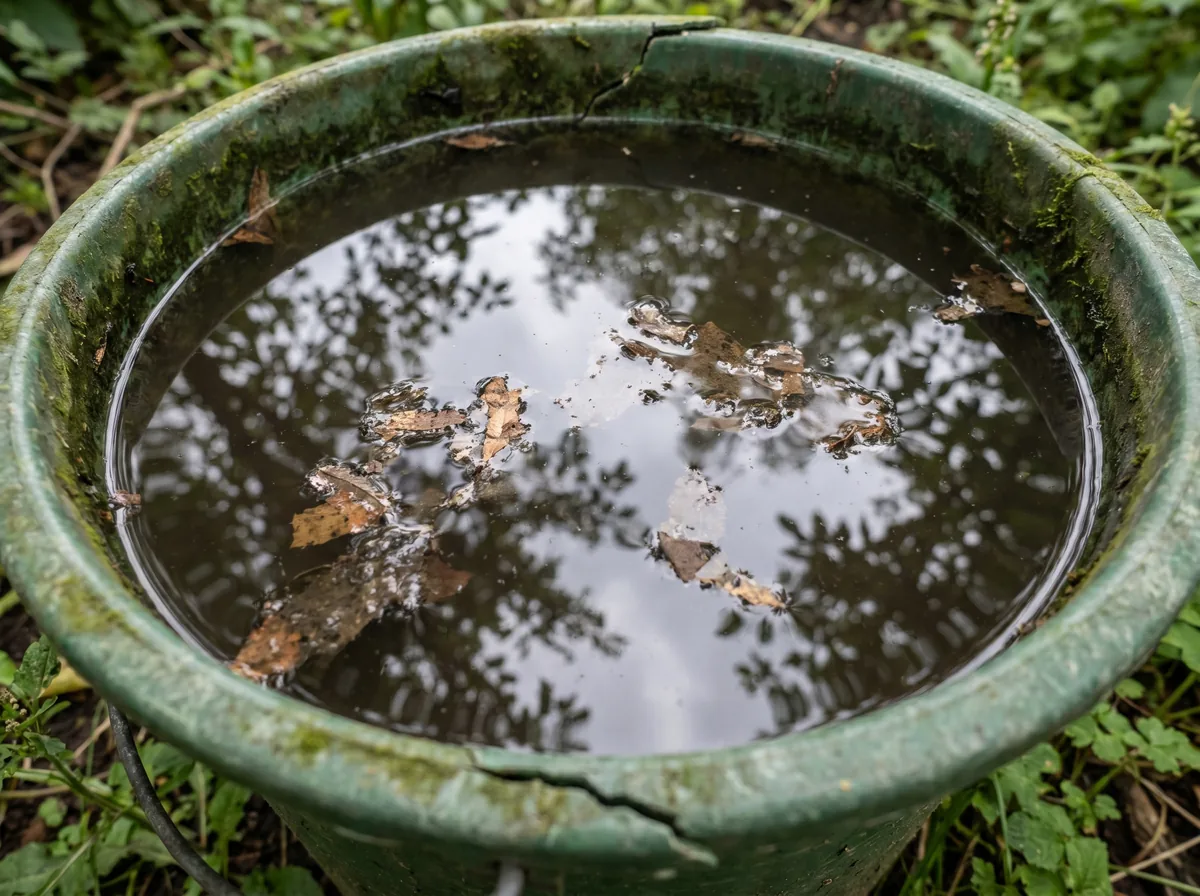
How and where mosquitoes lay eggs
A female lays eggs after a blood meal, and how she does it depends on the species. Culex lay floating “rafts” of eggs directly on the surface of still water. Aedes (including the ankle-biter and the Asian tiger) are sneakier — they lay single eggs just above the waterline inside containers, and those eggs can sit dry for months, hatching the moment the container fills with rain or a hose. That drought-proof egg is exactly why the invasive Aedes is so hard to knock out and why a single missed flowerpot saucer can restart the problem.
What mosquito eggs and larvae look like
Mosquito eggs are tiny — individually about the size of a poppy seed, dark, and easy to miss. Culex egg rafts look like a small floating speck of soot on the water. You are far more likely to notice the larvae: little “wrigglers,” a few millimeters long, that hang just under the surface and thrash when you disturb the water. If you see wrigglers in a container, that water is an active mosquito nursery — dump it now.
The hidden water in a Fresno backyard
Most homeowners think “I do not have a pond, so I am fine.” But mosquitoes do not need a pond — they need a cap of water that sits for a few days. Here is where it hides:
10 places mosquitoes breed at home
The weekly “tip and toss” routine
Mosquitoes go from egg to biting adult in about a week, so a weekly walk-through breaks the cycle before it completes. Once a week: tip out anything holding water, scrub container walls (Aedes eggs cling above the waterline), refresh birdbaths and pet bowls, and check the spots that refill themselves — gutters, AC drip, low lawn areas. The local mosquito abatement district calls this source reduction, and it is the foundation everything else builds on.
When source reduction is not enough
Sometimes you cannot drain the problem: a water feature you want to keep, chronic low spots, a neighbor’s untreated yard, or an Aedes population already established on the block. That is when larvicide (which treats the water you keep) and a barrier treatment of resting areas earn their keep — together with your weekly dumping. See exactly how that works in our backyard mosquito treatment, or learn what else attracts mosquitoes to your yard.
See our backyard mosquito treatment →Mosquito eggs FAQ
Where do mosquitoes lay their eggs?
In or right beside standing water. Culex mosquitoes lay floating egg rafts on still water; Aedes mosquitoes lay single eggs just above the waterline inside small containers, where they can survive dry for months until the container fills.
How much water do mosquitoes need to breed?
Very little. The invasive Aedes ankle-biter can breed in as little as a bottle cap or plant saucer of water. Culex prefer larger sources, but even a few days of standing water in a container is enough.
How long do mosquito eggs take to hatch?
When conditions are warm and wet, eggs often hatch within a few days, and the whole egg-to-adult cycle takes about a week to ten days in Central Valley heat. Aedes eggs can wait dry for months before hatching.
What do mosquito larvae look like?
Larvae are small “wrigglers,” a few millimeters long, that hang just below the water surface and thrash when disturbed. Seeing them in a container means that water is actively breeding mosquitoes.
How do I stop mosquitoes from laying eggs in my yard?
Eliminate standing water weekly — dump and scrub saucers, buckets, gutters, birdbaths and toys. For water you cannot remove, larvicide and a professional yard treatment stop the larvae and adults that source reduction alone cannot reach.
Found wrigglers in your yard? We’ll find the rest.
We locate every breeding source on your Fresno property and treat the water you can’t drain. Call (559) 472-8200 or request a no-cost inspection.