
Home › Learn › Spiders › Wolf Spider in California
Wolf Spiders in California: ID, Danger & the Recluse Mix-Up
The big, fast, hairy spider that bolts across your garage floor is almost always a wolf spider — harmless, web-less, and the spider most often mistaken for a brown recluse. Here is how to know for sure.
If a large, hairy, fast spider just sprinted across your garage or living-room floor and there was no web in sight, it was almost certainly a wolf spider. Wolf spiders are among the most common spiders in California homes and yards — and they are completely harmless. They are also the spider people most often panic-label a “brown recluse,” so this guide covers both how to identify a wolf spider and how to tell it apart from the recluse it is not.
Wolf spiders are big, fast, hairy ground spiders that build no web and hunt at night. They are harmless — a bite is no worse than a bee sting and they almost never bite. They are the #1 spider mistaken for a brown recluse, but recluses are not even found in California.
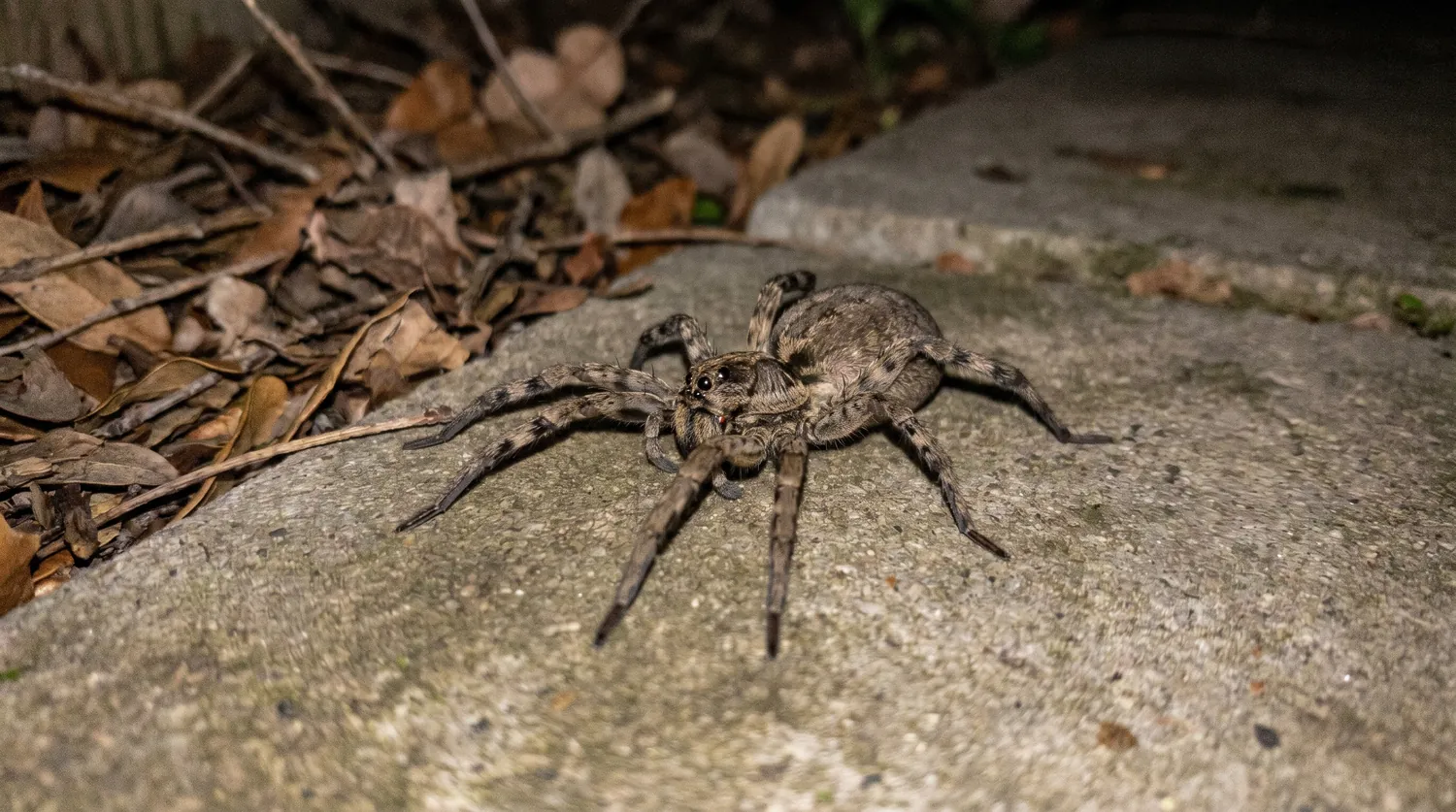
What a wolf spider looks like
Wolf spiders are stout and hairy, brown and gray with mottled or striped patterning, and large — the body alone can reach an inch, and with the legs they look much bigger. They have eight eyes, including two prominent ones that often shine when a light hits them at night. A telltale wolf-spider habit: the female carries her round egg sac attached to her spinnerets, and after the young hatch she carries them on her back for a while. They do not build snare webs; they run their prey down on the ground.
Wolf spider vs. brown recluse — the mix-up
“Wolf spider vs brown recluse” is one of the most-searched spider questions in the country, and for good reason — a big brown spider is alarming. But the two are easy to separate. A wolf spider is hairy, with striped and spiny legs, eight eyes, and it runs fast on the ground. A brown recluse is smooth and uniform tan, with unmarked legs, only six eyes, and a violin mark behind the head — and, crucially, recluses are not established in California. If your spider is hairy and fast, it is a wolf spider.
Wolf spider vs. brown recluse
Are wolf spiders dangerous?
No. Wolf spiders are not dangerous to people or pets. They can bite if you trap one against your skin, but it is rare and the result is roughly like a bee sting — brief pain and maybe minor swelling, with no lasting harm. They are not venomous in any medically significant way. The bigger “threat” is the startle factor: they are fast and they are large. Compare them with the spiders that are worth caution →
Why is a wolf spider in my house?
Wolf spiders come indoors hunting other insects, especially as nights cool in fall. They are not nesting or infesting — they wander in through gaps under doors and around the foundation, follow the prey, and often end up stuck in a bathtub or sprinting across a floor. A lot of wolf spiders inside usually means a lot of other bugs inside for them to eat. The same goes for the harmless spiders you see in window and ceiling corners.
What to do about wolf spiders
Because they are beneficial and harmless, the gentlest fix is to cup-and-release the occasional indoor wolf spider outside. To see fewer of them, reduce what they hunt and block how they get in: seal gaps under doors and around the foundation, reduce exterior lighting that draws insects, keep the perimeter clear of leaf litter and clutter, and knock down webbing. Our step-by-step guide to getting rid of spiders walks through it. The standard California reference for spider ID is the UC IPM spiders guide.
See our spider control process →Wolf spider FAQ
Are wolf spiders poisonous?
Wolf spiders have venom to subdue prey, but they are not dangerous to people. A bite is uncommon and feels roughly like a bee sting, with no lasting harm. They are considered harmless.
Is it a wolf spider or a brown recluse?
If it is hairy, has striped or spiny legs, eight eyes, and runs fast on the ground, it is a wolf spider. A brown recluse is smooth tan with unmarked legs and six eyes — and recluses are not established in California, so a wolf spider is far more likely.
Why do I keep finding wolf spiders in my house?
They wander indoors hunting insects, especially in fall. Lots of wolf spiders usually means lots of other bugs for them to eat. Sealing entry points and reducing insects indoors and at the perimeter cuts down how many you see.
Do wolf spiders bite?
Rarely. A wolf spider will only bite if trapped against skin, and the bite is minor — similar to a bee sting. They would rather run than bite.
How big do wolf spiders get?
California wolf spiders commonly have a body up to about an inch, and with their long legs they can span two inches or more, which is why they look so alarming.
Tired of big spiders bolting across the floor?
Call (559) 472-8200 or request a no-cost inspection. We seal them out, treat the perimeter, and handle black widows while we are at it.