
Home › Learn › Spiders › House Spiders in California
House Spiders in California (and Why You See More in Fall)
The small spiders in your window and ceiling corners are almost all harmless web-builders — and mostly on your side. Here is how to identify the common ones, why they swarm in fall, and how to see fewer of them.
The small spiders you find in window corners, ceiling corners, and the garage are almost all harmless house spiders — quiet web-builders that catch and eat other insects. In a California home you are most likely to meet the common house spider, the long-legged cellar spider, the bold little jumping spider, and outdoors the wheel-web orb-weavers. None of these is dangerous, and the one indoor spider worth caution — the black widow — looks and behaves very differently. This guide covers what the common house spiders look like, why they seem to appear all at once in fall, and how to see fewer of them.
Common house spiders are harmless and even helpful — they eat other pests. You see more in fall because it is mating season and males go wandering, not because of an invasion. To reduce them, cut the insects they hunt, knock down webs, and seal entry points.
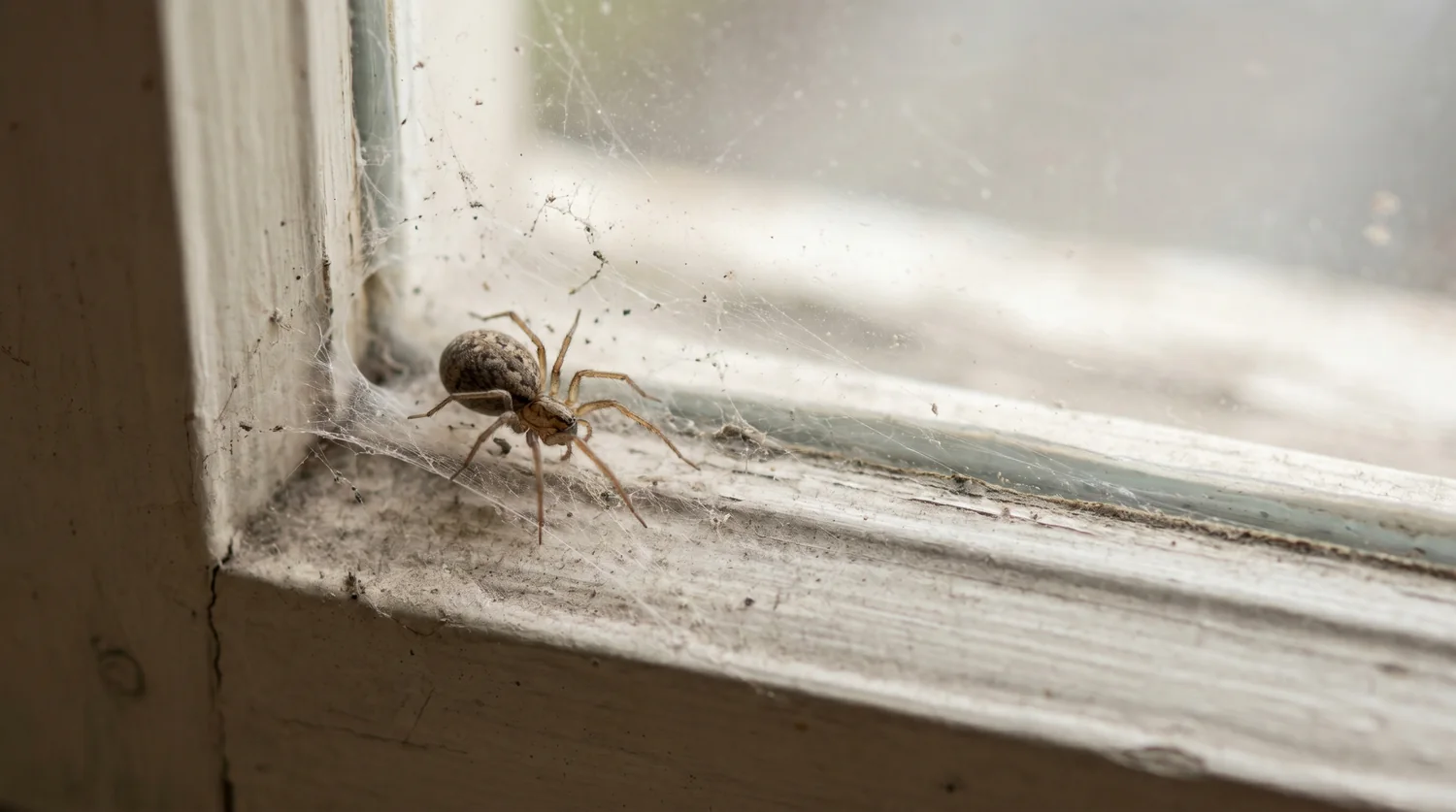
The common indoor house spiders
A handful of species account for almost everything you see indoors. The common house spider builds the messy cobwebs in corners. The cellar spider — the long-legged “daddy long legs” — hangs in loose webs in garages and ceilings (and no, it is not poisonous). Jumping spiders are the small, fuzzy, curious ones that hop along walls in daylight and build no web. Outdoors and on eaves you get orb-weavers, which spin the big round wheel webs that reappear every fall.
Common California house spiders
Are house spiders dangerous?
No — the common house spiders of California are not dangerous to people or pets. At most, a yellow sac spider can give a minor nip. The only indoor-adjacent spider worth caution is the western black widow, which is glossy black with a red hourglass and hides in low, dark spots like garages and woodpiles — not the window-corner cobwebs where house spiders live. And despite the worry, there is no brown recluse in California to find.
Why are there so many spiders in fall?
If it feels like spiders suddenly take over in September and October, you are not imagining it — but it is not an invasion. Fall is mating season for many spiders, so mature males leave their hiding places and go wandering in search of females, which is why you suddenly see them crossing floors and walls. At the same time, cooling nights nudge some spiders toward the warmth and shelter of buildings. The numbers settle back down on their own; in the meantime, the same prevention steps below help.
What attracts spiders indoors
Spiders go where the food is, and their food is other bugs. The things that draw spiders into a house are really the things that draw insects: exterior lights that pull in moths and flies at night, moisture and damp areas, clutter and undisturbed storage that gives them cover, and gaps around doors, windows, and the foundation that let everything in. Reduce the insects and the cover, and the spiders follow.
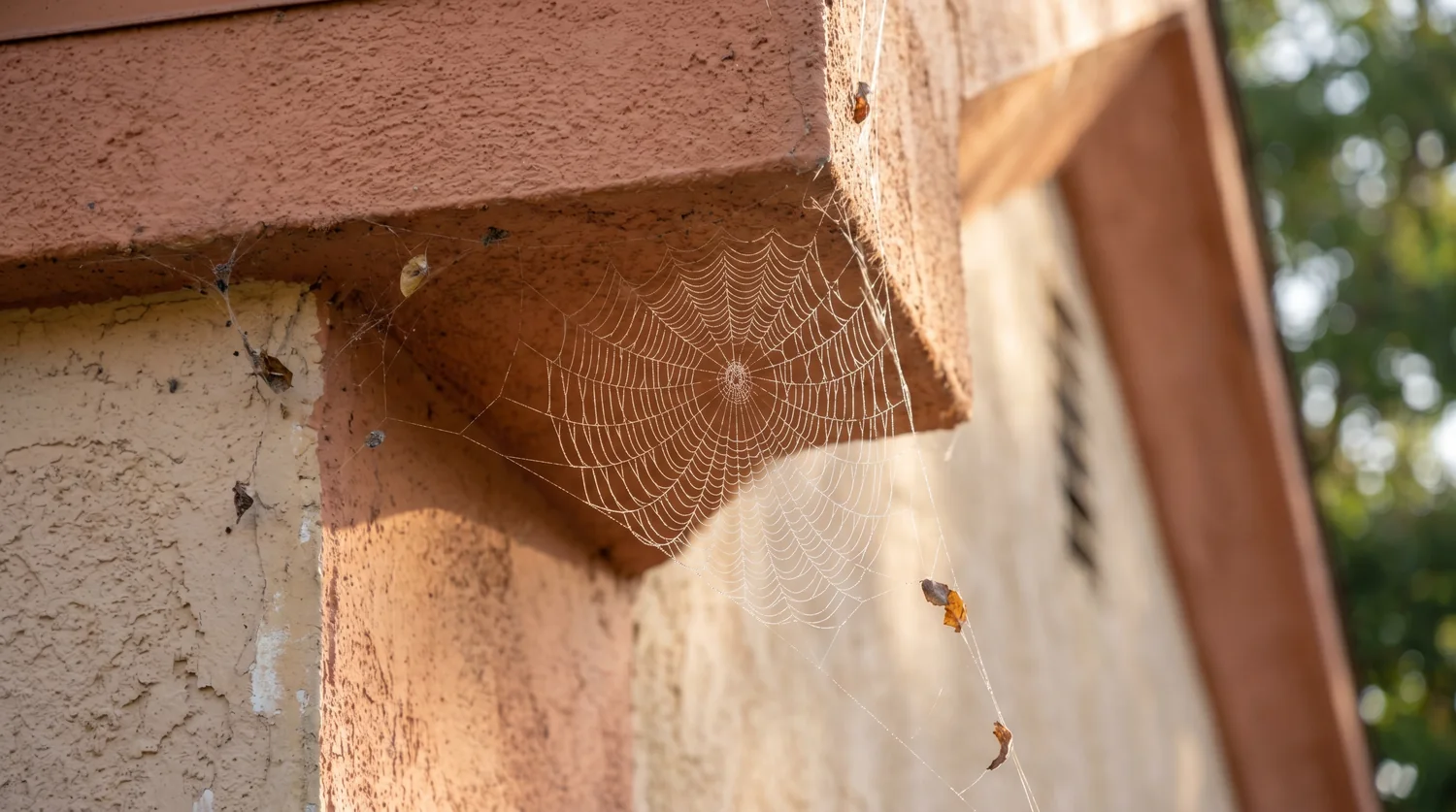
How to keep house spiders out
Knock down webs as they appear (spiders dislike rebuilding and often relocate), declutter garages and storage, vacuum corners and egg sacs, and seal the gaps under doors and around windows and the foundation. Swapping exterior bulbs for warm or yellow lights that attract fewer insects makes a real difference, since fewer bugs means fewer spiders. Our full step-by-step guide to getting rid of spiders walks through it, and the UC IPM spiders guide is the standard California reference.
See our spider control process →House spiders FAQ
Are house spiders in California dangerous?
No. The common house spiders — house spiders, cellar spiders, jumping spiders, and orb-weavers — are harmless. The only spider worth caution is the black widow, which hides in low dark spots, not in window-corner cobwebs.
Why do I see more spiders in my house in fall?
Fall is mating season, so mature male spiders leave cover and wander in search of mates, and cooling nights push some toward shelter. It looks like a surge but it is seasonal and settles on its own.
What attracts spiders into the house?
Other insects — spiders follow their food. Exterior lights, moisture, clutter, and gaps around doors and windows draw the bugs that draw the spiders. Reducing insects and entry points reduces spiders.
Should I kill house spiders?
You do not need to — they are harmless and they eat other pests. If you would rather not share the space, cup-and-release outdoors or vacuum the webs. The goal is usually fewer, not none.
What is the most common house spider in California?
The common house spider and the long-legged cellar spider are the two seen most indoors, along with jumping spiders on walls and orb-weavers on eaves. All are harmless.
Spiders and webs taking over the house?
Call (559) 472-8200 or request a no-cost inspection. We clear the webs, treat the perimeter, and keep spiders from moving back in.