
Home › Fleas › Yard & Outdoor Flea Treatment
Yard & Outdoor Flea Treatment in Fresno
The fleas in your house often start in your yard. Shaded, moist spots outdoors are a flea nursery that re-seeds your home every time your pet goes out. Treating the yard is half the battle in the Central Valley.
If you keep treating the inside of your house for fleas and they keep coming back, the answer is often in the yard. Fleas thrive outdoors in the cool, shaded, moist spots where pets and wandering wildlife rest — and every time your dog or cat goes out, it picks up the next batch and carries it back inside. In the Central Valley, where our long warm season barely pauses in winter, that outdoor reservoir runs almost year-round. Treating the yard is not an add-on; it is half the battle.
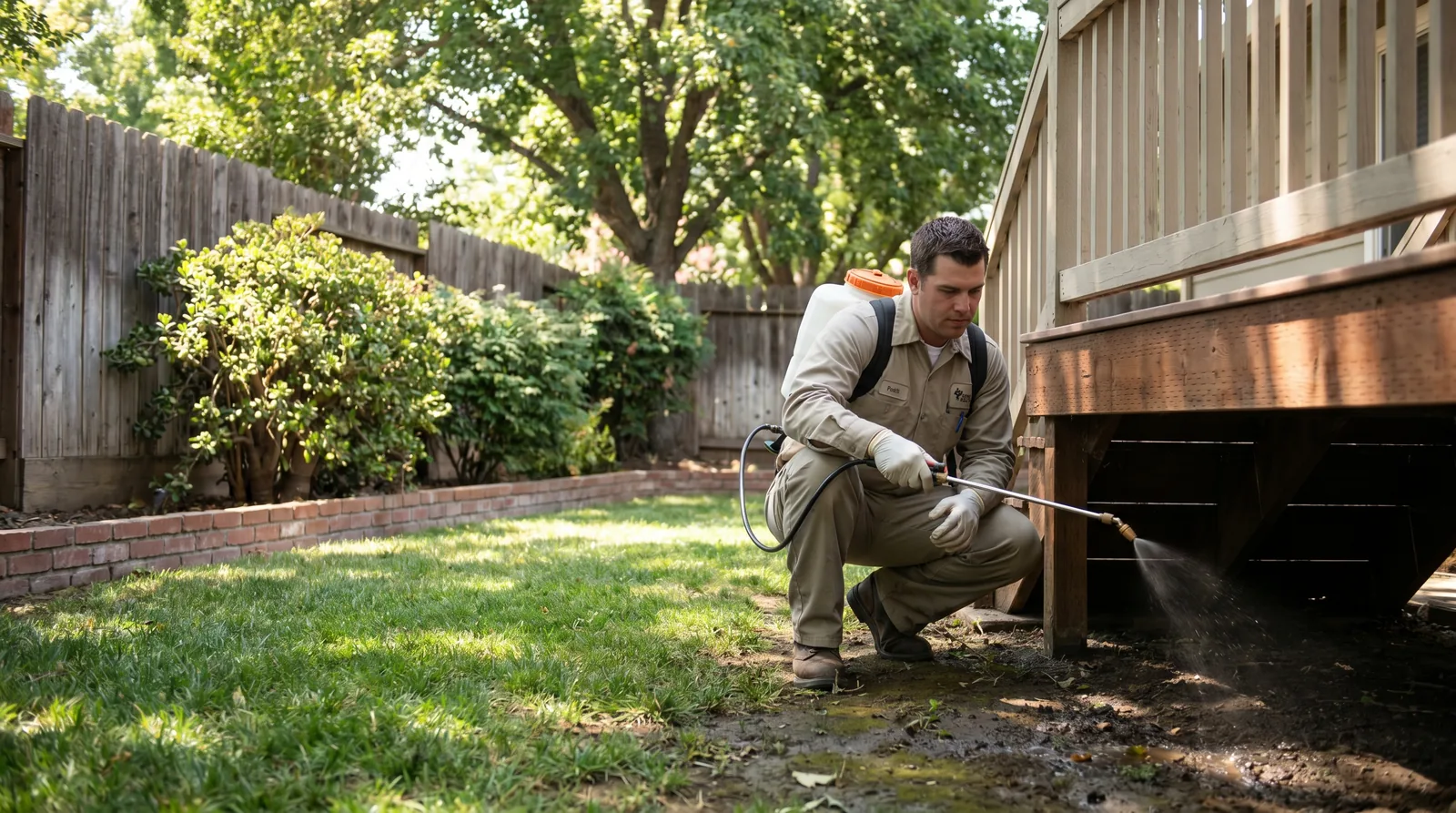
Fleas concentrate in shaded, humid harborage — under decks, in ground cover, along the foundation, and where pets rest. We target those zones (not a wasteful blanket spray of your whole lawn) with a treatment that includes an insect growth regulator, and we coordinate it with the interior so the house and yard stop re-seeding each other.
Where fleas live in a Fresno yard
Fleas do not live out in the open sun — the heat and dryness kill the eggs and larvae. They cluster in the cool, shaded, humid micro-habitats, almost always close to where animals rest. Knowing the hotspots is what makes outdoor treatment effective instead of a guess.
Flea hotspots in a Central Valley yard
Why the wildlife in your yard matters
Your own pets are not the only ones dropping flea eggs in the yard. Opossums, feral and neighborhood cats, raccoons, and rodents all pass through Fresno yards, and they are prolific flea carriers. They reseed the harborage even if your pet is on flawless flea control. That is why a yard can stay “fleay” long after the pet is protected — and why reducing the things that attract wildlife (open pet food, shelter, water) is part of long-term control.
Our yard flea treatment
1. Inspect for harborage. We map the shaded, moist zones and the paths pets and wildlife use, so treatment lands where fleas actually develop — not everywhere.
2. Treat the harborage and perimeter. We treat the under-deck, shrub, foundation, and pet-rest zones with a product that includes an insect growth regulator to stop eggs and larvae from maturing — a targeted approach, not a blanket lawn spray.
3. Coordinate with the interior and your pet. Yard work pairs with interior treatment and your pet’s vet product so the house, yard, and animal stop re-seeding one another.
4. Plan for our climate. Because the Central Valley flea season runs long, outdoor pressure rebuilds. For pet households we often recommend a recurring exterior service to keep the reservoir from rebuilding into a fresh indoor problem.
We treat targeted harborage zones at labeled rates, time applications to limit pollinator exposure, and tell you how long to keep pets off treated areas until they dry. A focused treatment is both safer and more effective than soaking the whole yard with a hose-end product.
How to prep your yard
Before treatment, mow the lawn and rake up leaf litter and debris so the product can reach the soil surface where larvae live. Trim back dense, low shrubs to let sun and air into chronically damp corners — fleas hate that. Pick up pet toys and bowls, and plan to keep pets indoors until treated surfaces dry.
Hose-end “kill everything” yard sprays mostly hit the open lawn, where fleas do not live, and miss the shaded harborage where they do. They also skip the insect growth regulator that breaks the cycle, so adults knock down for a few days and the next generation hatches right behind them. Targeting the harborage is what actually works.
Treat the yard and the house together
Treating only the yard leaves the indoor population to keep biting; treating only the house lets the yard re-seed it. The reliable fix is both at once, coordinated with your pet’s vet product and timed to the life cycle. See how we handle the inside in our pet-safe home flea treatment, and why repeat treatment is required in the flea life cycle guide.
See our full flea control →Yard flea treatment FAQ
Do I really need to treat the yard if my pet is on flea medication?
Often yes. Vet products protect the pet, but the yard harbors eggs and larvae — reseeded by your pet and by wildlife like opossums and feral cats — that keep producing new fleas. If fleas are concentrated outdoors, the yard will keep re-infesting the house no matter how well the pet is protected.
Is outdoor flea treatment safe for my garden, pets, and bees?
We treat targeted harborage zones at labeled rates rather than soaking the whole yard, time applications to limit pollinator exposure, and tell you how long to keep pets off until surfaces dry. That focused approach is safer and more effective than a blanket DIY spray.
How soon can my pets go back outside?
Once treated surfaces are dry — we give you the exact window for the product used. After that, normal yard use is fine.
How long does yard flea control last in Fresno’s climate?
Because our warm season is long and barely pauses in winter, outdoor flea pressure rebuilds over time. A single treatment helps, but pet households often do best on a recurring exterior service that keeps the reservoir from rebuilding.
Will you treat the inside of my home too?
Yes — the dependable fix is treating the yard and the home together, coordinated with your pet’s vet product, so the two stop re-seeding each other. We will scope both during your no-cost inspection.
Fleas riding in from the yard? We will treat the source.
Call (559) 472-8200 or request a no-cost inspection — we will scope your yard and home together and break the cycle.