
Home › Learn › Fleas
What Does a Flea Look Like?
Fleas are tiny — about 1 to 3 mm — reddish-brown, flattened side-to-side, wingless, and built to jump. Here is how to recognize one, and how to tell a flea from the other little specks in your pet’s fur or on your floor.
A flea is a tiny insect — only about 1 to 3 mm long, smaller than a sesame seed — with a shiny, reddish-brown to dark brown body that looks flattened from side to side, almost like it has been pressed thin. Fleas have no wings, but they have powerful back legs and can jump astonishing distances. On a pet you will usually see them as fast-moving dark specks down at the skin; on you, they tend to show up as quick dark dots around your ankles. The flea on Central Valley pets is almost always the cat flea (Ctenocephalides felis), which bites cats, dogs, and people alike.
Adult flea: 1–3 mm, reddish-brown, hard-shelled, flattened side-to-side, no wings, and it jumps. If it flies, it is not a flea. If it does not move, it is probably flea dirt (droppings), not a flea.
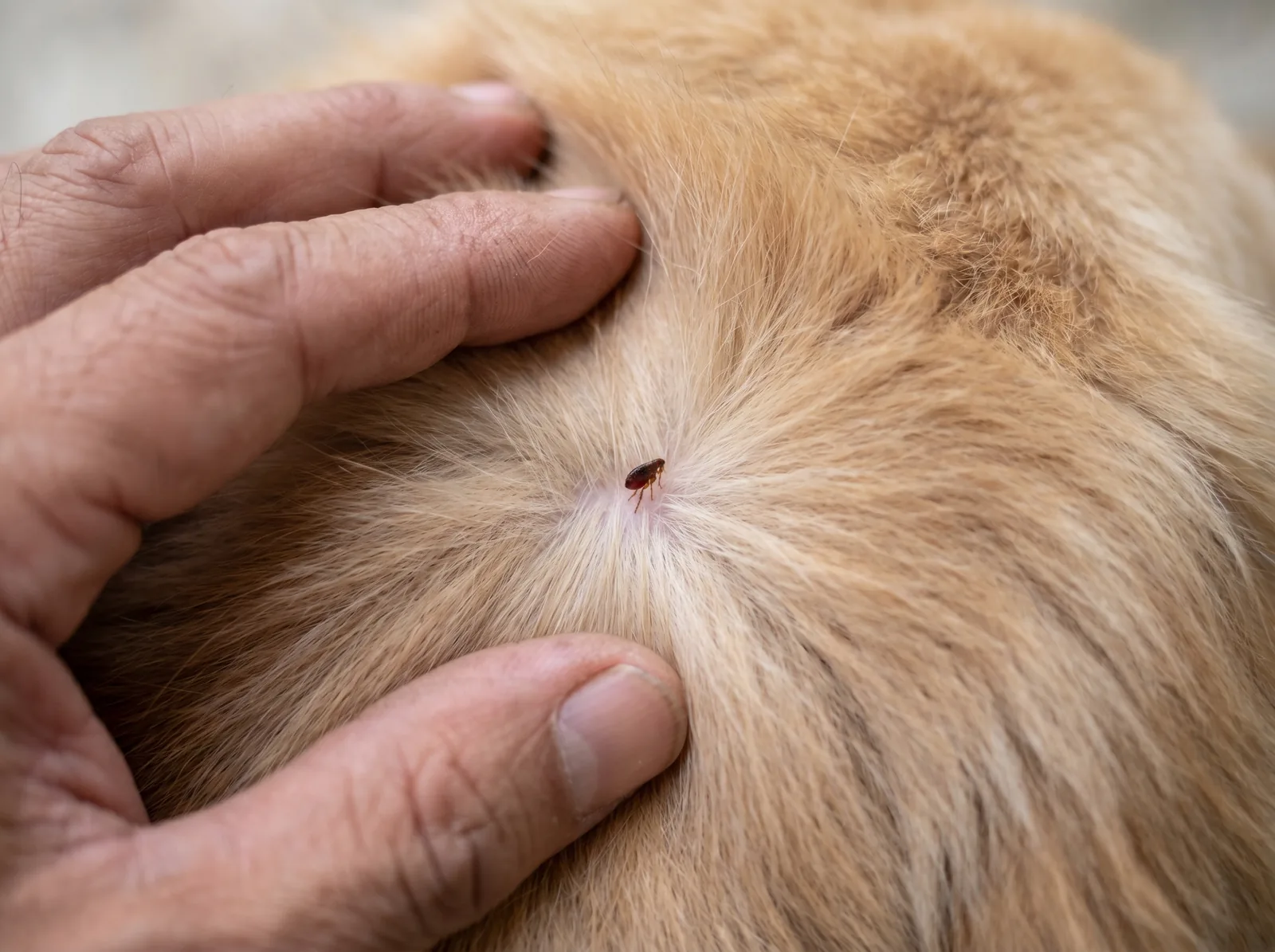
Size and color
Adult fleas are about 1 to 3 mm long — roughly the size of a comma on this page or a flake of ground pepper. Freshly emerged or unfed fleas look light reddish-brown; after feeding they darken to a deeper brown-black. Their bodies are covered in a hard, shiny exoskeleton and backward-pointing bristles that help them grip fur and slip forward through it. You can absolutely see them with the naked eye, but their speed and size make them easy to lose track of.
Body shape — and why fleas are so hard to squish
A flea’s most distinctive feature is that it is flattened side-to-side (laterally), not top-to-bottom like a bed bug. That narrow profile lets it knife through the dense hairs of a pet’s coat. Combined with that hard outer shell, it is also why fleas are notoriously hard to crush between your fingers — they pop out and away. The reliable way to kill one you have caught is to drop it into soapy water or crush it firmly against a hard surface with a fingernail.
Do fleas jump? And why they have no wings
Fleas cannot fly — they have no wings at all. Instead they jump, and they are among the best jumpers in the animal world: a flea can leap roughly 7 to 8 inches vertically and up to about 13 inches horizontally, on the order of 100 to 150 times its own body length. That jump is how a flea gets from the carpet or ground onto a passing host. So if the little bug you are looking at flew away, it was a gnat or fly, not a flea; if it sprang out of sight, that is classic flea behavior.
Flea vs. the other tiny specks you might see
Several small things get mistaken for fleas. Here is how to tell them apart at a glance.
Fleas vs. common look-alikes
The two that matter most: flea dirt (the black specks that turn red on a damp paper towel — see our flea eggs and flea dirt guide) confirms fleas even when you cannot catch an adult, and bed bugs are a completely different pest with a different treatment — compare them in fleas vs. bed bugs.
What flea eggs and larvae look like
The adults are only part of the picture. Flea eggs are tiny white ovals like grains of salt that fall off the pet into carpet and bedding; larvae are pale, worm-like, and hide deep in the fibers. Most of an infestation is these stages, not adults — which is why finding eggs and larvae matters as much as spotting a flea. We cover them in detail in what flea eggs look like and the flea life cycle.
Where you will actually see fleas
On a pet, check the warm, sheltered areas: the belly, the inner thighs, and especially the base of the tail, where fleas and flea dirt concentrate. Parting the fur down to the skin is the best way to spot them. Around the house, you will catch them as dark specks that vanish when you reach for them, on your socks and lower legs, or jumping up from the carpet. Seeing even a few usually means many more are developing out of sight.
Dealing with fleas? See our flea control →Flea identification FAQ
How big is a flea?
About 1 to 3 mm long — roughly the size of a sesame seed or a flake of ground pepper. They are visible to the naked eye, but their small size and speed make them easy to lose track of.
Can you see fleas with the naked eye?
Yes. Adult fleas are visible as small, fast-moving reddish-brown to dark specks, most easily spotted by parting a pet’s fur down to the skin on the belly or base of the tail.
Do fleas have wings or fly?
No — fleas are wingless and cannot fly. They move by jumping. If the insect flew, it was something else, like a gnat or fly.
How high can a flea jump?
Roughly 7 to 8 inches up and around 13 inches across — about 100 to 150 times its own body length. That jump is how a flea reaches a passing host from the ground or carpet.
What is the difference between a flea and flea dirt?
A flea is the live insect; flea dirt is its droppings — black, pepper-like specks of digested blood that turn rusty red on a damp paper towel. Flea dirt does not move and is often easier to find than the fleas themselves.
Found fleas on your pet or in your home?
Call (559) 472-8200 or request a no-cost inspection — we will confirm what you are seeing and clear it.