
Home › Learn › Fleas
What Do Flea Eggs Look Like? (Eggs, Larvae & Flea Dirt)
Flea eggs are tiny white ovals like grains of salt; flea dirt is black, pepper-like droppings that turn rust-red when wet. Here is how to recognize flea eggs, flea dirt, and larvae — and tell them from dandruff.
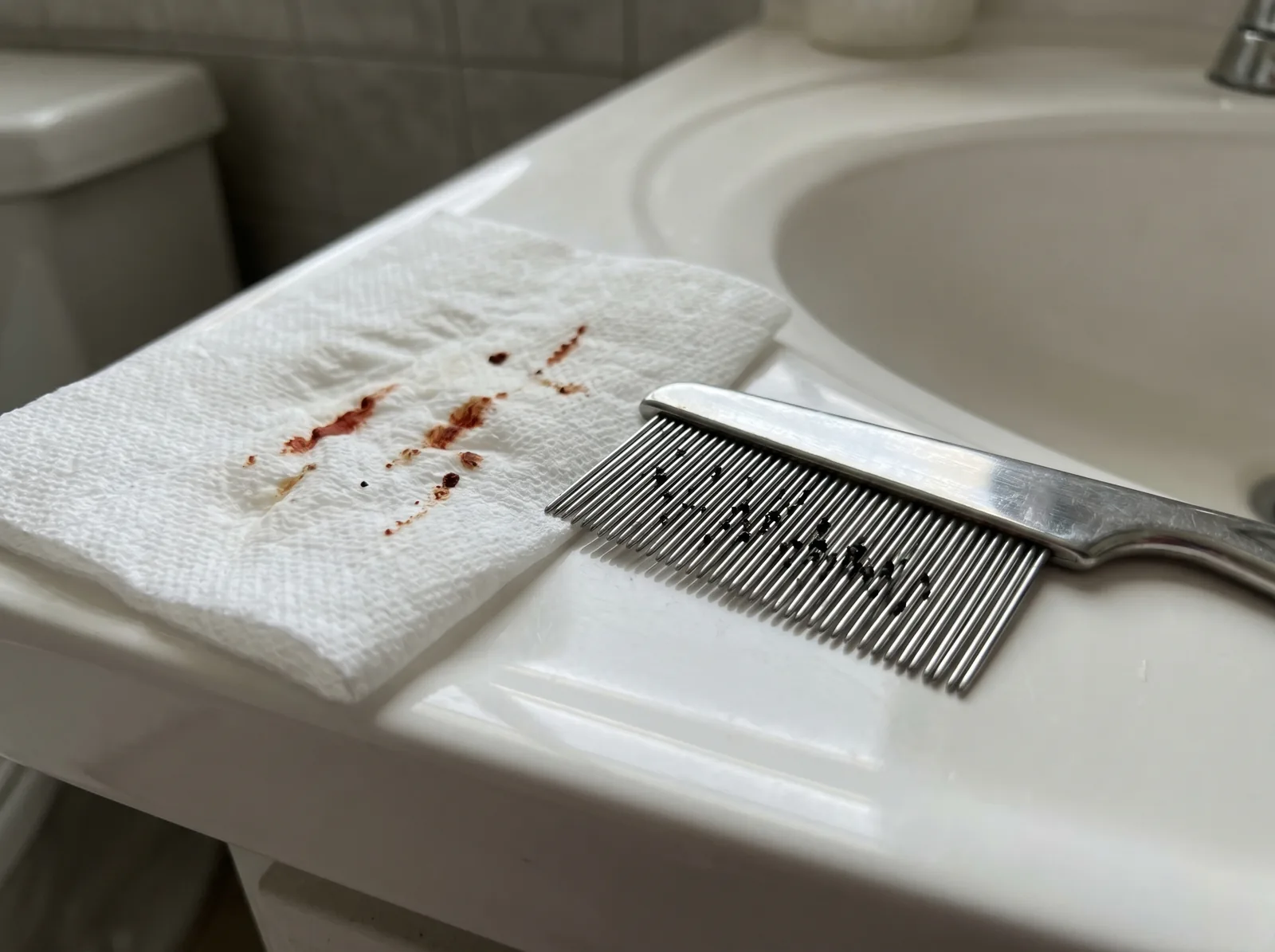
Flea eggs are tiny, oval, and white — about 0.5 mm, like a grain of salt or sugar. The catch is they are smooth and dry, not sticky, so they do not stay on the pet: they roll off into carpet, bedding, and floor cracks within hours. What people more often actually find is flea dirt — the black, pepper-like droppings adult fleas leave behind, which is digested blood and turns a tell-tale rusty red when it gets wet. Spotting either one is strong evidence that fleas are breeding in your home, not just visiting.
Flea eggs: tiny white ovals, like salt grains, that fall off the pet into the environment. Flea dirt: black specks that smear rust-red on a damp paper towel (the wet test). Dandruff: white flakes that stay white when wet. Find eggs or flea dirt and you have an active, breeding infestation.
What flea eggs look like
Up close, a flea egg is a smooth, rounded oval, off-white to translucent, roughly half a millimeter long — you can see them with the naked eye, but barely, and they are easiest to spot in clusters against a dark surface like a pet bed. Because they are not sticky, a female flea’s eggs scatter wherever the pet goes: about 20 to 50 eggs a day per flea, dropping into carpet, under cushions, and into the cracks where pets sleep. That is why the eggs you find are almost never on the pet — they are in the environment.
Flea eggs vs. flea dirt vs. dandruff
These three get mixed up constantly because they all show up in a pet’s coat. Here is the quick comparison — the wet test is the fastest way to be sure.
Flea eggs vs. flea dirt vs. dandruff
Comb your pet over a sheet of white paper and collect the specks. Sprinkle a few drops of water on them, or wipe them with a damp paper towel. If the specks dissolve into reddish-brown or rust-colored smears, that is flea dirt — digested blood — and you have fleas. If they stay dry, white, and flaky, it is dandruff. It is the single most reliable at-home flea check.
What flea larvae and pupae look like
After the eggs hatch, flea larvae are pale, whitish, worm-like, and a few millimeters long — they hate light and burrow deep into carpet fibers and cracks, where they feed on flea dirt. They then spin a sticky, debris-coated cocoon and become pupae, which are nearly invisible. You rarely see larvae or pupae directly, but they make up most of an infestation. We cover them in detail in the flea life cycle.
Where to look for flea eggs and dirt
Start where your pet sleeps — its bed, blanket, or favorite cushion — and look for salt-and-pepper grit: white egg specks mixed with black flea dirt. Then check the carpet and floor cracks in those rooms, and comb the pet itself, concentrating on the belly and the base of the tail. A flashlight and a white paper towel make the search much easier.
A flea passing through does not leave a carpet full of eggs. Finding flea eggs or significant flea dirt means adult fleas are reproducing inside your home, and the hidden larvae and pupae are already developing. The Central Valley’s warm climate only speeds that up — so it is a signal to act before the numbers climb.
How to get rid of flea eggs
You cannot reliably spray eggs away — they are tucked deep in fibers and new ones drop constantly. The dependable approach is mechanical plus an insect growth regulator: vacuum daily to pull up eggs and larvae, wash all pet bedding hot, treat the home with an IGR that stops eggs and larvae from maturing, and keep it up for several weeks to outlast the hatching pupae. Our step-by-step flea guide covers the full method, and for a heavy or stubborn case our pet-safe home treatment handles it on the life cycle’s timeline.
See our flea control →Flea eggs and flea dirt FAQ
What do flea eggs look like?
Tiny white to off-white ovals about 0.5 mm long — like grains of salt or sugar. They are smooth and dry rather than sticky, so they fall off the pet and collect in carpet, bedding, and floor cracks.
How can I tell flea dirt from dandruff?
Use the wet test: collect the specks and dampen them. Flea dirt is digested blood and smears reddish-brown or rust-red when wet, while dandruff stays white and flaky. Flea dirt is also darker and more granular than dandruff.
Are flea eggs visible to the naked eye?
Just barely — they are about 0.5 mm. They are easiest to see in clusters against a dark surface like a pet bed, often mixed with black flea dirt in a salt-and-pepper pattern.
Where do flea eggs end up?
Because they are not sticky, flea eggs roll off the pet within hours and collect wherever the pet walks and sleeps — carpet, bedding, upholstery, and floor cracks. That is why treating the environment, not just the pet, is essential.
Does finding flea dirt mean an infestation?
Usually yes. Significant flea dirt or flea eggs means adult fleas are feeding and reproducing in your home, with larvae and pupae already developing out of sight. It is a sign to treat promptly before the population grows.
Spotting flea eggs or flea dirt? Don’t wait for the population to climb.
Call (559) 472-8200 or request a no-cost inspection — we will confirm it and stop the breeding cycle.