
Home › Learn › Identify
Bald-Faced Hornets: Nests, Stings & How Dangerous They Are
The bald-faced hornet is the big black-and-white wasp behind those large grey “football” nests in trees and eaves. Here’s how to identify one, why it’s really a yellowjacket relative, and what to do about a nest.
The bald-faced hornet is a large, stout, black-and-white wasp — and despite the name, it’s not a true hornet at all but a relative of the yellowjacket. It builds the big, enclosed grey paper “football” nests you see hanging in trees and under high eaves. They’re beneficial predators, but they defend that nest aggressively and can sting repeatedly, which is what makes an unnoticed nest a real problem.
Black body, bright ivory-white face, about ¾ inch, building a large enclosed grey ball high up = bald-faced hornet. It’s actually a yellowjacket, not a true hornet. Harmless if you keep your distance, but very defensive within a few feet of the nest — and an enclosed nest at head height or above is a job for a pro, not a ladder and a can of spray.
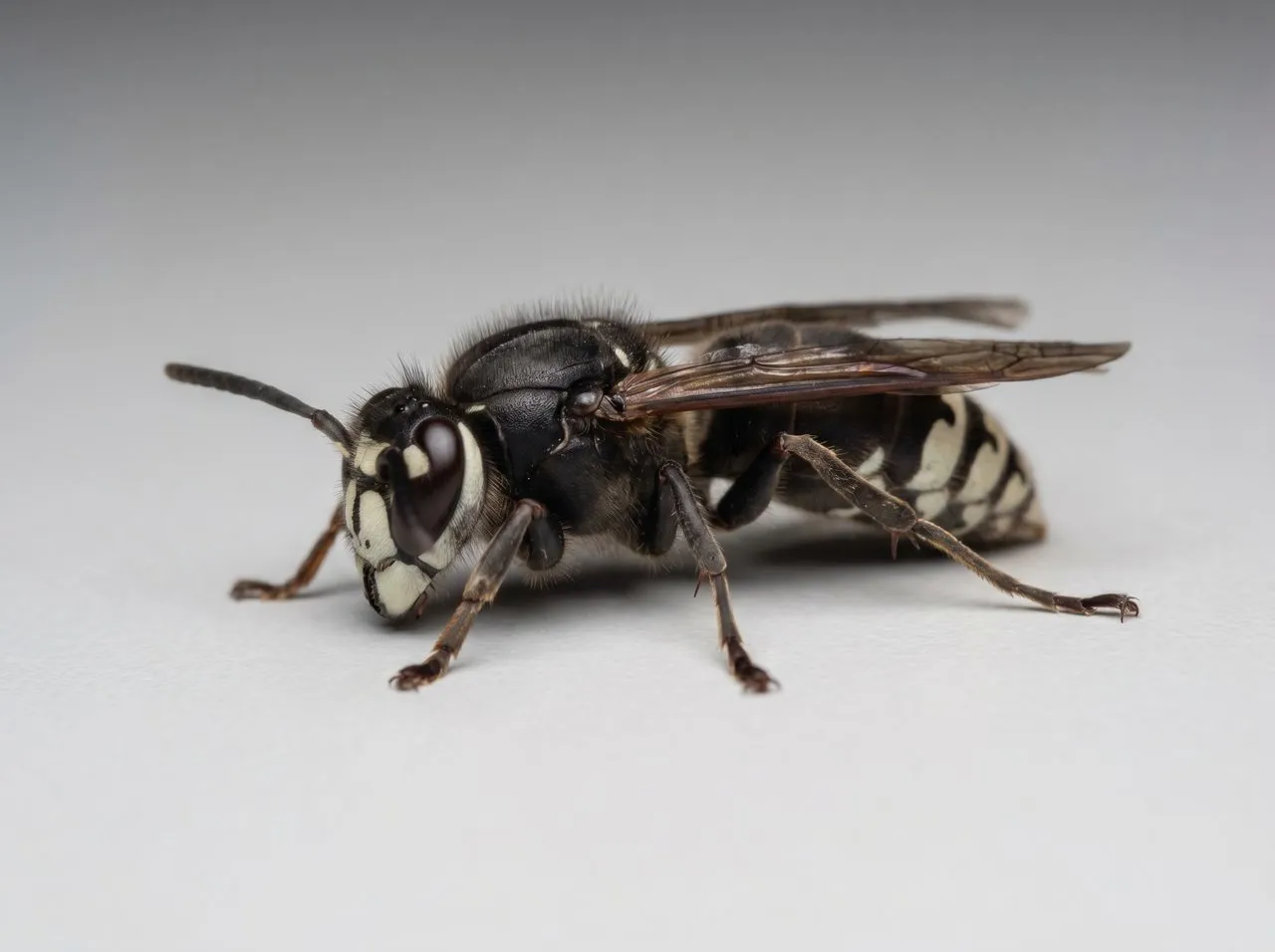
What a bald-faced hornet looks like
Bald-faced hornets are about three-quarters of an inch long — noticeably bigger and chunkier than a paper wasp or yellowjacket. They’re mostly matte black, with a distinctive ivory-white pattern on the face (the “bald” face that gives them their name) and white markings near the tip of the abdomen. The smoky wings and stout body complete the look. The white face is the giveaway: no other common wasp here has it.
The bald-faced hornet nest (the grey “football”)
The nest is unmistakable and is what most people notice first: a large, fully enclosed, grey papery ball or teardrop with a single entrance hole near the bottom, often the size of a football or basketball by late summer. They hang it in a tree, a tall shrub, or under a high eave, usually well off the ground. Unlike the open umbrella comb of a paper wasp, this nest is sealed — see how the nests compare on our wasp nest guide.
Are bald-faced hornets dangerous? Do they sting?
Away from the nest, bald-faced hornets are not especially aggressive and largely ignore people. Close to the nest is a different story: they’re among the most defensive wasps we deal with, will swarm out to confront an intruder within a few feet, and — because their stinger is smooth, not barbed like a bee’s — a single hornet can sting repeatedly. They can even spray venom toward the eyes of a threat. For most people the sting is painful but not dangerous; for anyone allergic, or facing a whole disturbed colony, it’s a medical risk. See wasp sting treatment for what to do.
Bald-faced hornet vs. yellowjacket vs. paper wasp
How the bald-faced hornet compares
In other words, the bald-faced hornet is essentially a big, black-and-white, tree-nesting yellowjacket. Our yellowjacket vs. wasp vs. hornet guide lays out all the look-alikes side by side.
What to do about a bald-faced hornet nest
An enclosed bald-faced hornet nest is one of the clearest “call a pro” situations in wasp control. The nest is sealed, so sprays don’t reach the colony inside; it’s defended aggressively; and it’s usually high up, meaning you’d be on a ladder with dozens of hornets pouring out. Knocking it down or spraying it in daylight is exactly how people get badly stung. The safe approach is professional removal, treated at dusk when the colony is home and calm. If the nest is small, brand-new, and you’re certain it’s inactive, it can be removed — but when in doubt, don’t risk it.
Because the nest is enclosed and defended, hitting it, spraying it, or pulling it down in daylight provokes the whole colony at once — and from a ladder that’s genuinely dangerous. Treat the nest at the source, at the right time of day, ideally with the right protective gear.
Bald-faced hornet FAQ
Is a bald-faced hornet a true hornet?
No. Despite the name, the bald-faced hornet (Dolichovespula maculata) is actually a type of yellowjacket, not a true hornet. It earned the “hornet” label from its large size and big aerial nest. The only true hornet established in North America is the European hornet.
Are bald-faced hornets dangerous?
They’re not very aggressive away from the nest, but they’re highly defensive close to it — they swarm intruders, sting repeatedly, and can even spray venom toward the eyes. For most people a sting is painful but not dangerous; for anyone allergic, or facing a disturbed colony, it’s a real medical risk.
What does a bald-faced hornet nest look like?
It’s a large, fully enclosed, grey papery ball or teardrop with a single entrance hole near the bottom, often football- to basketball-sized by late summer. They hang it in a tree, tall shrub, or under a high eave, well off the ground.
How do you get rid of a bald-faced hornet nest?
Because the nest is enclosed, fiercely defended, and usually high up, it’s not a DIY job — spraying or knocking it down in daylight provokes the whole colony. The safe route is professional removal, treated at dusk when the hornets are home and calm.
Do bald-faced hornets reuse their nest?
No. The colony dies off in fall and the nest is never reused — only newly mated queens survive winter to start fresh nests elsewhere in spring. An old nest can be taken down once you’re sure it’s inactive.
A grey hornet nest on your property?
Call (559) 472-8200 or request a no-cost inspection — bald-faced hornet nests are best removed by a pro, safely and at the right time of day.