
Home › Learn › Boric Acid for Roaches
Boric Acid for Roaches: Does It Actually Work?
Boric acid does kill roaches — but only when they eat it, and only if you apply it right. Here's the honest breakdown.
Yes, boric acid kills roaches — but slowly and only by ingestion. A roach walks through the powder, grooms it off, eats it, and dies in a few days; it spreads through the colony via grooming and feeding. It is not a repellent, and a heavy German-roach infestation usually outbreeds it.
Does boric acid actually work on roaches? The honest answer
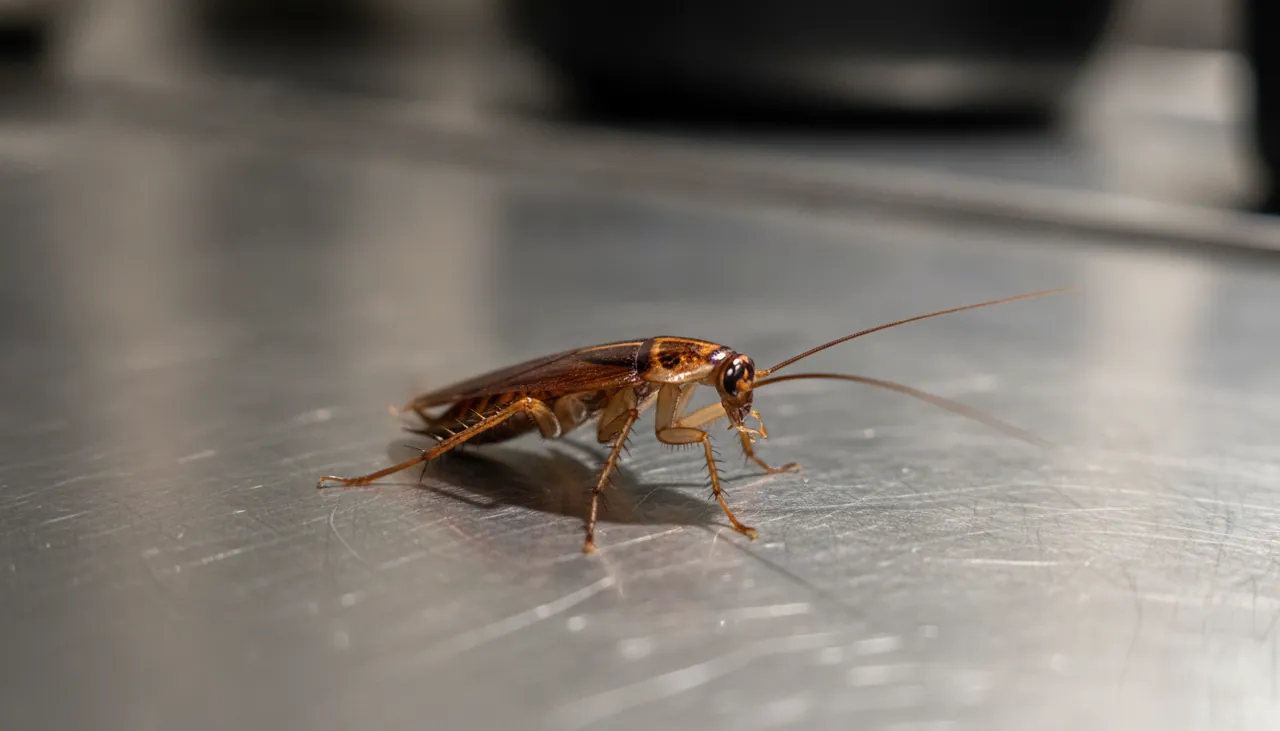
Boric acid genuinely kills cockroaches — it's been a registered insecticide for over a century, not a folk remedy. But two things temper that. First, it's slow: a roach that picks up the powder usually dies within a few days, and a colony takes two to three weeks to thin out. Second, it works mainly by ingestion — the roach has to eat it, which happens when it grooms the dust off its body or feeds on a treated bait.
So the powder isn't magic, and it isn't a repellent you sprinkle to make roaches leave. Done right — a thin film in the cracks where roaches actually travel — it quietly knocks down a light, scattered population. Done wrong, it sits there doing nothing while the roaches walk around it. Whether it works comes down almost entirely to application and to how bad the infestation already is.
How boric acid actually kills a cockroach
When a roach crosses a thin layer of boric acid, the fine particles cling to its legs, antennae, and body. Roaches are compulsive groomers, so within minutes it starts cleaning itself — and swallows the powder. Once ingested, boric acid acts as a stomach poison, damaging the gut and disrupting the insect's metabolism. The roach typically dies within a few days. The powder is also mildly abrasive to the waxy outer shell, but the lethal blow is the dose it eats.
The colony effect is what makes boric acid useful rather than just a single-roach killer. A poisoned roach lives long enough to carry traces back to its harborage; other roaches then pick up the dose by grooming and by feeding on the droppings and bodies of the dead. That secondary spread reaches insects you never treated directly. The key thing to understand: boric acid is not a repellent. Roaches don't sense it and avoid it — they walk right through it, which is exactly why thin-film placement matters. If you want the full playbook, see our guide on how to get rid of cockroaches.
How to apply boric acid the right way
Almost every failed boric-acid job is an application problem. The rule is counterintuitive: less powder works better. A thick pile is a wall roaches walk around; a film they can barely see is a trap they walk through. Here's the sequence we'd use, and it starts with knowing where cockroaches hide so you treat their real travel routes.
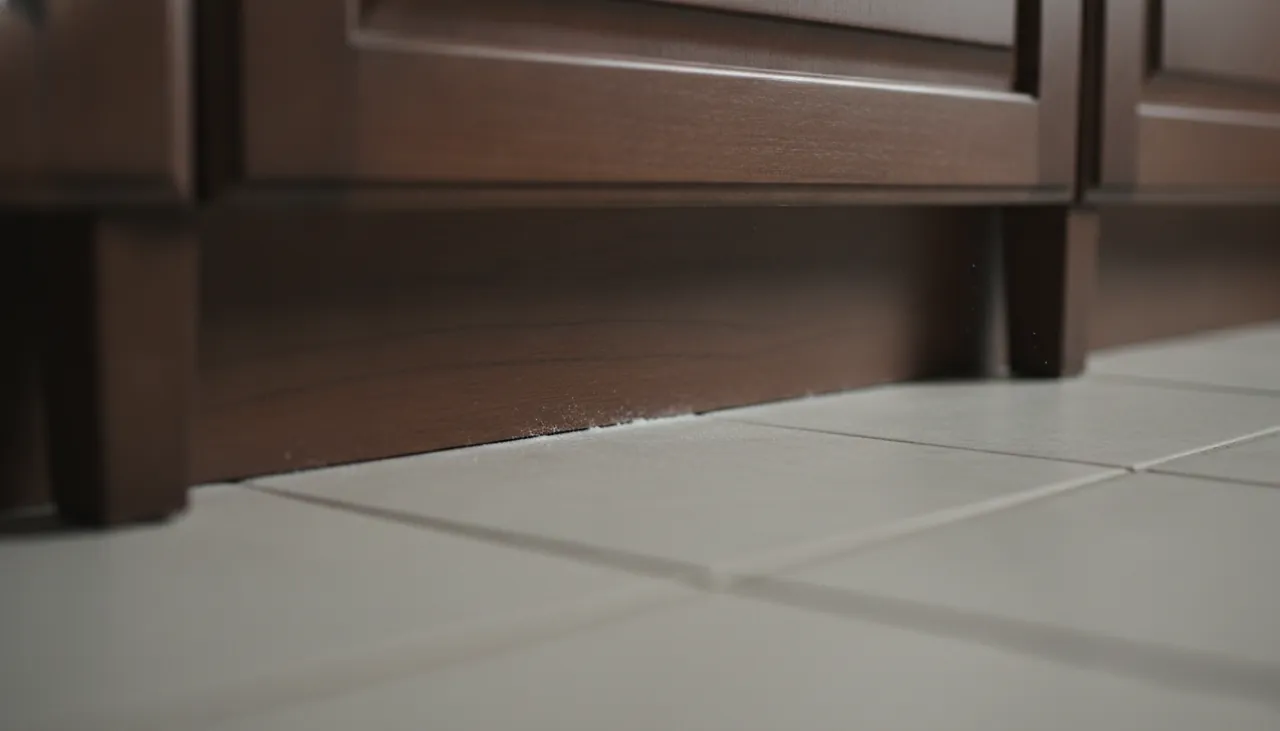
Find the hideouts. Roaches harbor in warm, dark, tight spaces — under and behind the fridge, dishwasher, and stove; inside the motor compartments of appliances; under the sink; and in cracks along baseboards and cabinet edges.
Lay down a thin, barely-visible film. Lightly dust a fine layer into those cracks and gaps. If you can see a clear white line, it's too thick — sweep most of it away. Roaches must walk through it, not over it.
Target the runways behind and under appliances. Treat the floor and wall voids behind the fridge and stove and under the dishwasher — the highways roaches use at night — rather than open, visible floor.
Keep it bone dry. Boric acid only works as a dry powder. Any treated spot that gets damp or mopped is dead; re-dust after cleaning. Skip sink edges, dishwasher splash zones, and other wet areas entirely.
Keep it away from pets, kids, and food surfaces. Never apply on open counters, inside cabinets where dishes or food are stored, or on exposed floor a child or pet can reach. Confine it to sealed cracks and the backs of appliances.
Wait and reapply. Don't expect overnight results — give it one to three weeks, leave it undisturbed, and re-dust thin layers as needed while the colony cycles down.
Boric acid vs. the other DIY roach remedies
Boric acid is one of several things people try in a kitchen. Some are real tools; some are internet myths. Here's how the common ones actually compare.
How boric acid stacks up against other DIY roach methods
Why DIY stalls on a German-roach infestation
Here in Fresno, the roach in apartment kitchens is almost always the German cockroach — and that's the species where boric acid hits its ceiling. German roaches breed extraordinarily fast. A single female and her offspring can produce hundreds of new roaches in a few months, and a thin layer of powder simply can't kill adults faster than the colony replaces them. Learn more about why this species is so persistent in our German cockroach guide.
The egg problem makes it worse. German roaches carry their eggs in a hard protective case called an ootheca, and boric acid does not penetrate it. You can knock down the adults you treat, but the next batch of eggs hatches untouched, and the cycle restarts. That's the maddening pattern we hear constantly in Fresno apartments — the powder works for a week or two, the roaches seem gone, then they're back. It isn't that the boric acid failed; it's that DIY alone can't outrun the breeding.
Get a No-Cost Roach InspectionWhen it's time to call a pro
Boric acid is a reasonable first move for a few stray roaches in a clean, dry kitchen. But call a professional if you're seeing roaches in daylight, finding them in multiple rooms, spotting egg cases or droppings, or you've dusted faithfully for several weeks and they keep coming back. Those are signs of an established breeding population — the German-roach situation DIY can't clear.
A licensed tech uses a combination DIY can't replicate: professional-grade baits that disrupt feeding, insect growth regulators that stop nymphs from maturing, and crack-and-crevice treatment placed precisely where the colony lives. Total Pest Control has served Fresno and the Central Valley since 2020, and our long warm season keeps roaches active nearly year-round — so a stalled DIY job rarely fixes itself. See how we handle it on our cockroach control page.
Boric Acid for Roaches FAQ
How long does boric acid take to kill roaches?
An individual roach that picks up and grooms in the powder usually dies within a few days — commonly two to seven. Clearing a colony takes longer — typically two to three weeks — because the dose has to spread roach-to-roach through grooming and feeding. You'll often see fewer roaches in the first several days, but full reduction is gradual, not overnight.
Is boric acid safe for pets and kids?
Boric acid is low in toxicity but not harmless — it can irritate or sicken pets and children if swallowed in quantity. Keep it strictly inside sealed cracks and behind appliances where kids and pets can't reach, never on open floors, counters, or in food cabinets. If a child or pet ingests it, contact Poison Control or your doctor.
What's the difference between boric acid and borax?
Both come from the element boron. Borax is the cruder, mined form often sold as a laundry booster; boric acid is the more refined version used for pest and other applications. Boric acid is the better roach killer — its finer powder clings to and is ingested by roaches more readily, so it works at lower doses and with fewer applications than borax.
Why are roaches avoiding the boric acid?
Usually it's not avoidance — boric acid isn't a repellent, so roaches don't sense it. The real problem is application: a pile that's too thick becomes a wall they walk around instead of through, or it's placed away from their actual runways. Spread a barely-visible thin film inside the cracks and behind appliances where roaches travel.
Does boric acid kill roach eggs?
No. Cockroach eggs are sealed inside a hard protective case called an ootheca, and boric acid cannot penetrate it. The powder kills adults and the nymphs that contact it after hatching, but the eggs themselves survive. That's why a fast-breeding German-roach infestation keeps rebounding — each new batch hatches untouched and restarts the cycle.
Roaches keep coming back after the powder?
If DIY boric acid has stalled, you likely have a breeding German-roach population. Total Pest Control clears Fresno kitchens with pro-grade baits and growth regulators. Get your no-cost inspection.