
Home › Learn › Spiders › What a Black Widow Looks Like
What Does a Black Widow Look Like?
A shiny black body and a red hourglass underneath — the western black widow is California’s one spider worth knowing on sight. Here is how to identify the female, the very different-looking male, and the juveniles.
An adult female western black widow is unmistakable once you know the two things to look for: a shiny, jet-black body with a round, bulbous abdomen, and a bright red hourglass mark on the underside of that abdomen. She is about half an inch in the body, with long black legs. In California this is the one spider worth identifying on sight, because it is the only one whose bite can occasionally need medical attention. The catch is that the male and the young look nothing like her — which is where most misidentifications happen.
The classic black widow is the adult female: glossy black, round belly, red hourglass underneath, in a messy web in a low dark spot. Males and juveniles are smaller, brown, and striped — and are not the dangerous ones. If it is shiny black with a red hourglass, treat it with respect.
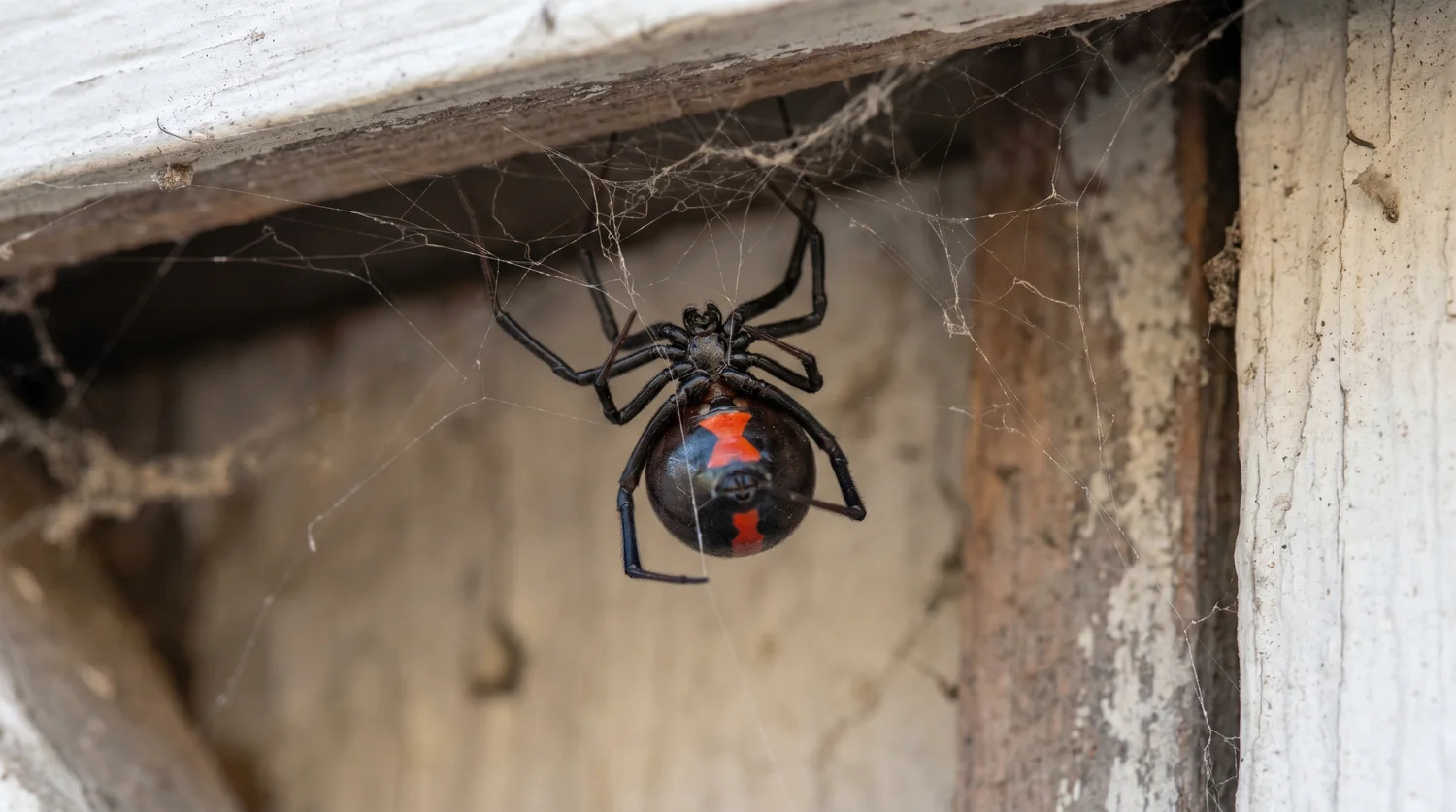
The adult female — the classic black widow
The female is what everyone pictures: glossy black, a round abdomen the size of a small pea, and the red hourglass underneath. Sometimes the hourglass is two separate red triangles rather than a perfect hourglass, and some females show a small red or orange spot on top of the abdomen too. She hangs upside down in her web, which puts that red mark in plain view if you look from below. She is not aggressive — she would rather drop and hide than confront you — but she will defend herself if pressed.
The male and juveniles look completely different
This is where people get tripped up. The male black widow is much smaller, lighter brown or tan, with longer legs and pale markings — he looks like a different species entirely and is essentially harmless. Juveniles start out tan and patterned with stripes and spots, and darken as they mature, gradually developing the adult coloring. So a brown, striped, smallish spider in a black-widow-type web may well be a young or male widow — but it is not the one that delivers the notable bite.
Black widow by life stage
Where black widows hide around Fresno homes
Black widows want low, dark, dry, undisturbed places. In Fresno and Clovis, that means garage corners and stored boxes, water-meter and irrigation-valve boxes, woodpiles and block walls, the undersides of patio furniture and outdoor seating, and the gaps under and behind anything that has been sitting in the yard. They are an outdoor spider that uses the sheltered edges of your home. Reaching bare-handed into those spots is the main way people get bitten — so wear gloves.
The web is a clue too
A black widow’s web is not the neat wheel of a garden spider — it is a messy, irregular, three-dimensional tangle, and it is noticeably strong; if a web feels tough and crackly when you brush it, that is a sign. It is usually built close to the ground in a protected corner, with the spider tucked into the most sheltered part.
Egg sacs
If you find a female, you may also find her egg sacs — round, papery, tan-cream balls about a quarter-inch across, hung in the web. Each can hold hundreds of eggs, so a sac in a high-traffic area is worth dealing with. See how to identify a black widow egg sac →
Is it dangerous — and what should you do?
A black widow bite is painful and occasionally needs medical care, but it is rarely dangerous to a healthy adult — the real caution is for children, older adults, and pets. Read what a black widow bite involves → If you are finding widows around a home where kids or pets play, do not just knock down the one you see — they hide in numbers. See our black widow control →, or check the UC IPM spiders guide for more identification detail.
Get black widows handled →Black widow identification FAQ
How do I know if a spider is a black widow?
The adult female is glossy black with a round abdomen and a bright red hourglass on the underside, hanging upside down in a messy, strong web in a low dark spot. The hourglass is the most reliable identifier.
Are male black widows dangerous?
No. The male is small, brown, and long-legged, looks like a different species, and is essentially harmless. The notable bite comes from the adult female.
What does a baby black widow look like?
Juveniles are tan and patterned with stripes and spots, and they darken as they mature into the adult coloring. A brown, striped young spider in a black-widow-type web may be a juvenile widow.
Where do black widows hide?
In low, dark, undisturbed places — garage corners, stored boxes, meter and valve boxes, woodpiles, block walls, and under patio furniture. They are an outdoor spider that uses the sheltered edges of a home.
What should I do if I find a black widow?
Do not reach toward it bare-handed. If it is a single spider outdoors you can remove it carefully, but finding widows where children or pets are means there are likely more hidden nearby — that is worth a professional inspection.
Found a black widow around your home?
Call (559) 472-8200 or request a no-cost inspection. We treat where they hide — not just the one you spotted.