
Home › Learn › Rat Droppings vs Mouse Droppings
Rat Droppings vs Mouse Droppings: How to Tell Them Apart
Size is the fastest tell: rat droppings are about 1/2 to 3/4 inch; mouse droppings are tiny, about 1/8 to 1/4 inch. Here’s how to identify rodent droppings, gauge an infestation, and clean them up safely.
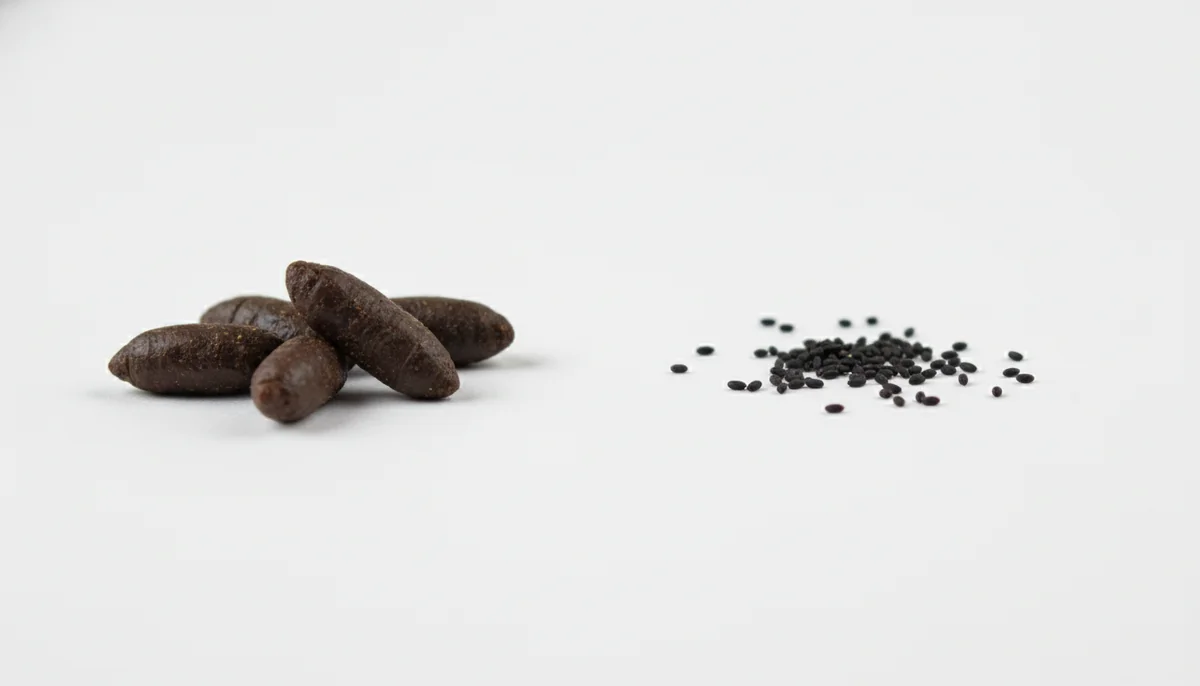
The fastest way to tell rat droppings from mouse droppings is size. Rat droppings are large — about 1/2 to 3/4 inch long and the thickness of an olive pit. Mouse droppings are tiny — about 1/8 to 1/4 inch, the size and shape of a grain of rice. Droppings are usually the first hard evidence of a rodent problem, and they tell you a lot: the species, where the rodents travel, and how active they are.

Rat vs mouse droppings at a glance
Rodent droppings compared
What do rat droppings look like?
Rat droppings are dark, shiny when fresh, and shaped like a spindle or capsule. Roof rat droppings (~1/2 inch) have pointed ends; Norway rat droppings (~3/4 inch) are larger with blunt, rounded ends. You’ll find them where rats travel and feed — roof rats up in attics and along beams, Norway rats at ground level. See the types of rats in California.
What does mouse poop look like?
Mouse droppings are small (1/8–1/4 inch), dark, and shaped like a grain of rice with pointed ends. A single mouse leaves 50–75 droppings a day, scattered along walls, in drawers and cupboards, behind appliances, and near food. Lots of small droppings in those spots usually means mice — see the other signs of mice in a house.
Fresh vs old droppings — is it active?
Fresh droppings are dark brown or black, shiny, and soft. Old droppings turn grey, dull, dry, and crumbly. If you clean an area and new droppings appear within a day or two, the infestation is active. The number also hints at the population — a lot of fresh droppings means more than one or two rodents.
Rodent droppings and urine can carry disease, including hantavirus from deer mice. The CDC says to ventilate the space, wear gloves and a mask, dampen droppings with disinfectant, wipe up and bag them — never sweep or vacuum dry, which can send particles into the air.
What to do next
Identify what you have, clean up safely, then deal with the source — droppings keep appearing until the rodents are gone and the entry points are sealed. See rat control or mouse control.
See rodent control in FresnoRodent droppings — FAQ
How do I tell rat droppings from mouse droppings?
Size. Rat droppings are about 1/2 to 3/4 inch long; mouse droppings are about 1/8 to 1/4 inch — roughly the size of a grain of rice.
What does mouse poop look like?
Small dark pellets, 1/8 to 1/4 inch, shaped like a grain of rice with pointed ends, scattered near food and along walls. A mouse leaves 50–75 a day.
What do rat droppings look like?
Dark, shiny spindle- or capsule-shaped pellets. Roof rat droppings are about 1/2 inch with pointed ends; Norway rat droppings are about 3/4 inch with blunt ends.
How dangerous is rodent poop?
It can carry disease, including hantavirus, salmonella, and others. Don’t sweep or vacuum it dry — ventilate, wear gloves and a mask, dampen with disinfectant, and bag it.
How do I clean up rodent droppings safely?
Per the CDC: air out the area, wear gloves and an N95 mask, spray droppings with disinfectant or a bleach solution, let them soak, wipe up with paper towels, and bag everything. Don’t sweep or vacuum dry.
Found droppings and not sure what’s there?
We’ll identify the rodent, find how it’s getting in, and stop it at the source. Book a no-cost inspection for your Fresno home.