
Home › Learn › Mosquitoes
Types of Mosquitoes in California (and the Central Valley)
Only a handful of mosquito species actually bite people here — and one invasive newcomer changed the game in Fresno County. Here is how to tell them apart and which ones matter.
California has more than 50 mosquito species, but only a handful regularly bite people in the Central Valley — and they are not all the same problem. Some carry West Nile virus. One invasive newcomer bites all day and breeds in a bottle cap of water. Knowing which mosquito is in your yard tells you when you are getting bitten, where it is breeding, and what it actually takes to stop it.
Two groups matter most around Fresno. Native Culex mosquitoes bite at dusk and dawn, breed in standing water, and are the main West Nile virus carriers here. The invasive Aedes aegypti — the "ankle-biter" — bites all day, breeds in tiny containers, and is now established across Fresno County. Both are why backyard source-reduction plus treatment beats waiting on a fogger truck.
Why the mosquito mix matters in Fresno
The Central Valley gives mosquitoes a long season — roughly April through October — of heat and irrigation. The species you are dealing with decides your strategy. Native Culex mosquitoes are an evening, standing-water problem you can largely treat at the property line. The invasive Aedes is a daytime, container-breeding problem that hides in the small stuff most people overlook. The table below is the quick field guide; the sections after it go deeper on the two that matter most.
California mosquitoes at a glance
The invasive ankle-biter: Aedes aegypti
Here is the local part most homeowners do not know: California’s very first Aedes aegypti were discovered in Clovis and Madera in 2013. They have since spread across Fresno County and much of the Central Valley. This is not the mosquito your parents dealt with.
Aedes aegypti is small and dark with bright white bands on its legs. It bites during the day, low on the body (hence "ankle-biter"), and it is aggressive — people often get several bites without ever seeing it. The reason it is so hard to control is the way it breeds: it lays eggs in the smallest amounts of water, a plant saucer, a bottle cap, a kid’s toy, a clogged gutter. The eggs can survive dry for months and hatch the next time that container fills. You can read more on where mosquitoes lay eggs and why dumping standing water is step one.
The West Nile carriers: Culex
The native Culex tarsalis and Culex pipiens are the workhorses of West Nile virus transmission in the Central Valley. They bite at dusk and after dark, breed in larger pools of standing water — neglected swimming pools, ditches, ponds, over-irrigated low spots — and Fresno County is one of California’s more persistent West Nile hotspots. Most people bitten never get sick, but the risk is real enough that it drives a lot of local treatment. We cover it in depth in West Nile virus in California.
Where they breed in a Fresno yard
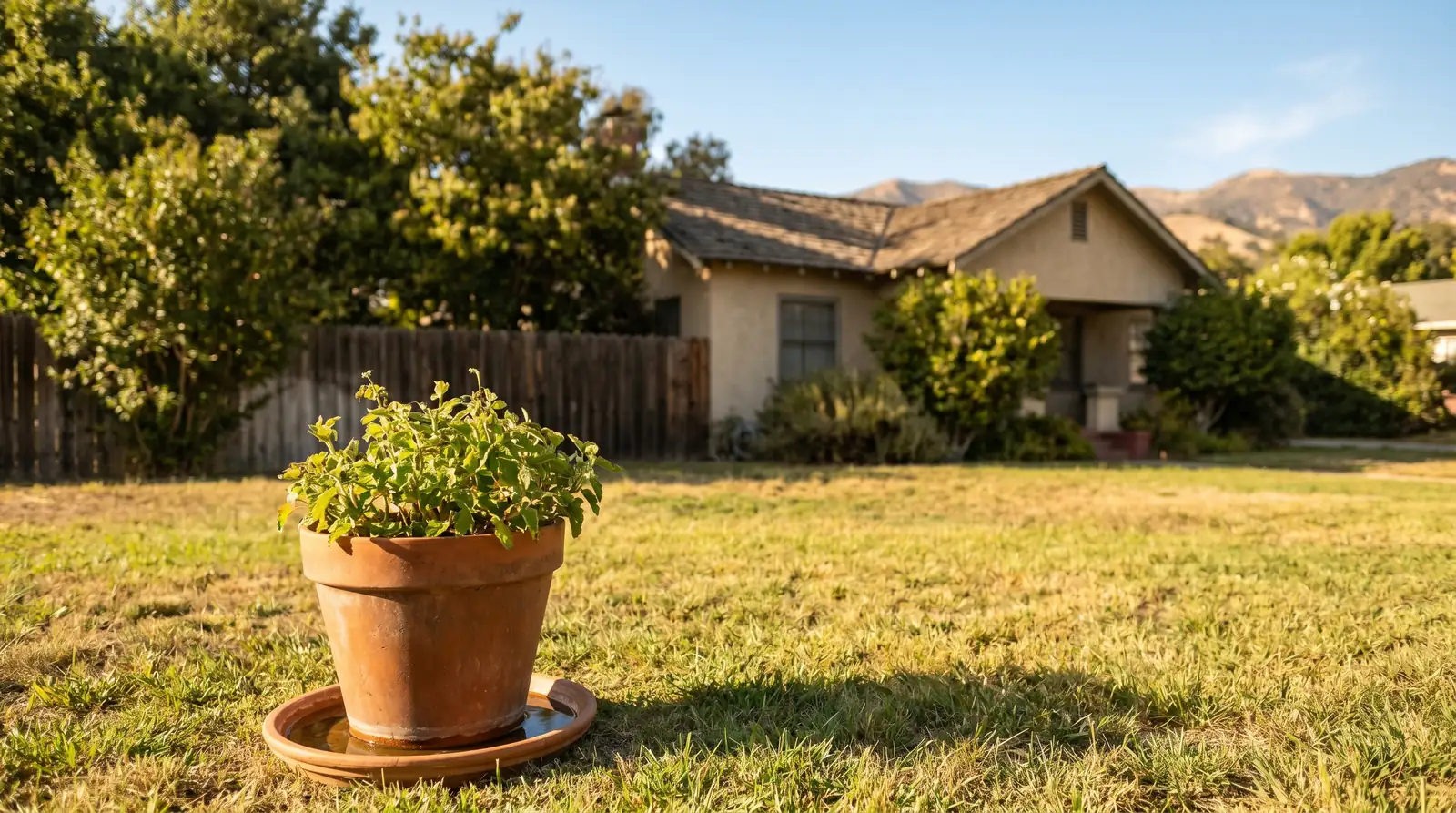
Every mosquito on this page needs standing water to reproduce — they just differ in how much. The Aedes ankle-biter exploits the tiny stuff; Culex prefers the bigger, stiller water. In a typical Fresno backyard that means plant saucers, bird baths, pet bowls, clogged gutters, tarps and toys that hold rain, AC condensate, low spots that puddle after irrigation, and an unmaintained pool or fountain. Emptying those on a weekly rhythm removes most of the problem before treatment even starts.
What this means for treating your property
Your local mosquito abatement district does important public work — surveillance, larvicide in public waterways, and responding to complaints — but they do not come treat your backyard on a recurring schedule. That is the gap we fill. A real yard program combines source reduction, larvicide in the water that cannot be drained, and a barrier treatment of the shaded resting areas where adults hide during the day. Because the Aedes and Culex bite at different times, treating the property is what actually buys you back the yard.
See our Fresno mosquito control program →Want the yard-specific version? Read how backyard mosquito treatment works, or learn what time of day mosquitoes are most active so you can time outdoor plans around them.
California mosquito FAQ
What is the most common mosquito in Fresno?
Native Culex mosquitoes (Culex tarsalis and Culex pipiens) are the most common biters around the Central Valley and the main West Nile virus carriers. The invasive Aedes aegypti ankle-biter is now well established here too and is the one most likely to bite you during the day.
What is the ankle-biter mosquito?
Ankle-biter is the nickname for the invasive Aedes aegypti — a small, dark, white-striped mosquito that bites low on the body during daylight. It was first found in California in Clovis and Madera in 2013 and is now across Fresno County.
Are there mosquitoes that carry disease in California?
Yes. Culex mosquitoes spread West Nile virus, which is present in Fresno County most years. The invasive Aedes mosquitoes can spread dengue, Zika and chikungunya; local transmission of those is still rare in the Valley but possible.
How do I know which mosquito I have?
Timing is the easiest tell. Getting bitten on the ankles during the day points to the Aedes ankle-biter. Getting bitten at dusk or after dark points to native Culex. The species table above covers appearance and breeding sites for each.
Does the mosquito abatement district treat my yard?
No. Districts like the Consolidated Mosquito Abatement District and Fresno Mosquito & Vector Control District handle public-area surveillance and larvicide and respond to complaints, but they do not provide recurring private backyard treatment. That is what a private mosquito service does.
Mosquitoes taking over your Fresno yard?
We identify what is breeding on your property, knock down the adults, and keep them out through the season. Call (559) 472-8200 or request a no-cost inspection.