
Home › Learn › Spiders › Black Widow vs Brown Recluse
Black Widow vs. Brown Recluse: How to Tell Them Apart
The two spiders everyone worries about — side by side. How to tell them apart, which one is actually dangerous, and the California twist: you will only ever meet one of them here.
The black widow and the brown recluse are the two spiders that get all the fear — and they are genuinely the two whose bites can matter medically in the United States. But they look nothing alike, they behave differently, and their bites do different things. There is also one fact that changes the whole question if you live here: in California, you will only ever run into one of them. The black widow is common across the state; the brown recluse is not established in California at all.
A black widow is shiny black with a red hourglass underneath; a brown recluse is uniform tan with a violin mark and six eyes. The widow’s bite causes pain and muscle cramps; the recluse’s can cause a slow-healing wound. In California it is moot — only the black widow lives here.
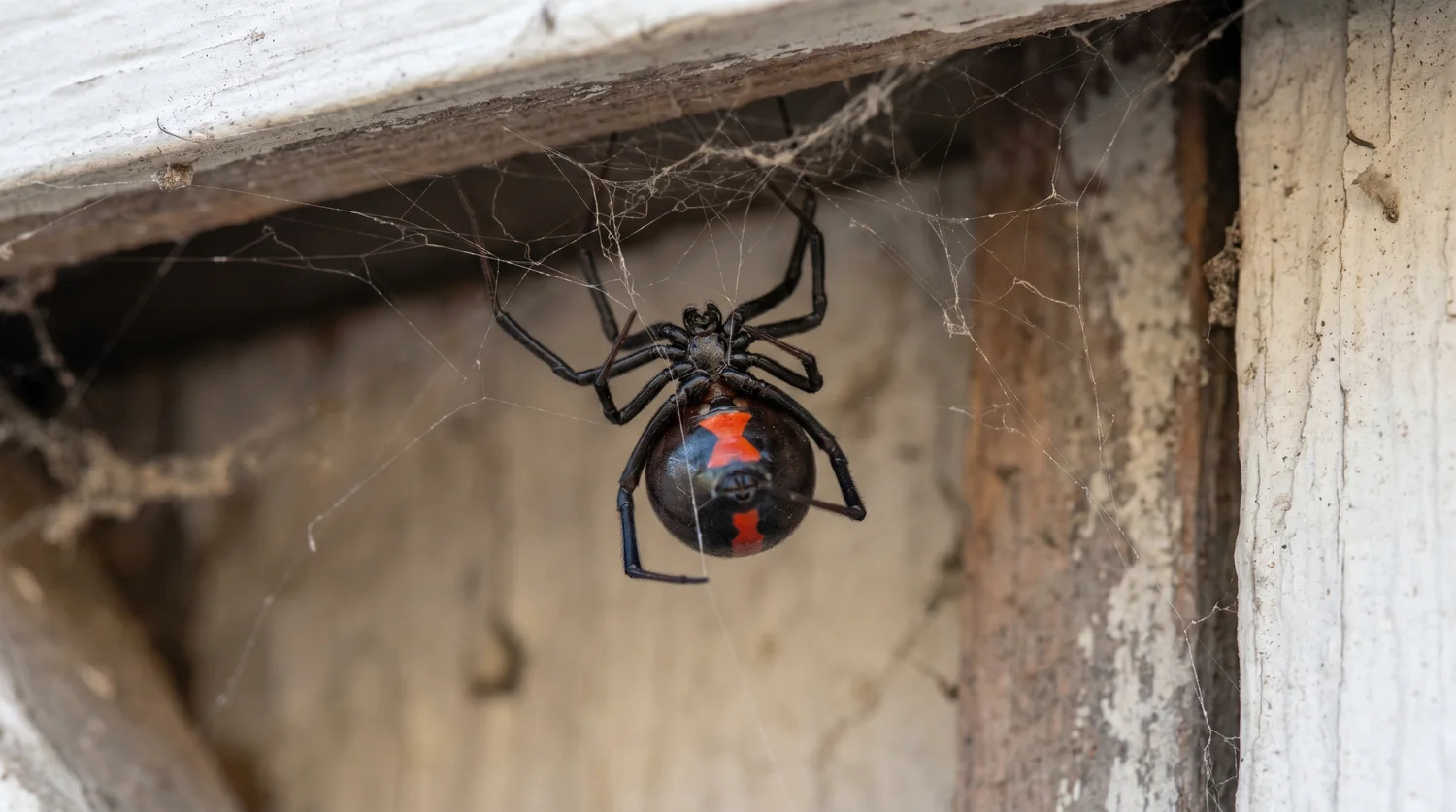
Black widow vs. brown recluse at a glance
The fastest way to tell them apart is color and marking. A black widow is glossy black with a bright red hourglass on the underside of a round abdomen. A brown recluse is a flat, uniform tan with a darker violin shape behind the head and — unusually — only six eyes. They do not resemble each other at all once you know what to look for.
How to tell them apart in three seconds
Is it shiny black with a round belly? Look underneath for a red hourglass — that is a black widow.
Is it flat and uniform tan? Look for a violin behind the head and count the eyes. Six eyes and smooth, unmarked legs point to a recluse — but remember they are not found in California.
Is it hairy, striped, or fast on the ground? That is a harmless wolf spider, the spider most often mistaken for a recluse — not either of these two.
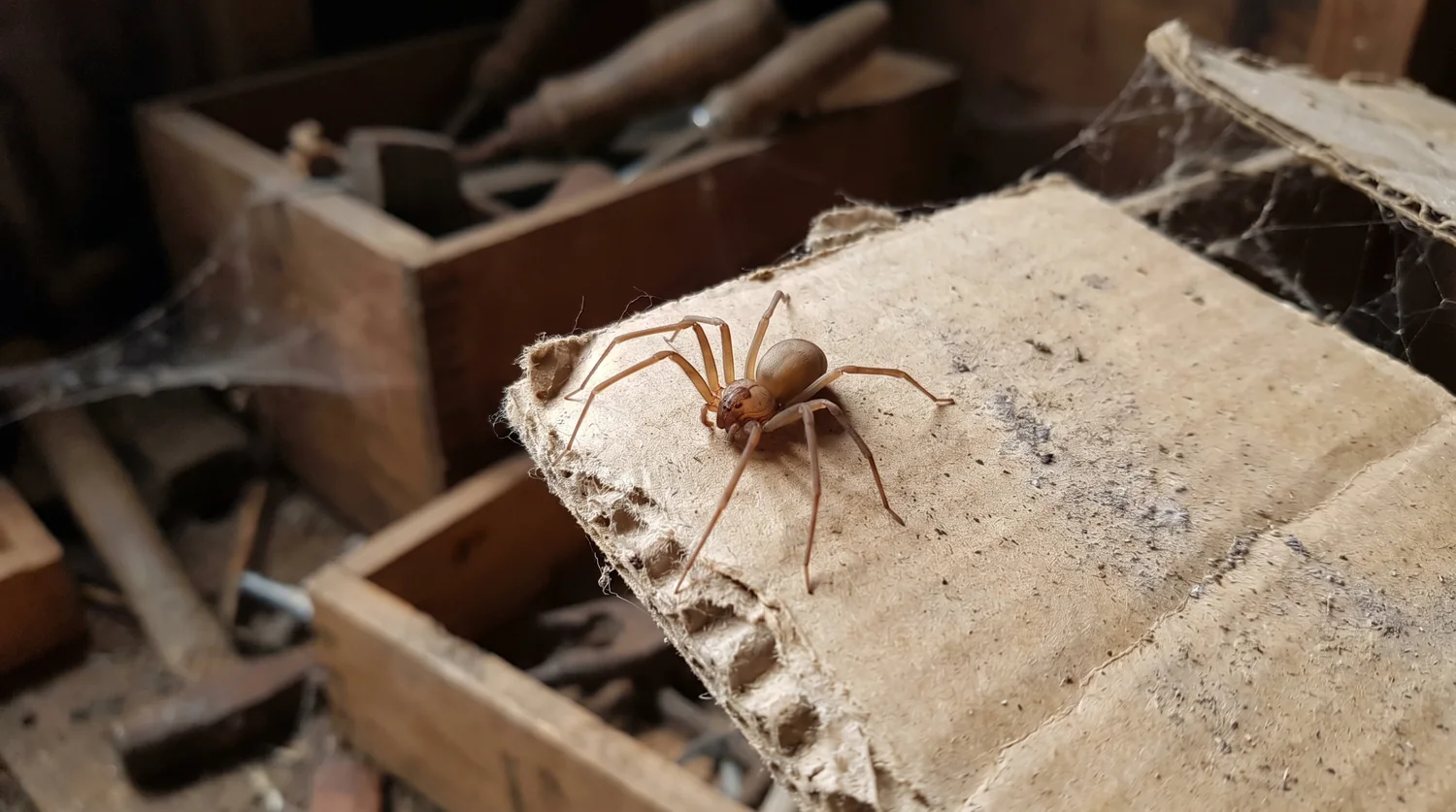
Which one is more dangerous?
They are dangerous in different ways. A black widow bite is neurotoxic: it can cause intense pain, muscle cramps, sweating, and nausea, but it is rarely life-threatening to a healthy adult and antivenom exists for severe cases. A brown recluse bite is cytotoxic: a minority of bites cause a slow-healing, sometimes necrotic wound. Both are overstated in the popular imagination — deaths from either are extremely rare. And in California the comparison is academic, because only the black widow is here. Read more about the black widow bite →
For any suspected black widow bite in a child, an older adult, or a pregnant person — or if there is severe pain, cramping, or trouble breathing — seek medical care and call Poison Control at 1-800-222-1222. This page is educational and not medical advice.
What to do if you have black widows
Since the black widow is the one you can actually encounter in Fresno, that is where to focus. They favor low, dark, undisturbed places — garages, woodpiles, meter boxes, the undersides of patio furniture. Wear gloves when reaching into those spots, knock down webs, declutter storage, and treat the hiding places. If you are finding widows where kids or pets play, that is worth a professional. See our black widow control →
Get black widows handled →Black widow vs brown recluse FAQ
Which is more dangerous, a black widow or a brown recluse?
Both can cause medically significant bites, but in different ways — the black widow’s bite is neurotoxic (pain and cramps) and the brown recluse’s can be necrotic (a slow-healing wound). Deaths from either are extremely rare. In California only the black widow is present.
Which one lives in California?
Only the black widow. The western black widow is common throughout California, while the brown recluse is not established in the state.
How do I tell a black widow from a brown recluse?
Color and marking. A black widow is glossy black with a red hourglass underneath; a brown recluse is uniform tan with a violin mark and six eyes. They look nothing alike once you know what to check.
What happens if a black widow bites you?
You may feel a sharp pinprick followed by pain, muscle cramps, sweating, and nausea over the next several hours. Most healthy adults recover with supportive care; seek medical attention for children, older adults, or severe symptoms.
Could a spider in my California home be a brown recluse?
Almost certainly not — they are not established in California. A brown, fast, hairy spider is far more likely to be a harmless wolf spider. See our guide on the brown recluse in California.
Think you have a black widow?
Call (559) 472-8200 or request a no-cost inspection. We identify what you found and treat where black widows hide.