
Home › Learn › Spiders › Black Widow Bite
Black Widow Bite: Symptoms, Timeline & When to Worry
A black widow bite is painful but rarely dangerous to a healthy adult. Here is what it feels like, how symptoms unfold, the clear signs you should seek care, and what to do in the meantime.
A black widow bite is usually painful, but it is rarely dangerous to a healthy adult. Most people recover with supportive care, and deaths are extremely rare. The bites that need closer attention are in young children, older adults, pregnant people, and pets, or when symptoms are severe. This page explains what a bite feels like, how the symptoms typically unfold, and the clear signs that mean you should get medical care.
If you think you were bitten by a black widow and have severe pain, cramping, trouble breathing, or the bite is on a child or older adult, seek medical care now and call Poison Control at 1-800-222-1222 (no-cost, 24/7). When in doubt, get it checked.
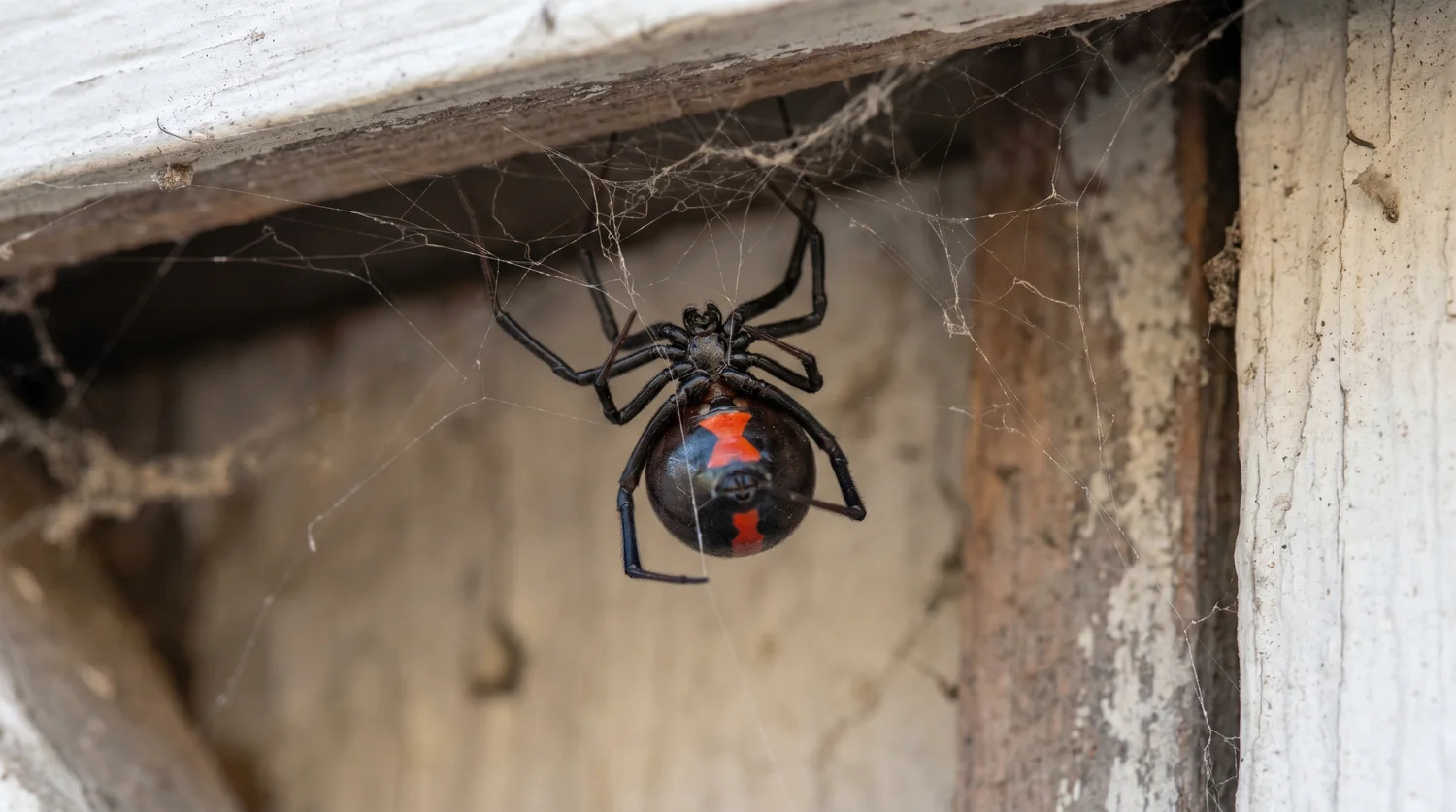
What a black widow bite feels like
The bite itself often feels like a small pinprick — some people barely notice it at first, and you may see two tiny puncture marks. Within an hour or two the area usually becomes painful and red, and a distinctive symptom can set in: muscle cramping that spreads outward from the bite. Black widow venom acts on the nervous system, so the hallmark of a significant bite is cramping pain (often in the abdomen, back, and legs) rather than a wound at the bite site. This collection of symptoms is sometimes called latrodectism.
Symptom timeline
Symptoms come on over hours, peak, and then ease. This is a general picture — not everyone follows it, and reactions vary with the person and the amount of venom.
Get medical attention if: the person bitten is a young child, an older adult, or pregnant; there is severe or spreading cramping, chest or abdominal pain, or trouble breathing; symptoms are getting worse rather than better; or you are simply not sure. Call Poison Control at 1-800-222-1222 for no-cost guidance any time, and call 911 for any breathing difficulty.
First aid while you arrange care
Stay calm and still. Keeping the bitten area still slows the spread of venom.
Clean it. Wash the bite with soap and water.
Cool it. Apply a cool, damp cloth or a wrapped ice pack to ease pain and swelling.
Do not cut, suck, or apply a tourniquet. Those old remedies cause harm and do not help.
Note the time and, if it is safe, the spider. A photo helps a clinician confirm it was a widow.
How dangerous is it, really?
Less than the reputation suggests. The large majority of black widow bites resolve with supportive care — pain control and monitoring — and an antivenom exists for severe cases. Fatalities are extremely rare and occur mainly in the very young, the very old, or people with other health problems. The bite deserves respect and attention, not panic. For medical background, the CDC venomous spiders page and Poison Control are good references.
Avoiding bites around the house
Almost all black widow bites happen when someone reaches bare-handed into a spot where a widow is hiding — a stored box, a meter box, a woodpile, under patio furniture. Wear gloves when working in those areas, shake out shoes and gloves left in the garage, and keep widow habitat (clutter, woodpiles, debris) away from where people spend time. Knowing what a black widow looks like helps you spot one before you reach. If you are finding them where kids or pets play, treat the hiding places, not just the spider you see — see our black widow control →.
Get black widows handled →Black widow bite FAQ
How serious is a black widow bite?
For a healthy adult, usually not very — it is painful and can cause muscle cramps, but most people recover with supportive care. Bites in young children, older adults, and pregnant people, or with severe symptoms, need prompt medical attention.
When should I go to the ER for a black widow bite?
Seek care for severe or spreading cramping, chest or abdominal pain, trouble breathing, or any bite on a child or older adult — and call 911 for breathing difficulty. Poison Control (1-800-222-1222) can advise any time.
How long do black widow bite symptoms last?
Symptoms usually build over the first several hours, peak within a day or two, and ease over a few days. Pain and cramping are the main features rather than a wound at the bite site.
What does a black widow bite look like?
Often very little — a small red area, sometimes with two tiny puncture marks. Black widow venom affects the nervous system, so the cramping pain is more telling than the appearance of the bite.
Can a black widow bite kill you?
It is extremely rare. Deaths are uncommon and occur mainly in the very young, the very old, or people with other health conditions. Antivenom exists for severe cases.
Black widows where your family spends time?
Call (559) 472-8200 or request a no-cost inspection. We find and treat where black widows hide so bites do not happen.