
A spider egg sac is the small, round or teardrop-shaped silk ball you find tucked into a web or a sheltered corner — it is where a female spider seals her eggs. Most are harmless and belong to ordinary house or garden spiders. The one worth identifying with care is the black widow egg sac, because a single sac can hold hundreds of eggs. This guide shows you what spider egg sacs look like, how to tell a widow’s sac from a harmless one, and what to do.
A spider egg sac is a silk ball of eggs, usually a quarter-inch or so, hung in a web or hidden in a corner. Most are harmless. A black widow sac is round, papery, and tan-cream, in a strong messy web low to the ground — those are worth removing, especially near where people are.
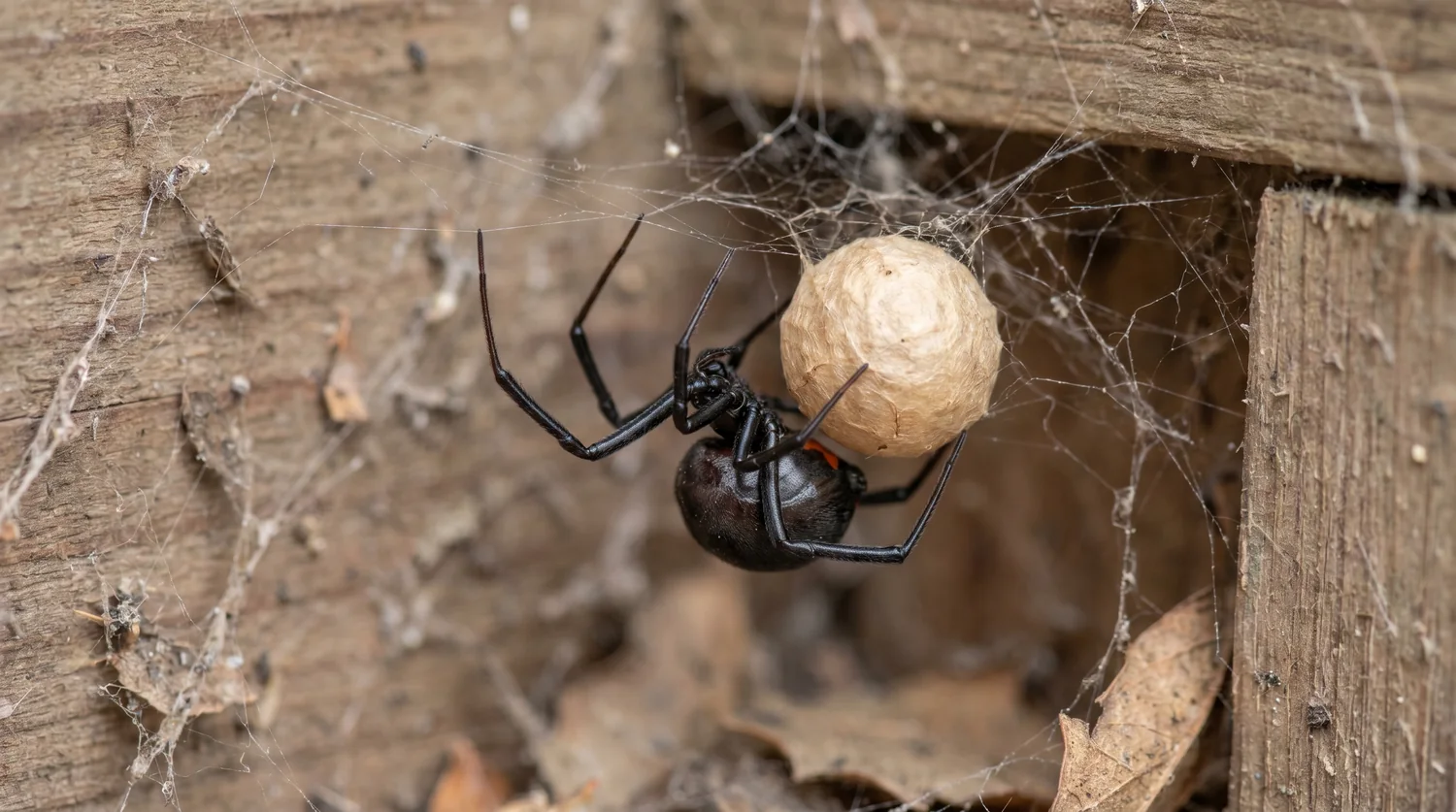
What spider egg sacs look like
Egg sacs vary by species but share a basic look: a ball of silk, anywhere from a few millimeters to about a half-inch, in white, cream, tan, or brown. Some are smooth and papery, some fluffy or fuzzy, and some have a slightly bumpy or textured surface. You will usually find them suspended in a web, attached under a ledge, or tucked into a protected corner. A female may guard the sac nearby, which is itself a clue to which spider made it.
Common spider egg sacs
How to spot a black widow egg sac
A black widow’s egg sac is round to slightly pear-shaped, about a quarter-inch across, papery, and tan to cream colored — noticeably tougher and smoother than a fluffy house-spider sac. The biggest tell is where it is: in a strong, messy, three-dimensional web built low and in a dark, sheltered spot (a garage corner, a meter box, under furniture), often with the glossy black female nearby. If you see that combination, treat it as a widow sac. Confirm the spider with our black widow ID guide →
Does an egg sac mean an infestation?
One sac from a house or garden spider is normal and not a sign of an infestation — spiders are simply doing what spiders do. What is worth acting on is finding multiple black widow sacs, or sacs in places where people reach and children play. Because each widow sac can release dozens to hundreds of spiderlings, several sacs in a garage or play area can genuinely raise the local widow population, and that is when it is worth handling properly.
What to do with a spider egg sac
Harmless sac, out of the way? You can leave it or remove it — your call. Vacuuming is the cleanest way.
Removing one? Vacuum it up (and empty the canister or bag outside), or knock it into a bag and seal it. Do not crush a widow sac with bare hands.
Black widow sacs, or many sacs near people? Treat the hiding spots, not just the sacs you see — there are usually more. A professional knock-down-and-treat is the reliable fix.
For prevention, the same routine that controls spiders controls their egg sacs: knock down webs, declutter storage, and seal entry points. See our guide to getting rid of spiders or the other common house spiders of California.
Finding black widow sacs? See our spider control →Spider egg sac FAQ
What does a spider egg sac look like?
A small silk ball, usually white, cream, or tan and from a few millimeters to about a half-inch, hung in a web or tucked in a sheltered corner. Texture ranges from smooth and papery to fluffy depending on the species.
How many spiders are in an egg sac?
It varies widely — from a few dozen to several hundred eggs in one sac. A black widow sac in particular can hold hundreds, which is why several of them in one spot are worth handling.
Is it a black widow egg sac?
A black widow sac is round, papery, and tan-cream, about a quarter-inch, in a strong messy web low in a dark, sheltered spot — often with the black female nearby. That combination of sac plus location plus spider is the tell.
What should I do with a spider egg sac?
For a harmless sac, leave it or vacuum it up. For a black widow sac — or many sacs near where people are — remove them carefully and treat the hiding spots, since there are usually more you cannot see.
Where do spiders lay their eggs?
In protected, sheltered spots — inside their web, under ledges and furniture, in corners, and in low dark places like garages, meter boxes, and woodpiles for black widows.
Spotting egg sacs around the house?
Call (559) 472-8200 or request a no-cost inspection. We remove sacs, treat the hiding spots, and keep new ones from showing up.