
Home / Learn / What Diseases Do Rats Carry
What Diseases Do Rats Carry? (And the Risks in California)
Rats spread serious diseases through their droppings, urine, and bites, and roof rats are the most common rat in California homes. Here are the diseases rats carry, who is most at risk, how to clean up safely, and how to keep them out.
Rats are far more than a nuisance. They spread serious diseases through their droppings, urine, saliva, and bites, and through the fleas, ticks, and mites they carry, and they contaminate far more food than they actually eat. In California the most common home-invading rat is the roof rat, which nests in attics and travels along walls, fences, and tree limbs. The diseases of greatest concern include hantavirus, leptospirosis, salmonellosis, rat-bite fever, and lymphocytic choriomeningitis. Most spread through contact with rodent waste or contaminated food, which is why safe cleanup and sealing rats out matter as much as trapping.
How rats spread disease
Rats pass illness to people in two ways. Directly, you can be exposed by touching or breathing dust from their droppings and urine, by handling contaminated food or surfaces, or, rarely, through a bite or scratch. Indirectly, the fleas, ticks, and mites that live on rats can transmit their own diseases once the rat dies or moves on. Because a single rat leaves droppings and urine constantly as it travels, an active infestation steadily spreads contamination across a kitchen, pantry, attic, or garage.
Diseases rats can spread to humans
Common rat-borne diseases
Hantavirus is the most feared because it can cause a severe lung illness. In California it is carried mainly by deer mice rather than roof rats, but heavy rodent contamination in an enclosed space like an attic or shed is always a reason for caution. Leptospirosis spreads when rat urine contaminates water or damp soil, so it is a risk around standing water and wet crawl spaces. Salmonella is the everyday one: rats crossing counters and pantries leave behind bacteria that cause food poisoning.
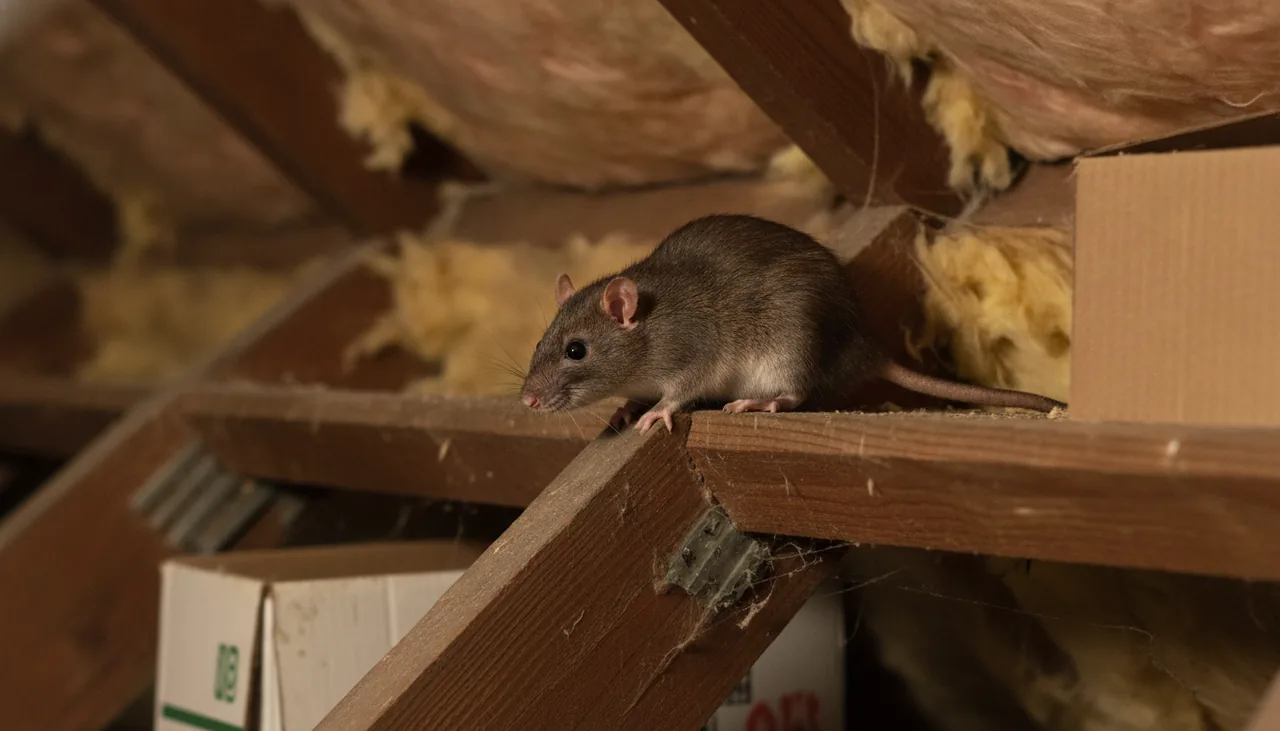
Are roof rats dangerous to humans?
Roof rats almost never attack people, but they are dangerous in the ways that matter. They contaminate food and surfaces, spread the diseases above, host fleas and mites, and gnaw constantly to keep their teeth worn down, including on electrical wiring, which is a real fire hazard. Because they nest in attics and travel along rafters, their droppings and urine often end up in insulation and stored items, where dried particles can become airborne during cleanup. So while a bite is unlikely, the health and home risks are very real.
Who is most at risk
Anyone can get sick from rodent contamination, but the risk is higher for young children, older adults, pregnant women, and people with weakened immune systems. LCMV in particular is dangerous during pregnancy. If someone in your household falls into one of these groups, it is worth being extra careful with cleanup and getting an active infestation handled quickly rather than living alongside it.
Sweeping or vacuuming dry droppings can send virus and bacteria particles into the air. The CDC recommends opening windows to ventilate for about 30 minutes first, then wearing gloves and a mask, spraying droppings and nesting material with a disinfectant or a bleach-and-water solution, letting it soak for several minutes, and wiping everything up with paper towels. Double-bag the waste and disinfect the area afterward. For heavy contamination in an attic or crawl space, professional cleanup is the safer choice.
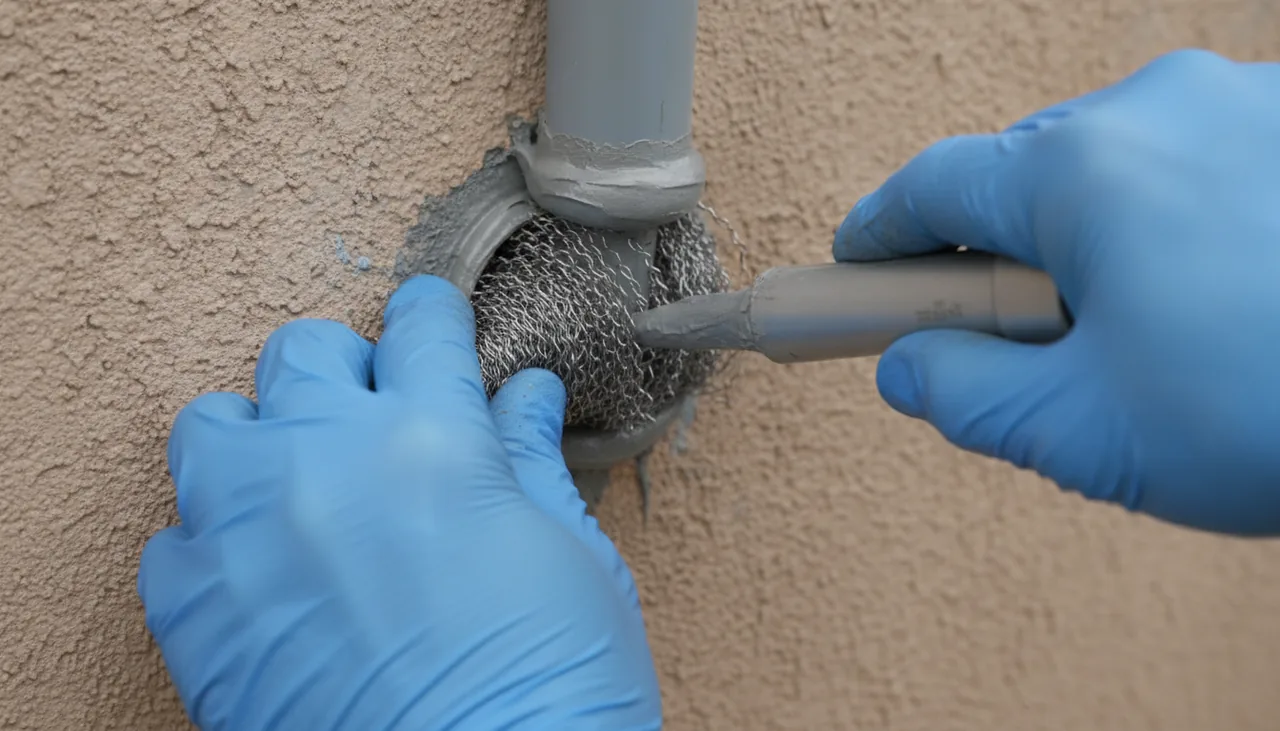
How to protect your home
The reliable fix is to remove the rats and seal them out. Keep food in sealed metal or glass containers, clean up crumbs and pet food, and take out trash regularly. Outside, clear clutter and wood piles, store firewood off the ground and away from the house, and trim tree limbs back from the roofline, because roof rats travel along branches and utility lines. Then seal every gap larger than a quarter-inch around pipes, vents, the roofline, and the garage, since a rat can squeeze through a hole the size of a quarter. Professional rodent control pairs trapping with this exclusion work and safe cleanup so the problem does not simply return. For more, see roof rats in California, the signs of mice and rats, and where rats hide.
Get a rodent inspectionRats and Disease FAQ
What is the most common disease from rats?
In California, the diseases of greatest concern are hantavirus, leptospirosis, and salmonellosis. Most spread through contact with rat droppings, urine, or contaminated food rather than from bites, which is why safe cleanup and sealing rats out are so important.
Can you get sick from rat droppings?
Yes. Dried rat droppings and urine can carry viruses and bacteria that cause hantavirus, leptospirosis, and salmonella. Disturbing them by sweeping or vacuuming can make particles airborne, so droppings should be dampened with disinfectant and wiped up with gloves and a mask.
What are the symptoms of a disease from rats?
Most rat-borne illnesses begin with flu-like symptoms: fever, headache, muscle aches, and fatigue. Hantavirus can progress to severe shortness of breath, leptospirosis to kidney or liver problems, and salmonella to diarrhea and cramps. If these appear after exposure to rodents or droppings, see a doctor and mention the contact.
Are roof rats dangerous?
Roof rats rarely bite people, but they are a real health and safety risk: they contaminate food and surfaces, spread disease through their waste, host fleas and mites, and gnaw wiring that can cause fires. Removing them and cleaning up safely protects both your health and your home.
How do I clean up rat droppings safely?
Do not sweep or vacuum. Ventilate the area, then wear gloves and a mask, dampen the droppings with disinfectant or a bleach solution, let it soak, and wipe up with paper towels. Double-bag the waste. For heavy contamination, especially in an attic, professional cleanup controls airborne particles and seals the entry points.
Do I need professional help to clean up after rats?
For a few droppings, careful cleanup with disinfectant, gloves, and a mask is usually enough. For heavy contamination in an attic or crawl space, professional cleanup is safer, because it controls airborne particles and includes sealing the entry points that let the rats in.
Worried about rats in your home?
Get licensed Fresno rodent control that removes the rats, seals them out, and handles cleanup safely, so the health risk goes with them.