
Home › Learn › Carpenter Bees
Carpenter Bees: Damage, Stings & How to Get Rid of Them
A licensed Fresno tech on telling carpenter bees from bumblebees, the wood damage they cause, whether they sting, and how to actually get rid of them.
To get rid of carpenter bees, treat the open tunnel (gallery) first with an insecticidal dust, leave it a few days so bees track it through, then plug the hole and seal or paint the bare wood. Repeat-check in spring, since they reuse old tunnels yearly.
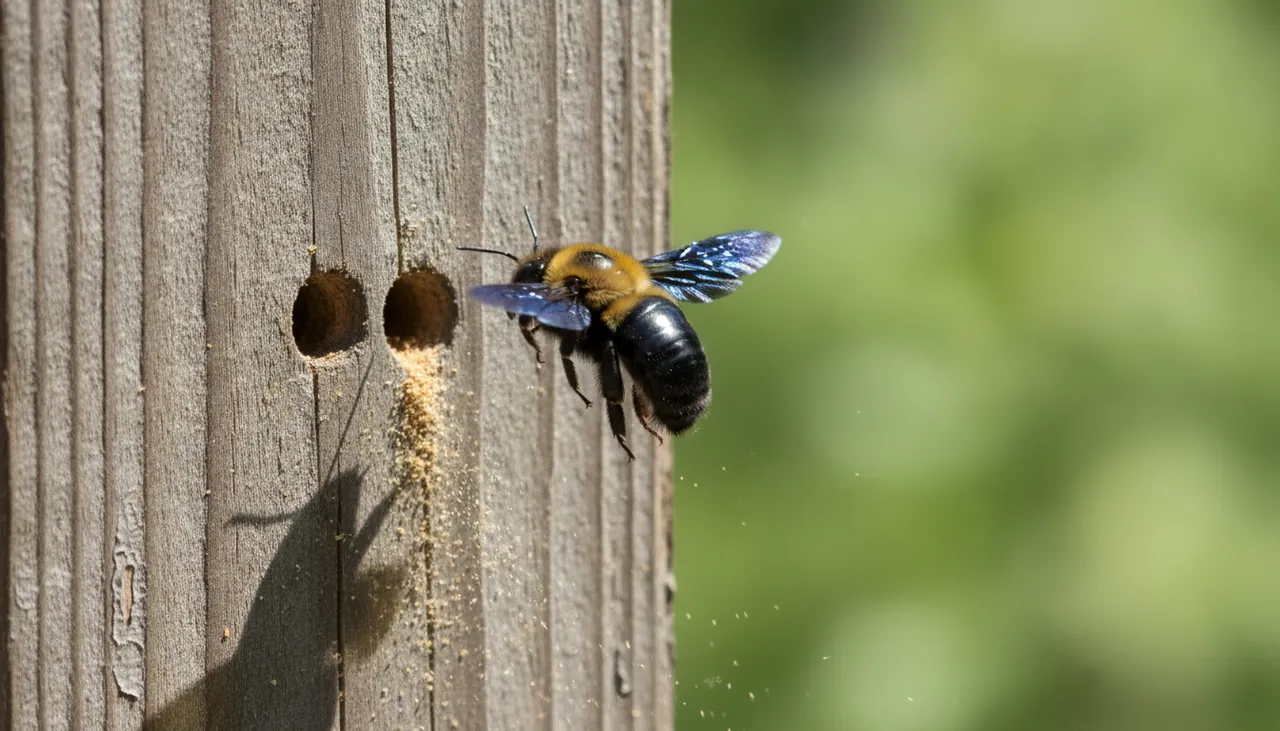
Carpenter bee vs. bumblebee: how to tell them apart
The quickest tell is the abdomen. A carpenter bee has a shiny, black, hairless rear end that looks almost polished, while a bumblebee's abdomen is fuzzy and yellow-banded all the way back. Carpenter bees are large and often hover in one spot near wood; bumblebees move from flower to flower and nest in the ground or in old rodent burrows, not in your fascia.
Don't confuse either one with ground bees — small solitary bees that nest in bare soil and pose almost no threat to people or structures. If the insect is boring into wood, you're looking at a carpenter bee, and that's the one homeowners actually need to manage.
Carpenter bee vs. bumblebee at a glance
The real problem: tunnels that widen every year
A female carpenter bee drills a near-perfect half-inch round hole into bare wood, then turns and tunnels with the grain to excavate a nest gallery. A single year's tunnel is usually only a few inches deep, but the bees and their offspring reuse and lengthen the same gallery season after season, so what starts as one hole can branch into a foot or more of hollowed wood over several years.
You'll often spot yellowish staining on the wood just below a hole — a mix of sawdust and droppings. The bigger headache is the follow-on: woodpeckers hear the larvae inside and tear the wood open to eat them, turning a tidy hole into a ragged gash. Left alone, the same fascia, deck rail, or patio-cover beam gets steadily weaker.
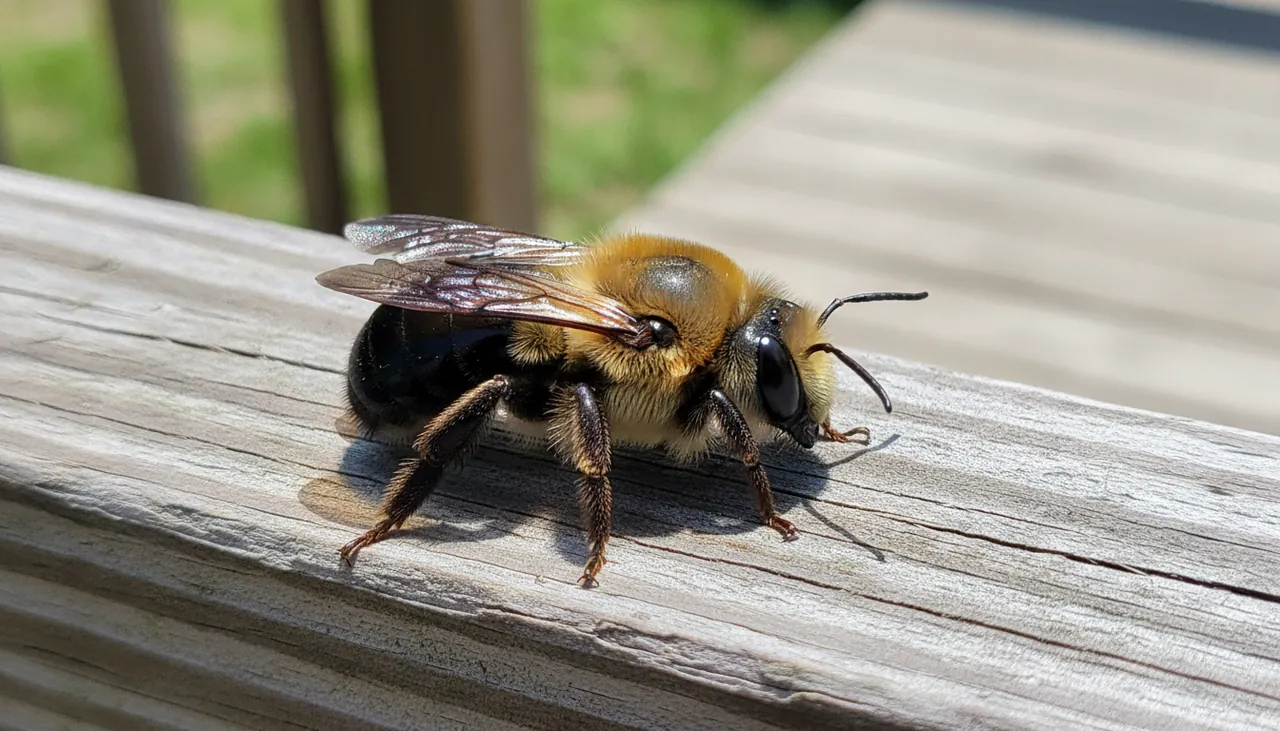
Do carpenter bees sting? The honest answer
The big bee dive-bombing your head near a deck is almost always a male, and males cannot sting — they have no stinger at all. They're territorial and bluff aggressively to scare off intruders, but it's pure theater. Only the female carpenter bee has a stinger, and she's docile; she'll generally only sting if she's handled or her nest is directly threatened.
So while carpenter bees look intimidating, they're far calmer than the social stingers we field calls about. If you're dealing with something that defends a paper nest and stings readily, that's a different insect — see our guides to wasps in Fresno, the types of wasps in California, or the bald-faced hornet. As always, if you've ever had a serious reaction to any stinging insect, follow your doctor's advice — this isn't medical guidance.
Why they keep coming back to the same spot
If you patched a hole last year and the bees are back, you're not imagining it. Carpenter bees are drawn to the scent of old galleries and will re-excavate or extend an existing tunnel rather than start from scratch — it's less work. They strongly prefer bare, unfinished, or weathered softwoods, which in the Central Valley means the redwood and cedar on so many local fascia boards, fences, decks, and patio covers.
Valley spring — roughly March through May — is prime season, and our long warm stretch gives them a generous window to nest. That's why a one-and-done patch rarely holds: if the wood stays bare and the old tunnel scent lingers, next year's bees treat your trim as a known address.
How to get rid of carpenter bees and keep them out
Order matters here. Sealing a hole before you treat it just traps live bees that chew a fresh exit — so always treat first, then plug. Here's the sequence we use on the homes we service:
Treat the gallery first. Apply an insecticidal dust labeled for carpenter bees into the open hole (evening is best, when bees are inside). The dust clings to them as they move through. Always follow the product label.
Wait several days. Leave the hole open so returning bees track the product deep into the tunnel and contact any developing larvae. Plugging too soon undercuts the treatment.
Plug the hole. Once activity stops, fill it with wood putty, a wooden dowel and glue, or steel wool plus caulk, then sand smooth.
Paint or seal the bare wood. Carpenter bees avoid finished surfaces. A coat of paint or a solid stain on fascia, rails, and beams is your single best long-term deterrent.
Consider hardwood or non-wood trim. On chronic problem spots, swapping softwood for hardwood, vinyl, or composite removes the target for good.
Re-check in early spring. Walk your eaves, deck, and fence line in March and treat any new half-inch holes before galleries get established.
Schedule Carpenter Bee TreatmentWhen to call a pro
A few single holes on an accessible fence are a reasonable DIY job. Call us when the holes are up under high eaves or second-story fascia (a ladder over hard ground is how people get hurt), when the same area gets re-infested year after year despite patching, or when you're seeing many bees and multiple galleries — that usually means established tunneling and woodpecker damage you can't see from the ground.
Total Pest Control treats carpenter bees throughout Fresno, Clovis, and the surrounding Central Valley. We've served local homeowners since 2020, and our residential pest control visits clear the active galleries safely and set you up to keep the wood protected season to season.
Carpenter Bee FAQ
Do carpenter bees sting?
Only the females can sting, and they rarely do — they're docile unless handled or their nest is directly disturbed. The large bee that aggressively dive-bombs you near a deck is the male, and males have no stinger at all, so their threatening behavior is pure bluff. If you've ever had a serious reaction to a sting, follow your doctor's guidance regardless.
How do I get rid of carpenter bees permanently?
There's no single permanent fix, but the durable approach is: treat the open gallery with an insecticidal dust, wait a few days, plug the hole, then paint or seal the bare wood so bees can't bore back in. Re-check trouble spots each spring. On chronic areas, switching softwood trim to hardwood or composite removes the target entirely.
What attracts carpenter bees to my house?
Bare, unfinished, or weathered softwood — especially the redwood and cedar common on Central Valley fascia, decks, fences, and patio covers. They're also drawn to the scent of old tunnels and will reuse them year after year. Painted or solidly stained wood is far less attractive, which is why sealing exposed wood is the best prevention.
Are carpenter bees good for anything?
Yes — they're native pollinators. Carpenter bees visit many flowers and crops and even "buzz pollinate" plants like tomatoes, peppers, and eggplant, vibrating the pollen loose in a way honey bees can't. The goal isn't to wipe them out everywhere, just to keep them from tunneling into your home's structural wood. Away from the house, they're beneficial.
What's the difference between carpenter bees and bumblebees?
The fastest tell is the abdomen: a carpenter bee's rear is shiny, black, and hairless, while a bumblebee's is fuzzy and yellow-banded. Carpenter bees are solitary and bore round half-inch holes into bare wood to nest; bumblebees live in social colonies and nest in the ground or dense grass. Both are large, but only carpenter bees damage wood.
Carpenter bees drilling into your trim?
Total Pest Control treats carpenter bees across Fresno, Clovis, and the Central Valley — clearing active galleries and protecting your wood. Call for a no-cost inspection and quote.