
Home › Learn › Identify
Types of Wasps in California (How to Identify Them)
California has dozens of wasp species, but only a handful regularly turn up around Central Valley homes. Here’s how to recognize the common ones — paper wasps, yellowjackets, hornets, mud daubers, and cicada killers — with photos.
California is home to dozens of wasp species, but only about five regularly show up around Central Valley homes: paper wasps, western yellowjackets, bald-faced hornets, mud daubers, and cicada killers. The rest you’ll rarely notice. Below is how to tell the common ones apart — by look, by nest, and by how likely each is to sting.
In the Fresno area, the wasps that matter are paper wasps (calm, umbrella nests under eaves), yellowjackets (aggressive, hidden ground and wall nests), bald-faced hornets (big enclosed grey nests up high), mud daubers (harmless mud-tube builders), and the alarming-but-mostly-harmless cicada killers that dig in bare summer soil. Yellowjackets and hornets are the two worth worrying about.
The wasps you’ll actually see in the Central Valley
Common California wasps at a glance
Paper wasps
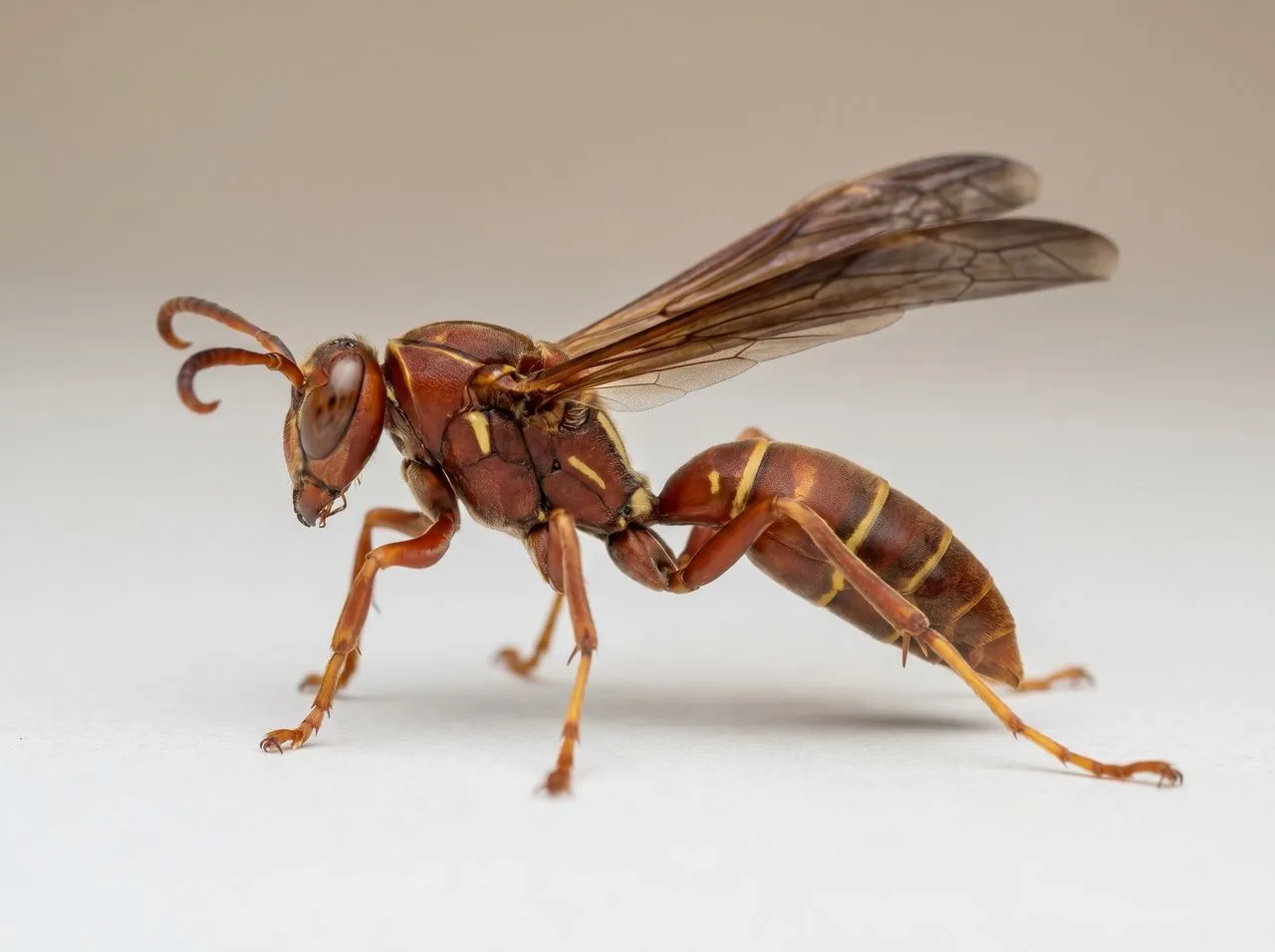
Paper wasps (genus Polistes) are the slender, long-legged wasps you see around eaves and porches. They’re reddish-brown to dark with yellow markings and let their legs dangle in flight. Their open, umbrella-shaped grey comb under an eave is the easiest ID of all — see what a wasp nest looks like. They’re not aggressive and only defend the nest if you get close.
Yellowjackets
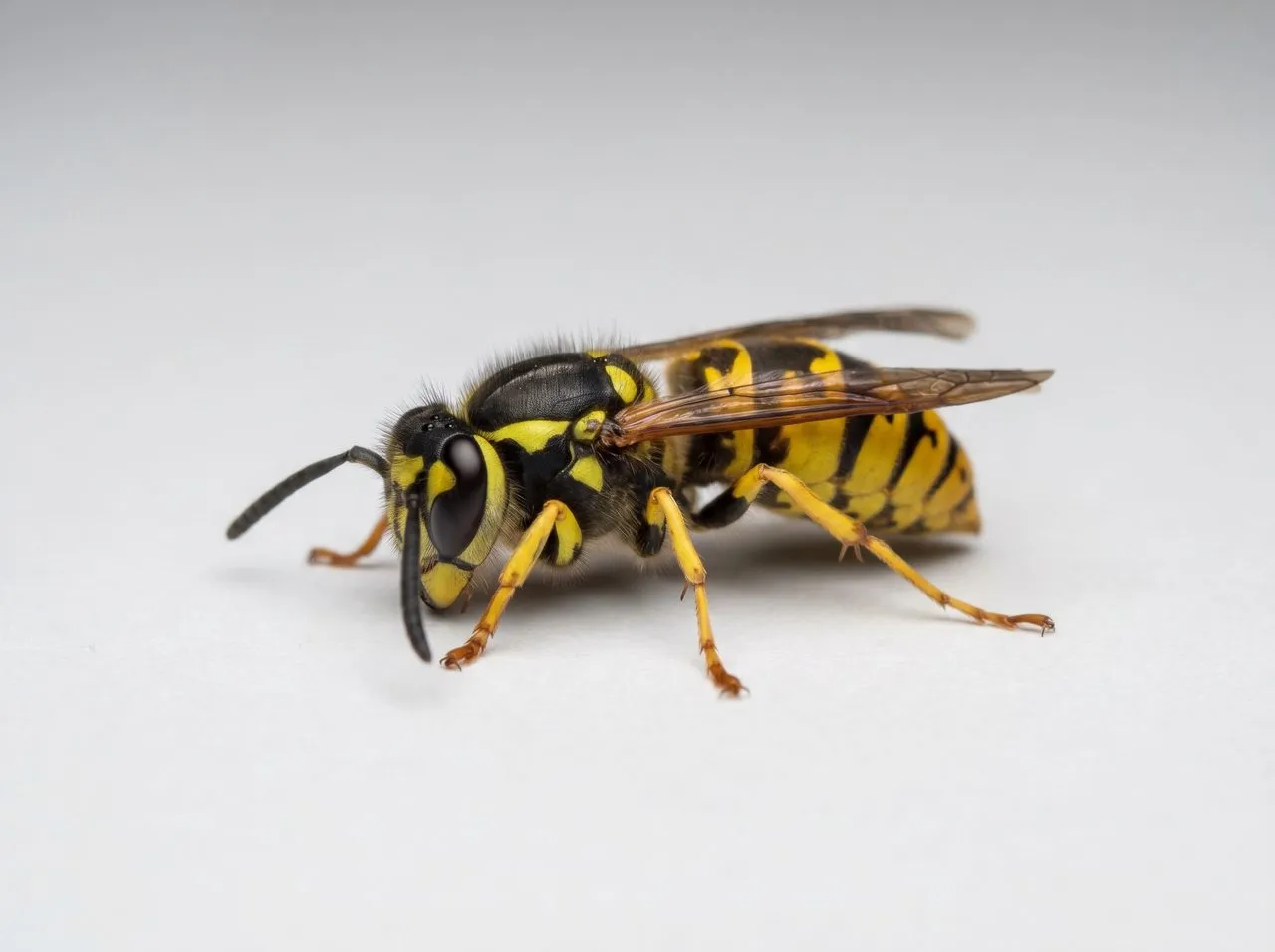
Western yellowjackets are the half-inch, stocky, bright yellow-and-black wasps behind most Central Valley stings. They nest out of sight in old rodent burrows, ground cavities, and wall voids, and a colony can reach thousands by late summer. They scavenge meat and sugar, so they crowd trash cans and barbecues and sting readily. Our yellowjacket vs. wasp vs. hornet guide breaks down the differences.
Bald-faced hornets
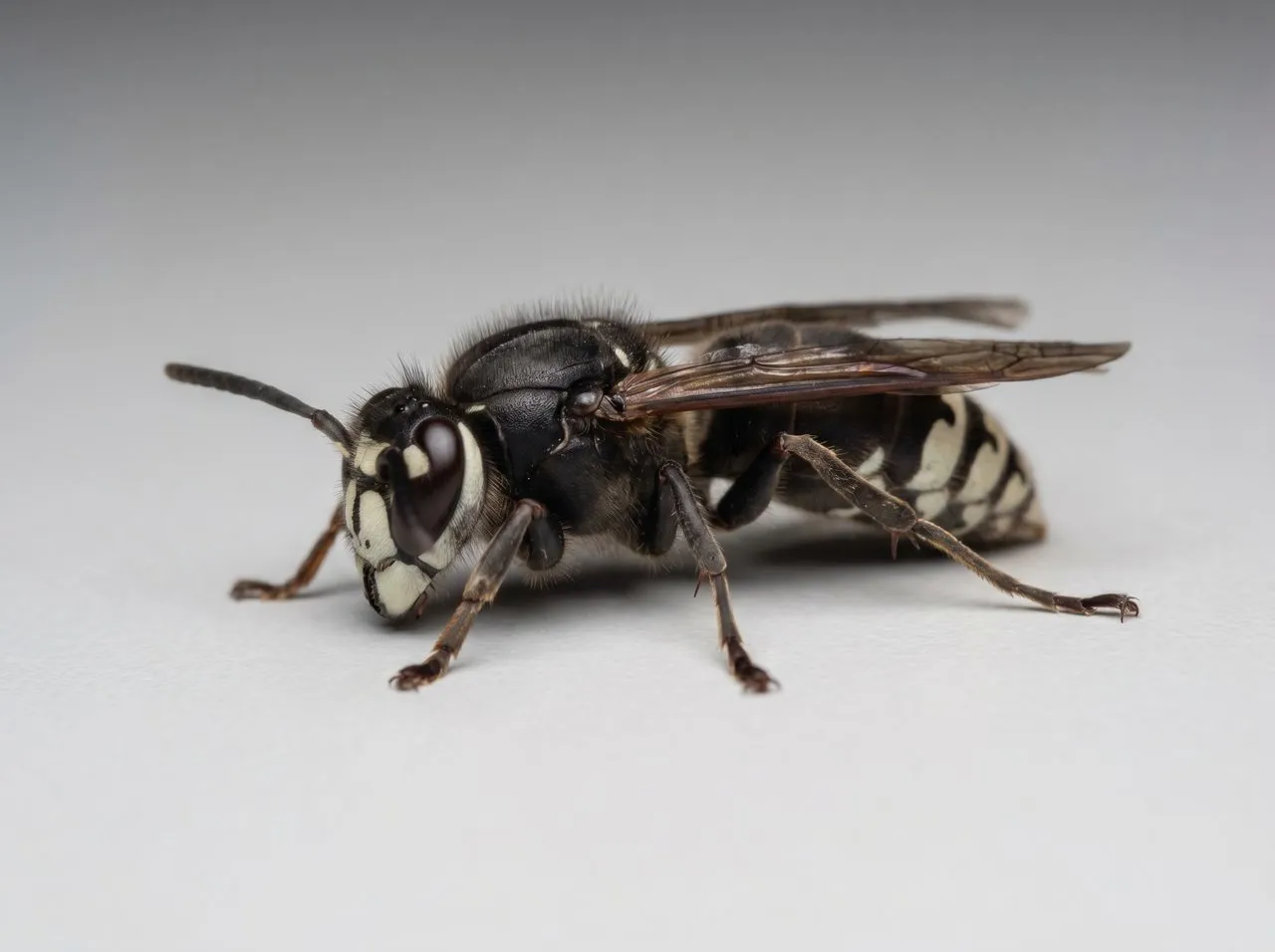
True hornets aren’t native to California, but the bald-faced hornet — a large relative of the yellowjacket — is here. It’s about ¾ inch, black with a striking ivory-white face, and it builds the classic large, enclosed grey “football” nest in a tree, tall shrub, or high eave. They defend that nest aggressively, so an enclosed grey nest at head height or above is best left to a professional. See the dedicated bald-faced hornet guide for the full picture.
Mud daubers
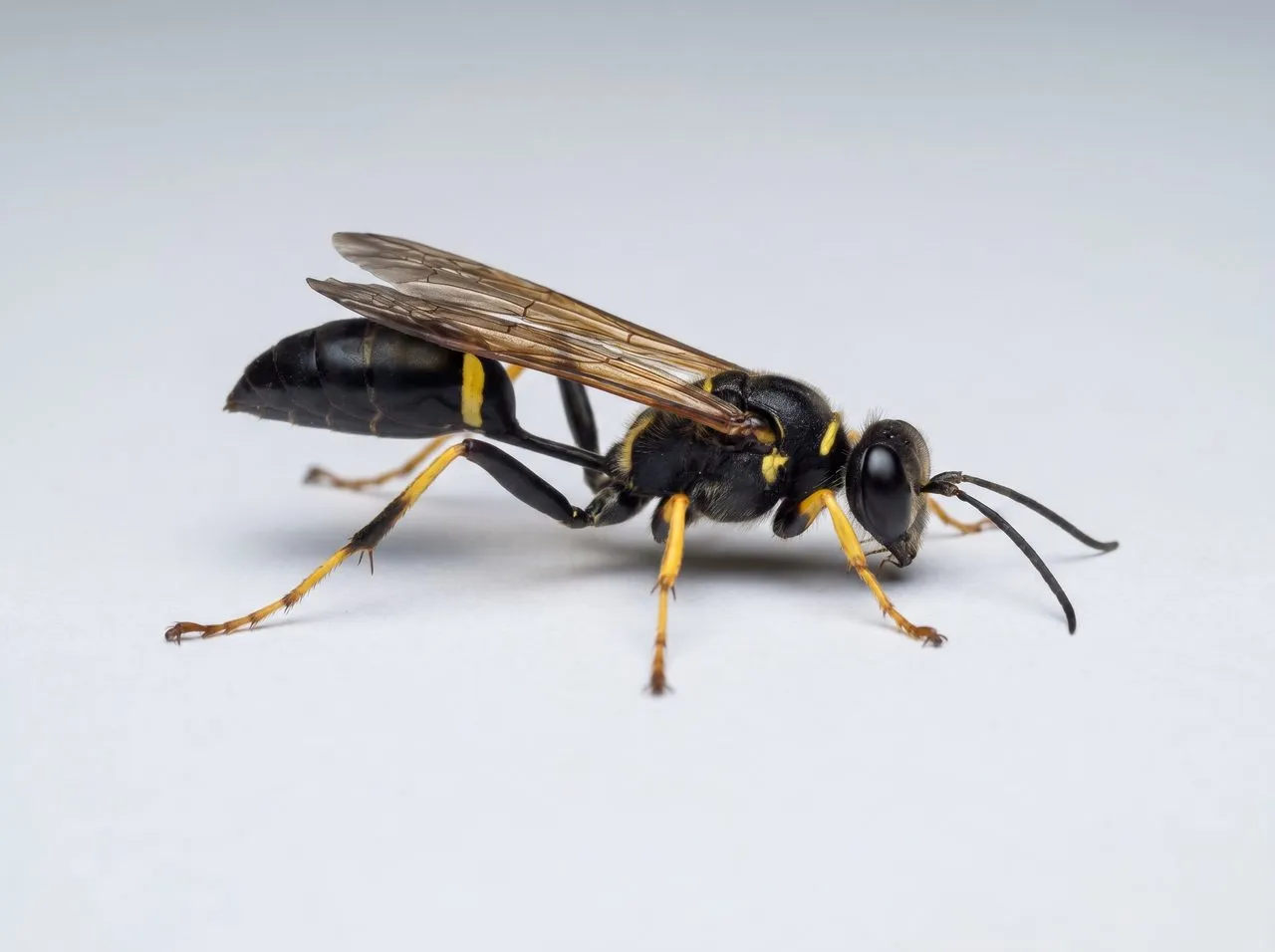
Mud daubers are easy to recognize by their extremely long, thread-thin waist and their mud-tube nests stuck to walls, eaves, and sheds. They’re solitary, docile, and almost never sting — they actually hunt spiders. An old mud nest is usually empty and can be scraped off. Full details on our mud dauber guide.
Cicada killers
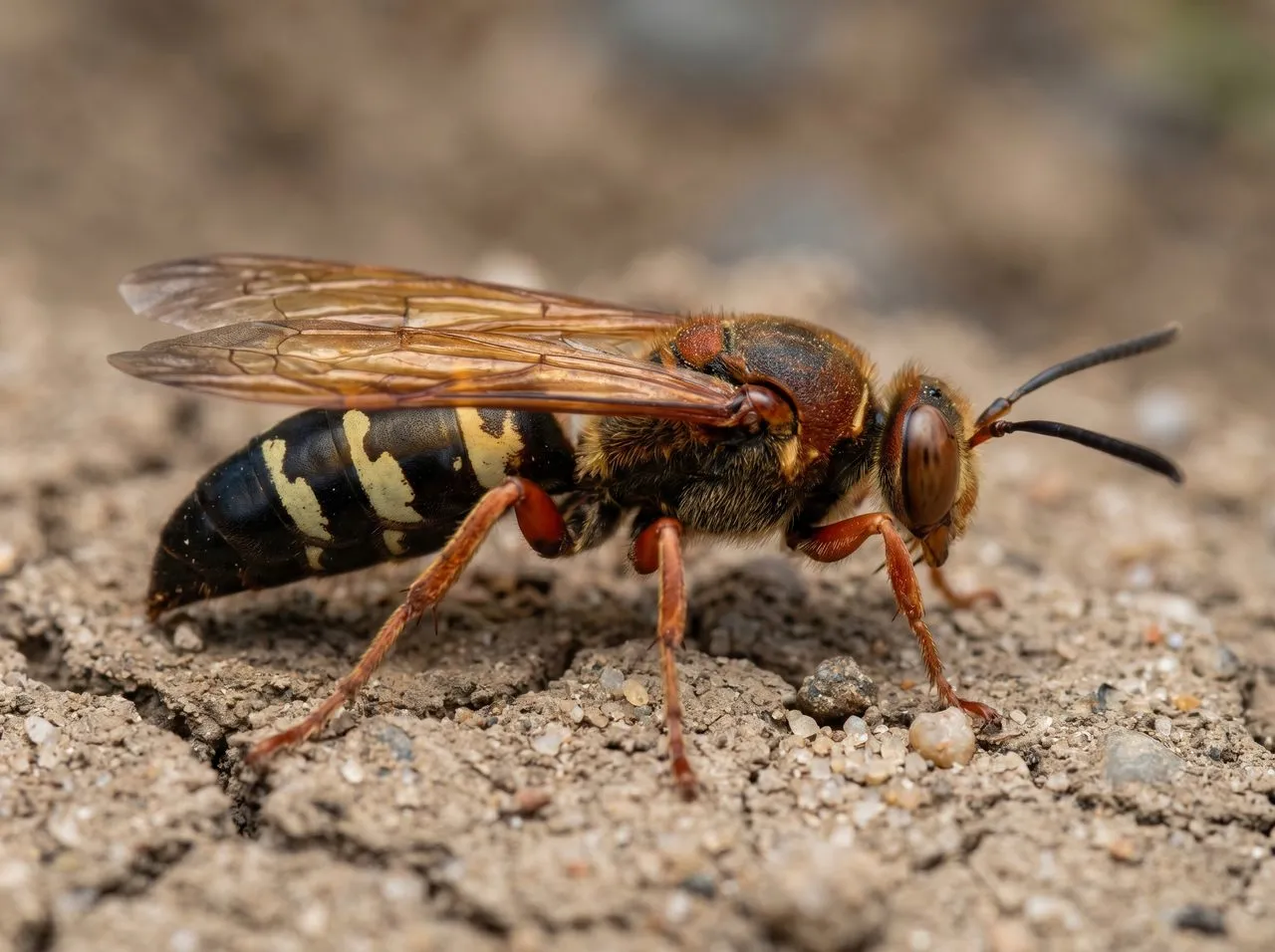
Cicada killers are the giant wasps — up to two inches long — that alarm Central Valley homeowners every summer. They dig burrows in bare, sunny soil (lawns, flowerbeds, along driveways) and hunt cicadas. Despite their size they’re mostly harmless: males can’t sting and females rarely do. Learn more on our cicada killer guide.
Which California wasps sting — and which to worry about
Of the common Central Valley wasps, only two are a real concern: yellowjackets and bald-faced hornets, because they nest in hidden or hard-to-reach spots, defend aggressively, and sting repeatedly. Paper wasps will sting only if you crowd the nest, and mud daubers and cicada killers almost never sting at all. So the question isn’t just “is it a wasp?” but “which wasp, and where’s the nest?” — that’s what decides whether it’s a quick knock-down or a job for a pro.
See our wasp & hornet control →California wasp FAQ
What types of wasps are most common in California?
Around Central Valley homes the most common are paper wasps, western yellowjackets, bald-faced hornets, mud daubers, and cicada killers. Paper wasps and yellowjackets are by far the ones people encounter most; mud daubers and cicada killers are larger or odder-looking but rarely sting.
What is the most dangerous wasp in California?
The western yellowjacket is the most dangerous common wasp here. It nests hidden in the ground or in walls, defends aggressively, stings repeatedly, and is drawn to food and trash in late summer. Bald-faced hornets are a close second because of how defensive they are around their large enclosed nests.
Are there hornets in California?
True hornets are not native to California, but the bald-faced hornet — actually a large relative of the yellowjacket — lives here and builds the big enclosed grey nests people call “hornet nests.” The European hornet and the so-called “murder hornet” are not established in the Central Valley.
What are the really big wasps in California?
The giant wasps most people see in summer are cicada killers, which can reach about two inches long and dig burrows in bare soil. Despite their alarming size they’re mostly harmless — males can’t sting and females almost never do unless handled.
Do California wasps die off in winter?
Mostly, yes. Paper wasp and yellowjacket colonies die out in late fall, and only newly mated queens survive winter in sheltered spots to start fresh nests in spring. That’s why nests aren’t reused year to year and why activity peaks in late summer.
Identified your wasp? We’ll handle the nest.
Call (559) 472-8200 or request a no-cost inspection — we treat wasps, yellowjackets, and hornets across Fresno and the Central Valley.