
Home › Learn › Mouse vs Rat
Mouse vs Rat: How to Tell the Difference
Rats are much bigger, with thicker tails and blunter snouts; mice are small with big ears and thin tails. Here’s a full mouse vs rat comparison — size, droppings, behavior, and which one is in your Fresno home.
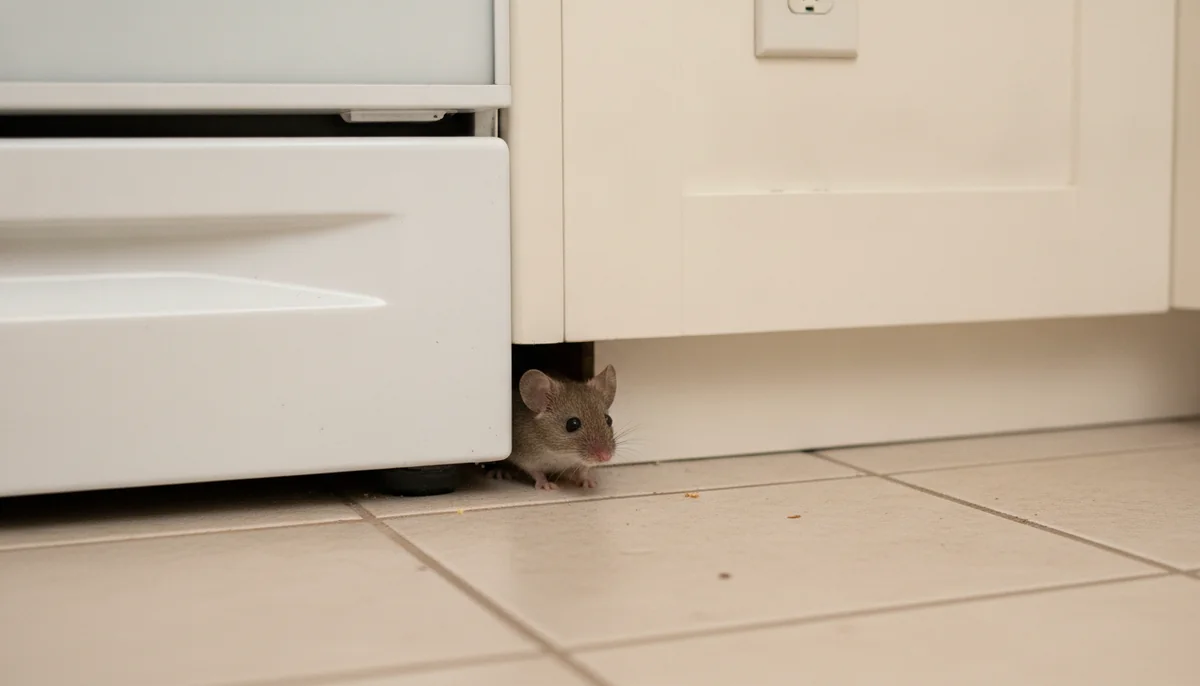
The quickest difference: a rat is several times bigger than a mouse. An adult mouse is small — palm-sized, a 2.5–4 inch body — with large ears, a thin tail, and a small head. An adult rat is much larger — a 7–10 inch body — with a thicker tail, smaller ears relative to its head, and a blunter, heavier snout. The two are controlled differently, so telling them apart matters. In Fresno, the two you’re most likely to meet are the house mouse and the roof rat.

Mouse vs rat at a glance
Mouse vs rat comparison
Size & appearance
A young rat can be mistaken for a mouse, but the proportions give it away: a rat’s feet and head are proportionally larger, and its tail is thick and scaly. A mouse’s tail is thin and finely haired, and its ears look big for its small, triangular head.
Behavior & habits (and why it matters for trapping)
Mice are curious — they investigate new objects, so traps placed in their runs tend to work quickly. Rats, especially Norway rats, are neophobic (wary of new things) and may avoid a trap for days, so placement and patience matter more. Mice also stay close to food (within about 30 feet); rats range farther.
Droppings & other signs
Droppings are an easy tell — tiny rice-grain pellets mean mice; large capsule-shaped pellets mean rats. See the full rat droppings vs mouse droppings guide, plus the signs of mice in a house.
Damage & danger
Both gnaw, contaminate food, and can carry disease, but rats do more structural damage and chew larger holes — including on wiring. Mice make up for their size with numbers: they breed fast and spread droppings widely through a home.
Which is in my Fresno home?
Indoors, the house mouse is the most common rodent in Fresno kitchens, garages, and pantries. Up in the attic or out in fruit trees, it’s almost certainly the roof rat (see roof rats in California). Norway rats turn up at ground level. If you’ve confirmed it’s a rat, use the types of rats in California guide.
How treatment differs
Mice: many traps placed close together in their runs, plus sealing gaps as small as a quarter-inch. Rats: fewer, well-placed traps with patience, sealing half-inch gaps, and (for roof rats) trimming trees and clearing the roofline. For both, exclusion comes first. See mouse control and rat control.
See rodent control in FresnoMouse vs rat — FAQ
What is the difference between a mouse and a rat?
Size is the main one. Mice are small (2.5–4 inch body) with large ears and thin tails; rats are much larger (7–10 inch body) with thicker tails, smaller ears, and blunter snouts.
Is it a baby rat or a mouse?
Look at proportions: a young rat has large feet and a large head relative to its body and a thick tail, while a mouse has a small head, large ears, and a thin, finely haired tail.
Which is worse, mice or rats?
Rats cause more structural and wiring damage per animal; mice make up for it with sheer numbers and fast breeding. Both contaminate food and can carry disease.
Do mice and rats live together?
Not usually in the same space — rats will kill and even eat mice, so a strong rat presence tends to push mice out. You can still have both in different parts of a property.
How can I tell what I have from the droppings?
Tiny rice-grain droppings (1/8–1/4 inch) mean mice; large capsule-shaped droppings (1/2–3/4 inch) mean rats.
Mice or rats — we’ll confirm which and clear it out
One inspection tells us the species, the entry points, and the fix. Book a no-cost rodent inspection for your Fresno home.