
Home › Learn › Types of Spiders
Types of Spiders in California (and How to Tell Them Apart)
A field guide to the spiders you actually find in California homes and yards — how to identify each one, whether it is dangerous, and what to do about it. Spoiler: almost all of them are harmless.
California has hundreds of spider species, but the ones you actually run into in a Fresno home or yard come down to a short list — and the good news is that almost all of them are harmless. The only spider in the Central Valley worth real caution is the western black widow. The dreaded brown recluse? It is not established in California at all. This guide shows you how to identify the spiders you are likely to see, whether each one is dangerous, and what to do about it.
Most spiders in California are harmless and even helpful — they eat other pests. The one to respect is the western black widow (shiny black, red hourglass underneath). The brown recluse is not established here, so a brown spider in your house is almost always a harmless wolf spider or house spider. Match what you see to the chart below.
The California spider comparison chart
Use this chart to narrow down what you are looking at. Size, color, the kind of web (if any), and where you found it are usually enough to identify a spider — and to tell a harmless one from the single species worth caution.
The western black widow — the one to respect
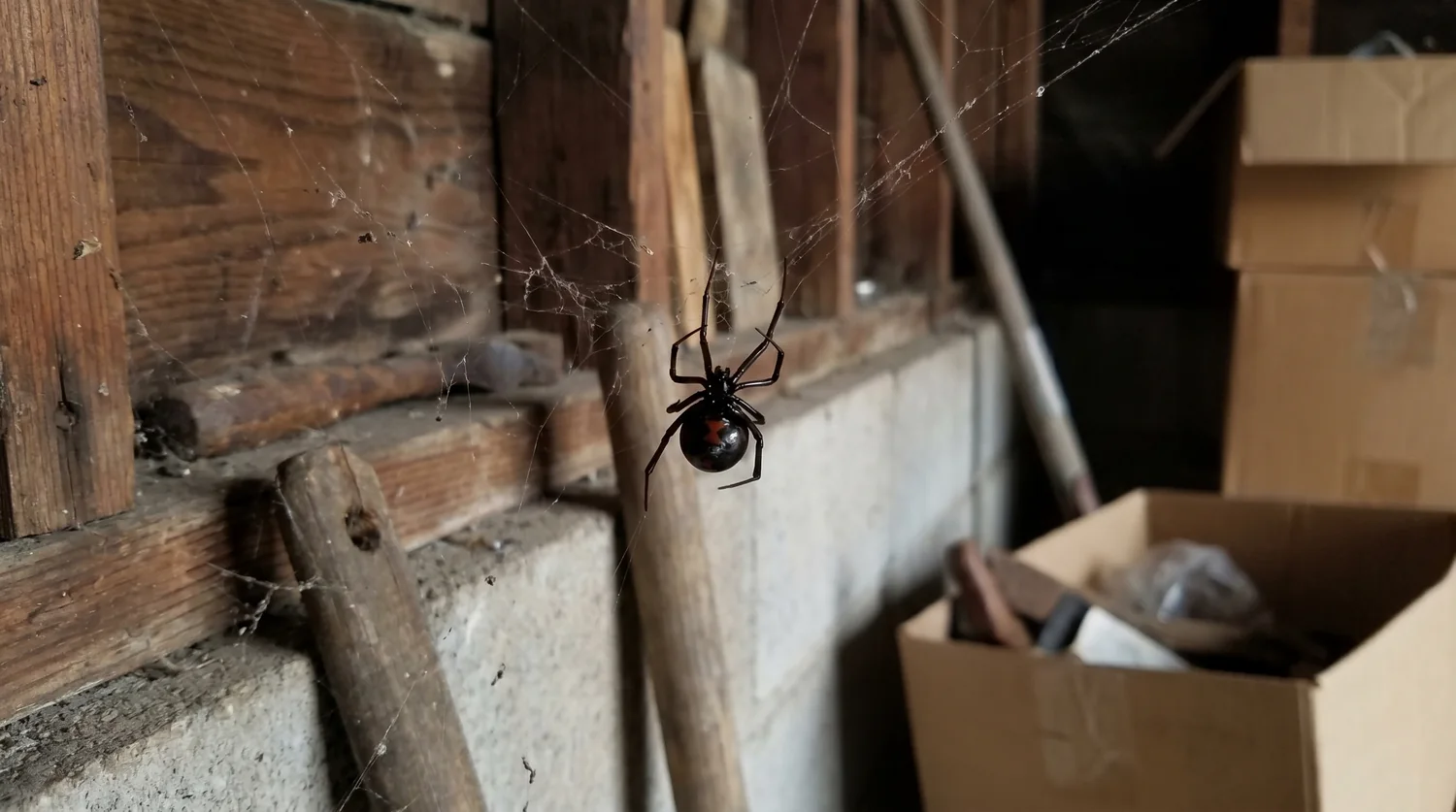
If you find a shiny, jet-black spider with a round abdomen hanging in a messy web in a low, dark, undisturbed spot — a garage corner, a water-meter box, a woodpile, the underside of patio furniture — it is probably a western black widow. Flip your view to the underside of the abdomen and you will see the red hourglass. Their bite is rarely dangerous to a healthy adult, but it is worth caution around children and pets. See exactly what a black widow looks like → or read about the black widow bite →
Wolf spiders — big, fast, and harmless
Wolf spiders are the large, hairy, fast-moving spiders that bolt across a garage floor and make everyone jump. They build no web and hunt on the ground, wandering indoors in fall. They are harmless — and they are the spider most often misidentified as a brown recluse. Read the wolf spider guide →
House spiders and cellar spiders
The small spiders in your window corners and ceiling corners are almost always common house spiders or cellar spiders (the long-legged “daddy long legs”). Both are harmless web-builders that quietly eat other insects, and both turn up in larger numbers in fall — which is mating season, not an invasion. See the common house spiders of California → and find out whether daddy long legs are poisonous →
Is it a brown recluse?
Almost certainly not. The brown recluse is native to the south-central United States and is not established in California — the vast majority of “recluse” sightings here are harmless wolf spiders, house spiders, or sac spiders, and most “recluse bites” diagnosed in the state turn out to be something else entirely. This is the single most common spider mistake we see in Fresno. Read why there are no brown recluses in California → The standard reference is the UC IPM spiders guide.
Which California spiders are actually dangerous?
In practical terms, one: the western black widow. Its relative the false black widow can give a mild bite, and the yellow sac spider’s bite is minor. Everything else on this list — wolf spiders, house spiders, cellar spiders, jumping spiders, orb-weavers — is harmless to people. If you are trying to decide whether a bite needs attention, the honest answer is that most “spider bites” are not from spiders at all; when in doubt about any wound, see a doctor. Compare the two “scary” spiders →
What we actually see in Fresno homes
After years of spider calls across Fresno and Clovis, the pattern is consistent: black widows in garages, meter boxes, and woodpiles; wolf spiders wandering in during fall; and a lot of harmless house and cellar spiders in window corners and eaves. Webbing on the outside of the house — along eaves, around lights, in corners — is usually the first thing people notice. The fix is the same for almost all of them: knock down webs, reduce the insects they feed on, seal entry points, and treat the spots where black widows like to hide. Not sure what you found? Use our Fresno spider ID helper →
See our spider control process →California spider identification FAQ
What is the most common spider in California?
In and around homes, the common house spider and the cellar spider (“daddy long legs”) are the spiders people see most, along with wolf spiders that wander indoors in fall. All three are harmless. The western black widow is also common in garages, woodpiles, and meter boxes, but it stays hidden.
What is the most dangerous spider in California?
The western black widow is the only spider of real medical concern in California. Its bite is painful and occasionally needs treatment, especially in children or older adults, but it is rarely dangerous to a healthy person. No other common California spider is dangerous.
Are there brown recluse spiders in California?
No — the brown recluse is not established in California. Nearly every “brown recluse” found here is a harmless look-alike such as a wolf spider, and most “recluse bites” diagnosed in the state are actually other skin conditions. See our full guide on the brown recluse in California.
How do I identify a spider I found?
Start with size, color, and whether it built a web. A shiny black spider with a red hourglass is a black widow; a big fast hairy ground spider is a wolf spider; tiny spiders in window or ceiling corners are house or cellar spiders. The comparison chart above narrows it down quickly.
Should I be worried about spiders in my house?
Usually not. Most house spiders are harmless and even helpful. The exception worth handling is the western black widow, which hides in low, dark spots like garages and woodpiles. If you are seeing widows or a lot of webbing, that is worth a professional inspection.
Seeing spiders — or a black widow — around your Fresno home?
Call (559) 472-8200 or request a no-cost inspection. We identify what you have, treat where black widows hide, and knock the webs down.