
Home › Learn › How Mosquito Control Works
How Mosquito Control Works: Barrier Treatment, Larvicide & Source Reduction
Professional mosquito control attacks two life stages at once — the adults biting you now and the larvae in standing water. Here are the three methods, how In2Care stations work, and the two-step approach we use.
Professional mosquito control works by attacking the mosquito at two life stages at once: killing the adults that are biting you now, and stopping the larvae in standing water before they ever become adults. Every legitimate program is some combination of three jobs — a barrier (adulticide) treatment of the shaded vegetation where adult mosquitoes rest, a larvicide applied to the standing water where larvae develop, and source reduction, which means finding and eliminating the breeding water in the first place. A program that only sprays adults treats the symptom; a program that also targets the breeding sites treats the cause. This guide explains each method, how station-based systems like In2Care work and where they fall short, and the two-step approach Total Pest Control uses across Fresno, Clovis, Madera and Fresno County.
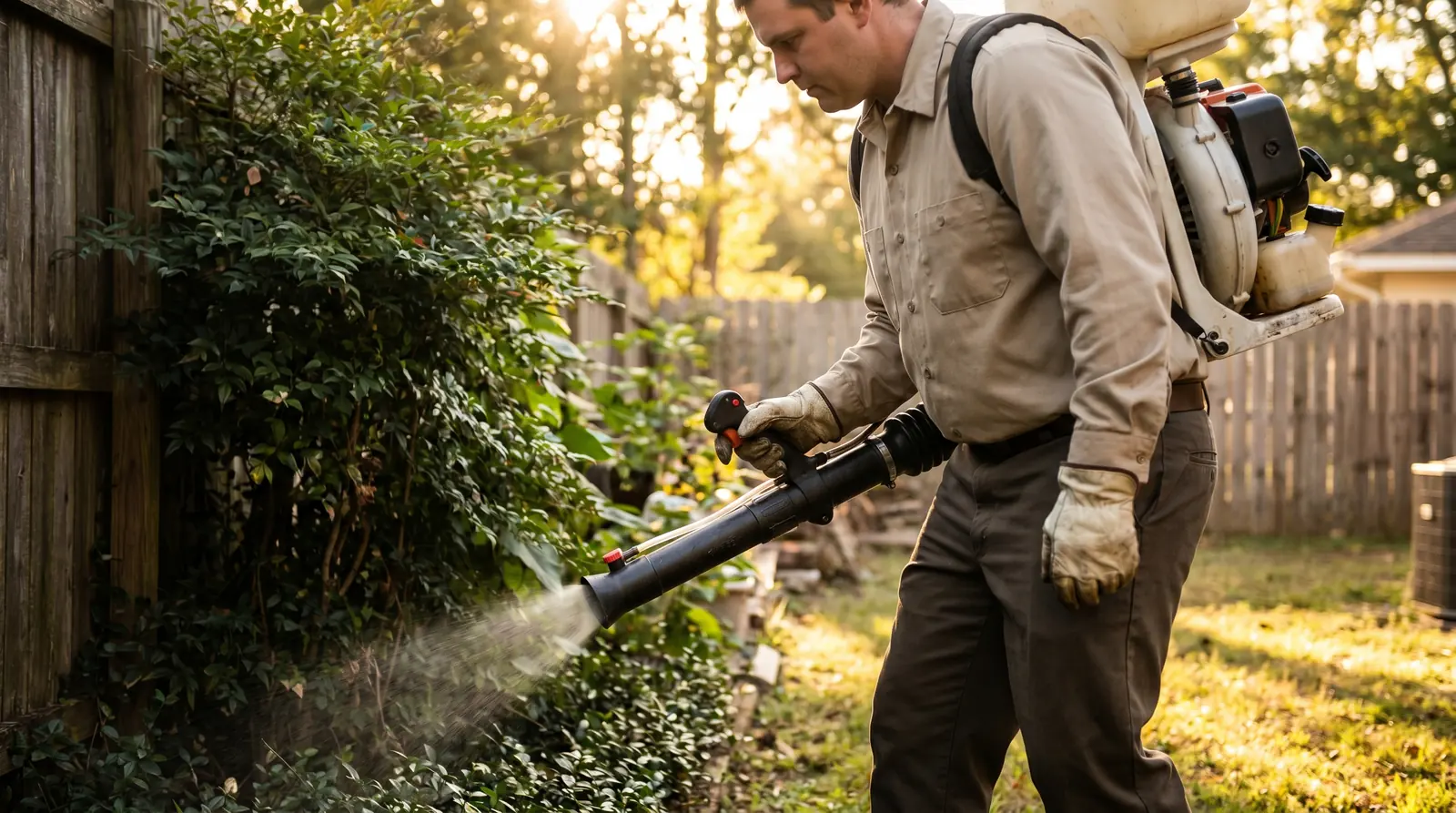
The three jobs of professional mosquito control
Professional mosquito control breaks into three distinct jobs, and the strongest programs do all three rather than just one.
1. Barrier (adulticide) treatment — a barrier spray is applied to the tall grass, dense shrubs, fence lines and shaded undersides of foliage where adult mosquitoes rest during the heat of the day. It kills adults on contact and leaves a residue that keeps reducing the resting population for a few weeks, which is why it is sometimes called a perimeter or barrier treatment. This is the part you feel fastest, because it knocks down the mosquitoes that are biting you.
2. Larvicide — a larvicide is applied directly to standing water to kill mosquito larvae and pupae, or to prevent them from developing into biting adults, before they ever leave the water. Treating larvae is more efficient than chasing adults, because larvae are concentrated and stationary in known breeding sites while adults disperse across the whole yard.
3. Source reduction — source reduction means physically finding and eliminating the standing water where mosquitoes breed: emptying buckets and plant saucers, clearing clogged gutters, fixing leaky irrigation and draining low spots. It is the most efficient long-term control there is, because water you remove is water that can never hatch another mosquito. Most container-breeding mosquitoes need only about a teaspoon of water to develop.
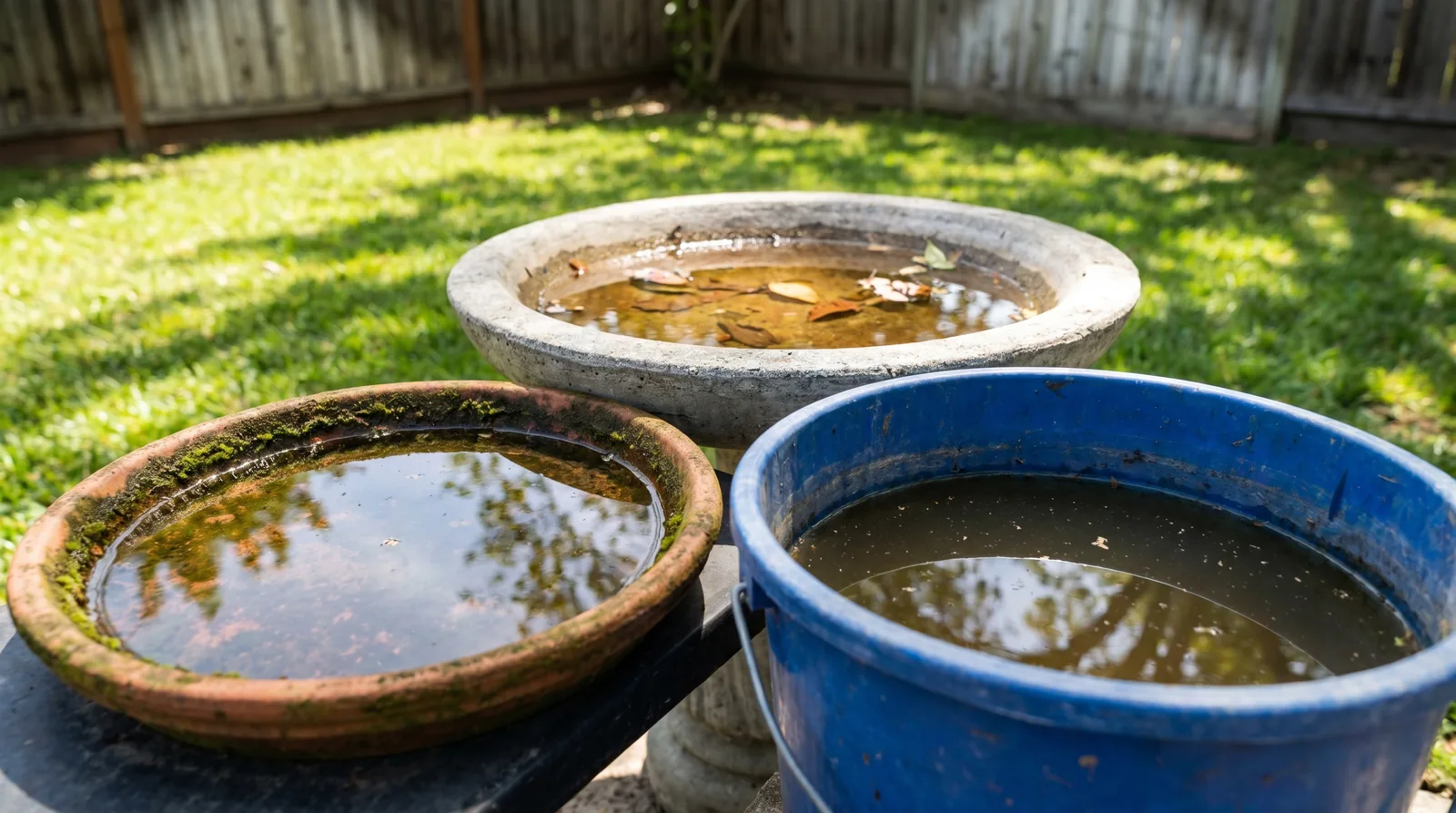
Why standing water is the real target
Standing water is the single thing every mosquito problem has in common, which is why standing-water mosquito treatment is the foundation of any serious program. Mosquitoes do not breed in your lawn or your hedges — they breed in water, and the adults you swat are simply the ones that already hatched. Mosquito breeding sites are usually small and easy to miss: plant-pot saucers, birdbaths, pet dishes, clogged rain gutters, tarps and toys that collect rain, low spots that pool after irrigation, and yard drains. The invasive Aedes aegypti “ankle-biter” now established across Fresno County is a container breeder that can develop in roughly a teaspoon of water, so a single forgotten saucer can produce hundreds of mosquitoes. This is why a spray-only service rarely solves the problem on its own: if the breeding water is still there, a new generation hatches every few days, and in the Central Valley's summer heat the full egg-to-adult cycle can finish in a week or less.
How In2Care mosquito stations work
An In2Care Mosquito Station is a passive “lure-and-contaminate” device that uses the mosquito herself to spread larvicide to breeding sites a technician can't reach. The station is a black container holding water, a yeast/organic odor lure and a treated gauze strip. An egg-laying (gravid) female is attracted by the color, water and scent, and when she lands on the gauze she picks up two active ingredients on her body — pyriproxyfen, an insect growth regulator that stops larvae and pupae from developing into adults, and Beauveria bassiana, a naturally occurring fungus that kills her over roughly six to twelve days. Before she dies, she flies to other small pockets of standing water and contaminates them with the pyriproxyfen, which is the clever part: the system can reach hidden, cryptic breeding water that no person could physically find. The stations need no power, drilling or digging; the manufacturer says professionals typically place two to three per yard, the refill is replaced every four to six weeks, and the housing can last up to about five years. The system targets container-breeding Aedes and Culex mosquitoes specifically, and it is the method behind several station-based mosquito services.
Where station-based systems fall short
In2Care stations work, but they work slowly, partially, and only when placed at the right density — which is why we treat them as one tool rather than a complete solution. By the manufacturer's own statement, In2Care is not an instant knockdown: a significant population impact is expected after about three to four weeks, and each contaminated female takes six to twelve days to die. Independent peer-reviewed field trials show real but partial suppression, not elimination — one Aedes study found about 43% fewer eggs at six weeks and about 33% fewer at ten weeks versus untreated sites. Effectiveness is also strongly tied to station density: the EPA label recommends about ten stations per acre, research found efficacy at around six per acre, and a two-year Florida study at only three stations per acre measured no reduction at all. The system also depends on mosquitoes finding and entering the stations, it targets container-breeding Aedes and Culex rather than every species, and it can be undercut by mosquitoes flying in from a neighbor's untreated yard. None of this means stations don't work — placed honestly at adequate density they help — but if you want fast relief from the adults biting you tonight, a passive station is not built for that.
Our method: a two-step approach with EcoVenger ER-3
Total Pest Control uses a two-step mosquito method built around a green, plant-based product — EcoVenger ER-3 — and we do not rely on In2Care stations. The two steps map directly to the two life stages that matter.
Step 1 — Adult barrier treatment. We treat the resting vegetation around your property — the shaded shrubs, tall grass and fence lines where adult mosquitoes shelter during the day — to knock down the adults that are biting you and leave a residual barrier behind.
Step 2 — Larval source reduction. We walk the property to find the standing water that breeds the next generation, then reduce or treat those sources so new mosquitoes never hatch in the first place.
The product we use for the barrier work, EcoVenger ER-3, is a botanical (“green”) bio-insecticide concentrate — not a synthetic pyrethroid. Its listed active ingredients are geraniol, cedarwood oil, lemongrass oil and sodium lauryl sulfate; it is made by Reneotech (the same maker behind the EcoRaider line, rebranded EcoVenger in 2021); and it is marketed as triple-action against mosquitoes — contact-kill of adults, larval activity in standing water, and a repellency barrier. It is positioned by its maker as safe around children and pets, which is why a plant-based product is a sensible choice for backyards, patios and play areas where families and animals spend time. Combining a fast adult barrier with deliberate larval source reduction is what makes the two-step approach more thorough than spraying adults alone.
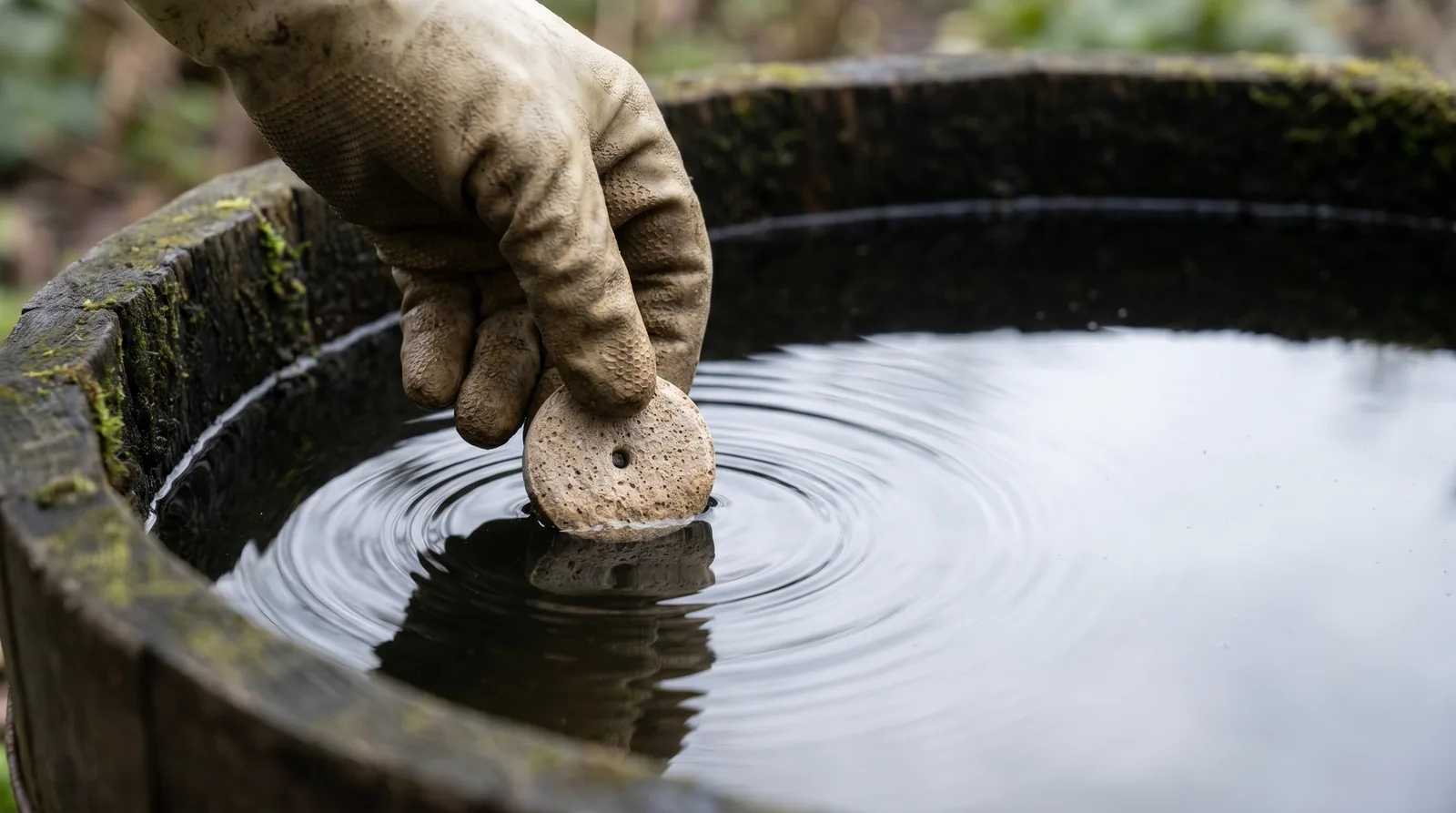
Why two methods beat one
A two-step program beats any single-method approach because adults and larvae are two different problems that need two different fixes. Spray the adults only, and the breeding water keeps producing a fresh generation every few days. Target only the larvae — or rely only on a passive station that builds effect over three to four weeks — and the mosquitoes biting you tonight go untouched. The barrier step handles the adults you can feel; the source-reduction step shuts down the supply line that refills the yard. It also explains why one good treatment doesn't last forever: a barrier residual fades over a few weeks, mosquitoes can fly in from neighboring properties, and Central Valley summer heat lets a new batch mature in under a week, which is why recurring seasonal service through mosquito season — roughly April through October here — keeps a yard usable rather than letting the population rebuild between visits.
Two-step + EcoVenger vs. station-only (In2Care)
What the public mosquito districts do (and don't do)
Your local mosquito abatement district and a private mosquito service do two different jobs — you generally want both. The Fresno area is divided among several tax-funded public districts, mainly the Fresno Mosquito and Vector Control District (covering the City of Fresno and nearby communities) and the Consolidated Mosquito Abatement District, which covers central and eastern Fresno County including Clovis, Sanger, Selma, Reedley and Parlier. These districts do excellent, no-cost public-health work: they trap and monitor mosquitoes, treat standing water on public land, stock no-cost mosquitofish, respond to neglected-pool complaints, and track West Nile virus, which is detected in Fresno County mosquitoes nearly every season. What they generally do not provide is scheduled, recurring barrier or source-reduction treatment of your private backyard. We cover exactly how to use them in our guide to the Fresno mosquito abatement district vs a private service.
How long does mosquito treatment last?
A professional adult barrier treatment generally keeps reducing mosquitoes for a few weeks before it needs refreshing, which is why ongoing service is scheduled rather than one-and-done. Residual products lose strength over time, mosquitoes fly in from surrounding properties, and in the Central Valley's summer heat a new generation can mature in under a week — so a single treatment is a knockdown, not a season-long shield. The practical window here runs from about April, ahead of the peak, through roughly October, the tail of mosquito season. The same two-step method scales up to Fresno-area businesses too — restaurants and patios, HOAs, hotels and venues — through our commercial mosquito control on a recurring schedule. For a recurring plan tailored to your property — and a quote based on your yard size, standing-water sources and coverage — see our Fresno mosquito control service or call (559) 472-8200.
See our mosquito control process →Mosquito control methods FAQ
What is the difference between a mosquito barrier spray and a larvicide?
A mosquito barrier spray (an adulticide) is applied to the vegetation where adult mosquitoes rest, killing the adults that bite you and leaving a residue that keeps reducing them for a few weeks. A larvicide is applied directly to standing water to kill larvae or stop them from developing into adults, before they ever leave the water. The barrier handles the mosquitoes you feel now; the larvicide handles the next generation. A thorough program uses both, plus source reduction to remove the breeding water entirely.
Does mosquito spraying actually work?
Yes — a professional barrier (adulticide) treatment knocks down the adult mosquitoes resting in your yard's vegetation and keeps reducing them for a few weeks. The catch is that spraying adults alone treats the symptom: if the standing water that breeds them is still on the property, a new generation hatches every few days, and in Central Valley summer heat that can happen in under a week. That is why spraying works best when it is paired with larval source reduction and repeated on a seasonal schedule rather than done once.
How does an In2Care mosquito station work?
An In2Care Mosquito Station is a passive lure-and-contaminate device. A black container holds water, an organic odor lure and a treated gauze strip that attract egg-laying female mosquitoes. When a female lands on the gauze she picks up two active ingredients — pyriproxyfen, a growth regulator that stops larvae from developing into adults, and Beauveria bassiana, a fungus that kills her over about six to twelve days. Before she dies she carries the pyriproxyfen to other breeding water, contaminating sites a technician can't reach. The manufacturer says professionals typically place two to three stations per yard and refill them every four to six weeks.
Is In2Care better than a barrier spray?
They do different jobs, so better depends on what you need. In2Care is good at reaching hidden breeding water through autodissemination and works passively between visits, but it is slow (the manufacturer says significant impact comes after about three to four weeks) and highly dependent on placing enough stations; a two-year Florida study at only three stations per acre found no measurable reduction. A barrier spray gives fast relief from the adults biting you now but fades over a few weeks. The most thorough approach combines a fast adult barrier with deliberate larval source reduction — the two-step method Total Pest Control uses.
What is EcoVenger ER-3 and why use a green product for mosquito control?
EcoVenger ER-3 is a plant-based (green) bio-insecticide concentrate — not a synthetic pyrethroid — made by Reneotech, with listed active ingredients geraniol, cedarwood oil, lemongrass oil and sodium lauryl sulfate. It is marketed as triple-action against mosquitoes (contact-kill of adults, larval activity in standing water, and a repellency barrier) and is positioned by its maker as safe around children and pets. We use it for the barrier step of our two-step program because a botanical product is a sensible choice for backyards, patios and play areas where families and animals spend time.
How long does a mosquito treatment last?
A professional adult barrier treatment generally keeps reducing mosquitoes for a few weeks before it needs refreshing. The residual fades over time, mosquitoes fly in from neighboring properties, and Central Valley heat lets a new generation mature in under a week — so treatment is scheduled on a recurring basis through mosquito season (roughly April through October here) rather than done once. Pairing the recurring barrier with ongoing source reduction is what keeps a yard's population down all season instead of letting it rebuild between visits.
Can't the Fresno mosquito abatement district just treat my yard?
The public districts — the Fresno Mosquito and Vector Control District and the Consolidated Mosquito Abatement District (which covers Clovis and much of eastern Fresno County) — do valuable no-cost work: they monitor mosquitoes, treat breeding sources on public land, provide no-cost mosquitofish, respond to complaints and inspect for breeding sources, and track West Nile virus. What they generally don't do is scheduled, recurring treatment of your private backyard; their adult spraying is reactive, triggered by disease risk or very high mosquito numbers. Routine treatment of your own property is the gap a private mosquito service fills, so it's worth using both.
Get a recurring mosquito plan for your Fresno-area property
Total Pest Control is a family-owned company serving Fresno, Clovis, Madera and Fresno County since 2020, and we treat both the adults biting you and the standing water breeding the next batch — with a green, plant-based barrier product. Pricing is based on your yard size, the number of standing-water sources and the coverage you need, so the fastest way to a real number is a quick call. Call (559) 472-8200 or see our Fresno mosquito control service page to get started.