
Home › Termites › Fumigation & Tenting
Termite Fumigation & Tenting in Fresno, CA
When drywood termites have spread through a home, whole-house fumigation is the most thorough way to eliminate them. Here's how tenting works, how to prepare, and what to expect from start to re-entry.
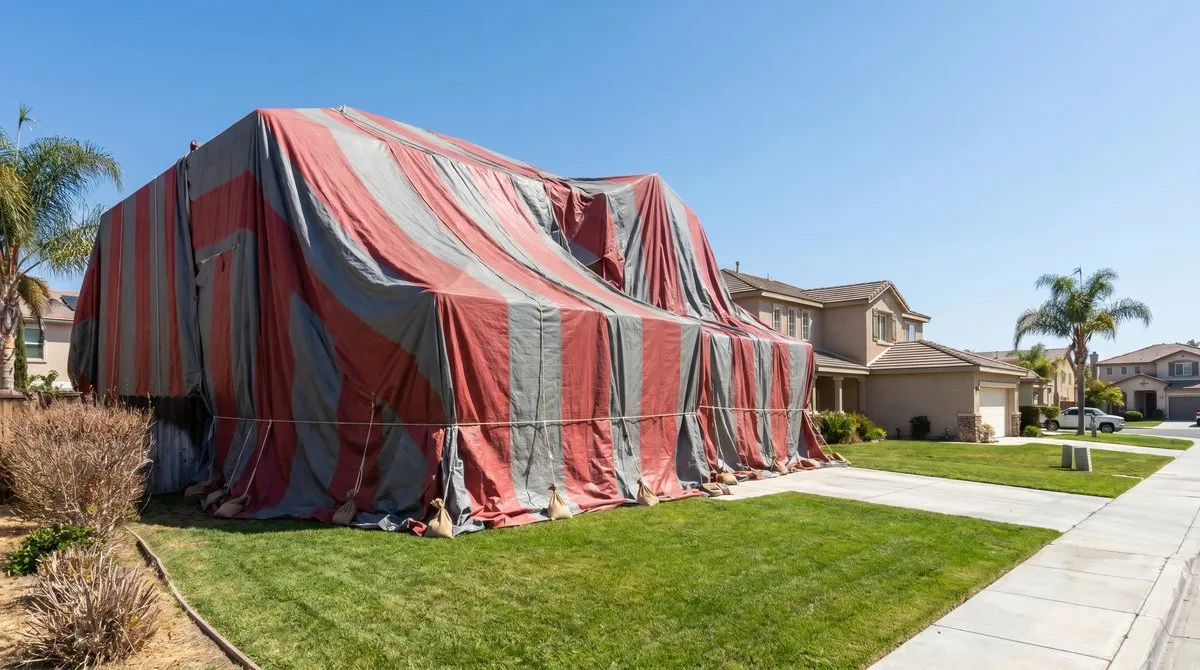
For widespread drywood termites, whole-house fumigation — “tenting” — is the most thorough treatment there is. Drywood termites live deep inside the wood throughout a structure, often in spots no spot-treatment can reach. Fumigation gets to every one of them at once. It’s the gold standard when an infestation has gone structure-wide, and Total Pest Control Fresno is SPCB-licensed to handle it from inspection through clearance.
When is fumigation the right call?
Fumigation is the answer when drywood termites are too widespread for a targeted treatment to reach them all:
Drywood termites are found in multiple areas of the structure, not one contained pocket.
Activity is in hard-to-reach spots — attics, eaves, wall voids — where localized treatment can’t reach every gallery.
You need a structure-wide clearance for a sale or warranty, not a partial fix.
For a small, accessible drywood pocket, localized treatment may be enough — we’ll tell you honestly which one your home needs.
How termite tenting works
Fumigation uses sulfuryl fluoride (the fumigant commonly known as Vikane) sealed under a tent so it penetrates all the wood in the home. The process runs in four stages:
Prep — people, pets, and plants come out, and food and medicine are sealed in the special bags we provide or removed.
Tenting — the home is covered with tarps and sealed so the fumigant stays contained.
Fumigation — the gas is introduced and held long enough to penetrate the wood and eliminate every drywood colony in the structure.
Aeration & clearance — the tent comes off, the home is aerated, and the air is tested and certified safe before you return.
How to prepare for fumigation
Plan on being out of the home for about two to three days. We give you a detailed prep checklist, but here’s the short version:
Yes. The fumigant penetrates wood and then dissipates completely, leaving no residue on surfaces, furniture, or clothing. The home is aerated and tested with sensitive equipment, and you only return once it is certified safe to re-enter. Food and medicine that were properly bagged are unaffected.
Fumigation vs. localized treatment
Fumigation treats the entire structure and is the most thorough option for widespread drywood termites, but it requires vacating for a few days. Localized treatment is targeted, needs no move-out, and is the right choice when the infestation is small and accessible. If your problem is actually subterranean termites in the soil, neither applies — those are handled with a liquid barrier or baiting.
Compare all termite treatments →Termite fumigation FAQ
How long does termite fumigation take?
Typically two to three days from tenting through aeration and clearance, depending on the size of the home and weather.
How long do I have to stay out of the house?
The full fumigation period plus aeration — usually two to three days. You return only after the home is tested and certified safe.
Is fumigation safe for my home and belongings?
Yes. The fumigant penetrates the wood and then fully dissipates, leaving no residue. Food and medicine are bagged or removed, and the air is tested before anyone re-enters.
Does fumigation prevent future termites?
Fumigation eliminates the current drywood infestation but doesn’t leave lasting protection on its own. We pair it with correcting conducive conditions and can set up ongoing prevention.
Will fumigation kill subterranean termites too?
Fumigation targets drywood termites inside the structure. Subterranean termites living in the soil are handled with a liquid soil barrier or in-ground baiting instead.
Do you inspect before recommending fumigation?
Always. We confirm the species and how widespread it is, then tell you whether fumigation or a localized treatment is the right call before quoting.
Tent fumigation vs. spot treatment for termites: which is better?
Tent fumigation treats an entire structure at once and is the most reliable option for widespread drywood termites, but it requires vacating the home for two to three days. Spot treatment targets a single accessible area at lower cost and disruption, but it only works when the infestation is limited and easy to locate. A thorough inspection determines which one fits.
Wipe out drywood termites for good.
If drywood termites have spread through your Fresno home, fumigation is the most thorough fix there is. Let's inspect, confirm the extent, and get you scheduled — with a clear plan before any tarps go up.